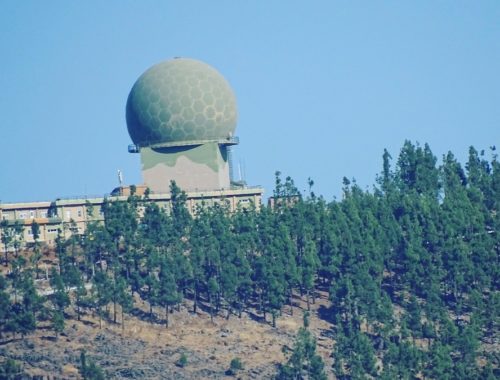
Between Dream and Reality: My Ascent to the Summit of North Africa
Have you ever dreamed of touching the sky? I did, when I attempted to climb Mount Toubkal! At 4,167 meters above sea level, it was a challenge worth taking on. My climb up Toubkal was much more than just a hike: it was an adventure that pushed me beyond my limits.
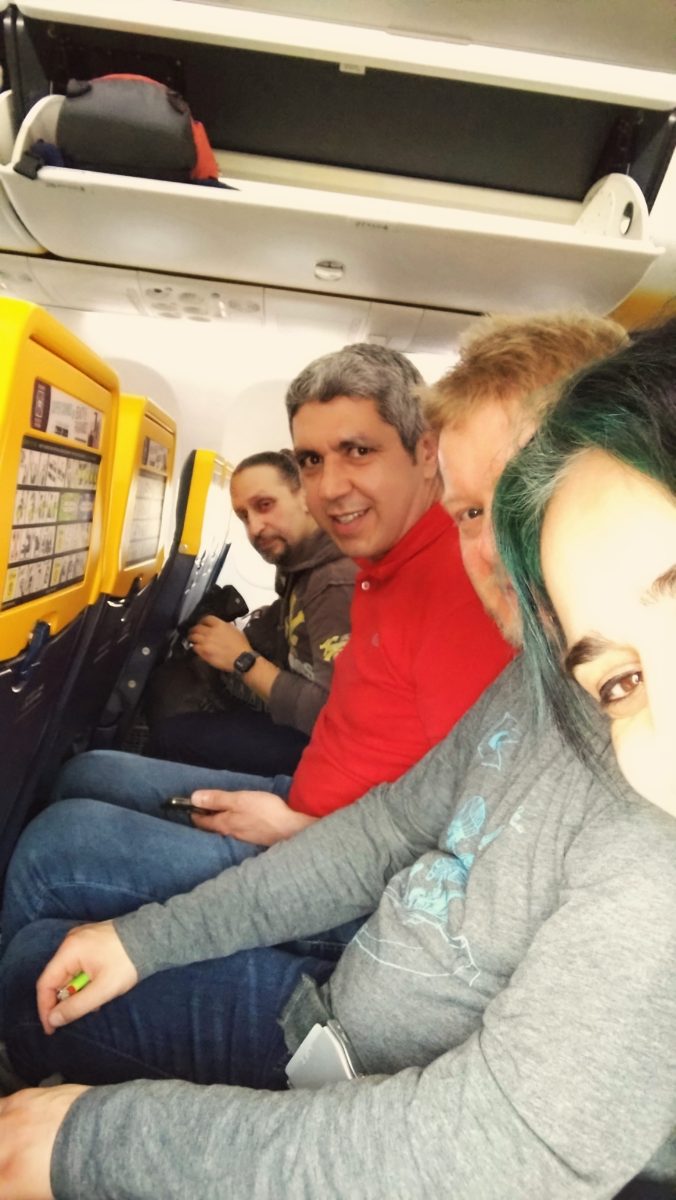
Day 1: Landing
We arrived in Marrakech late in the evening and, after picking up our rental car, headed to our lodging, which was 15 minutes from the airport. We barely had time to eat before collapsing into bed late that night.
Knowing that in a few hours we’d be climbing to the summit of Morocco: Mount Djebel Toubkal, at an elevation of 4,167 meters in the Atlas Mountains—the highest peak in North Africa.
Day 2: Immersion in the Atlas Mountains

It’s going to be a rough wake-up call! We have a 10 a.m. appointment with a guide in Imlil, which is an hour and a half from Marrakech. Of course, we’ll be late. We’ll need time to wake up and eat. We’re quite late, actually, since we don’t arrive until just before noon. On the way, we see the devastation caused by the latest earthquake.
We pick up our guide in the center of Imlil, the small village at the foot of the mountain at an elevation of 1,740 meters in the High Atlas. We stop at a secure parking lot near the trailhead. It’s important to know that we can’t go up without a guide. That’s the rule, and you’ll understand why later! We get ready: hiking gear, backpack, water, shoes, and trekking poles. We leave the rest of our belongings in the car and set off. We have a two-day hike ahead of us, with a destination in mind: a mountain hut at an altitude of 3,207 meters where we’ll spend the night.

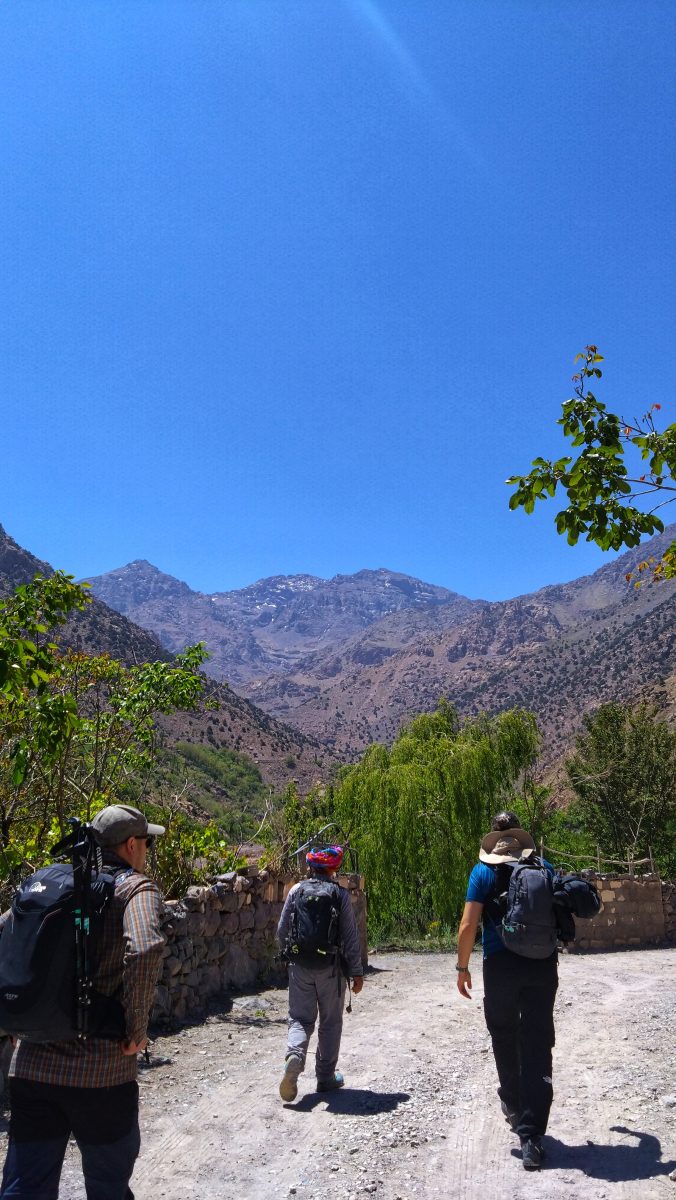
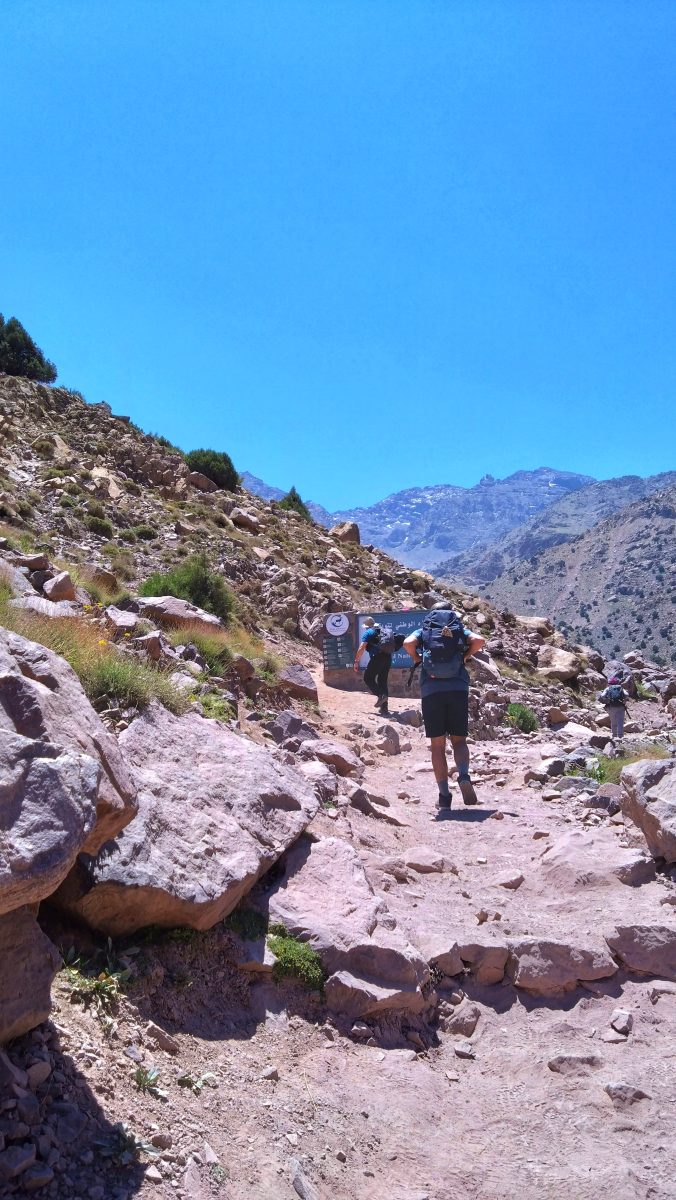
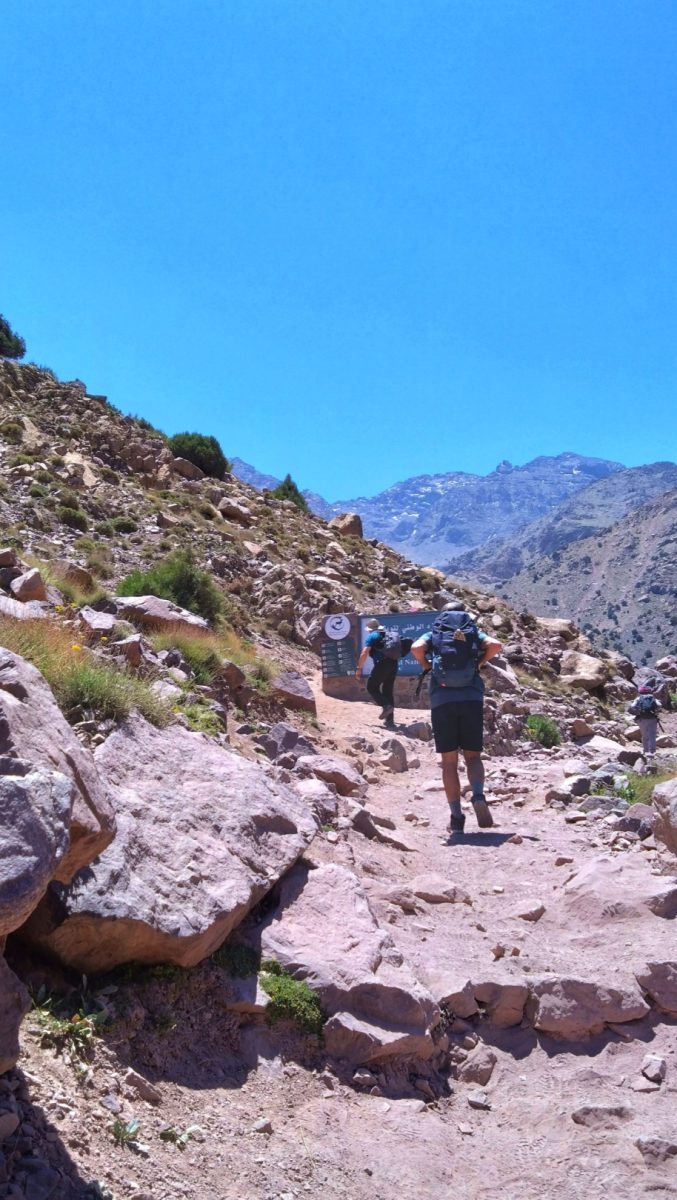
Here we are at the foot of the majestic Toubkal. The well-marked trail winds through sparse vegetation. We make our first stop at a checkpoint where we have to show our passports. They take this seriously!
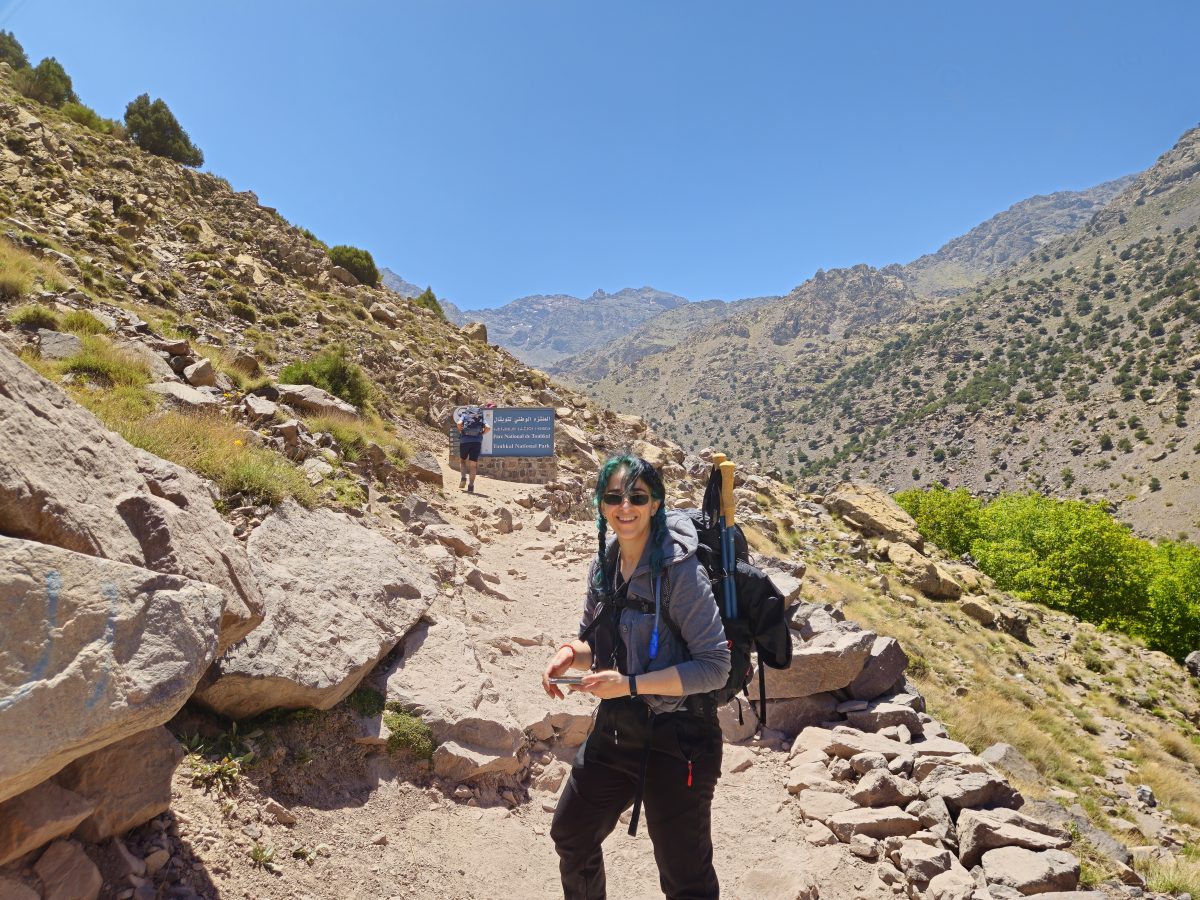
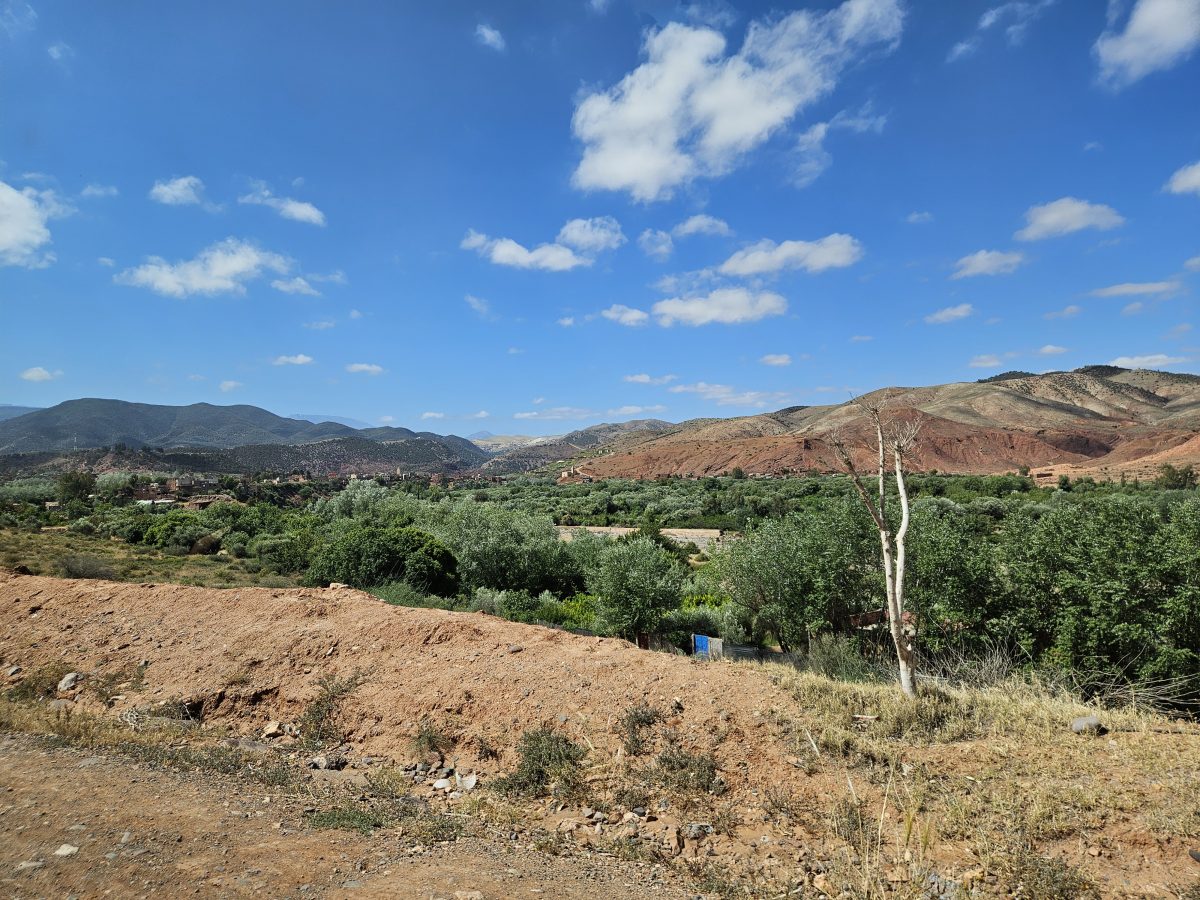
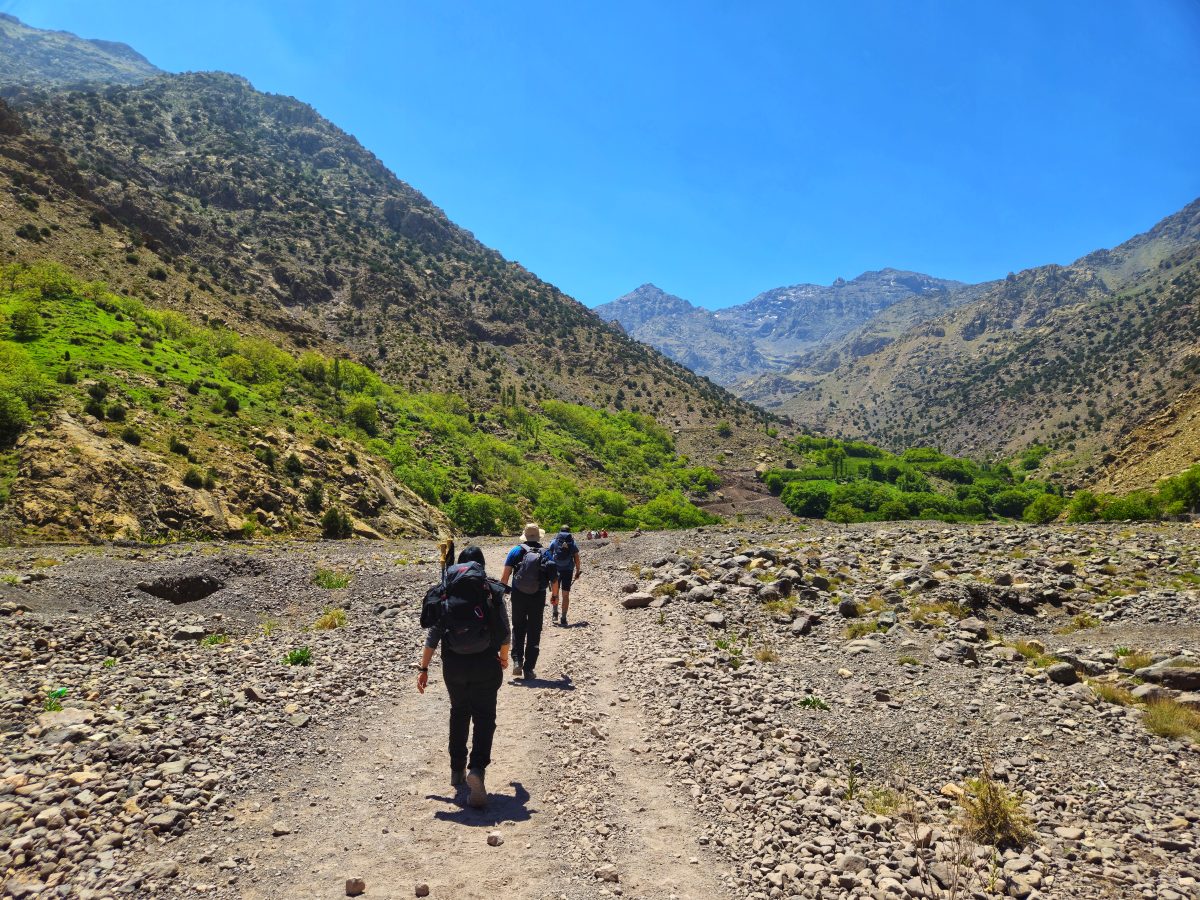
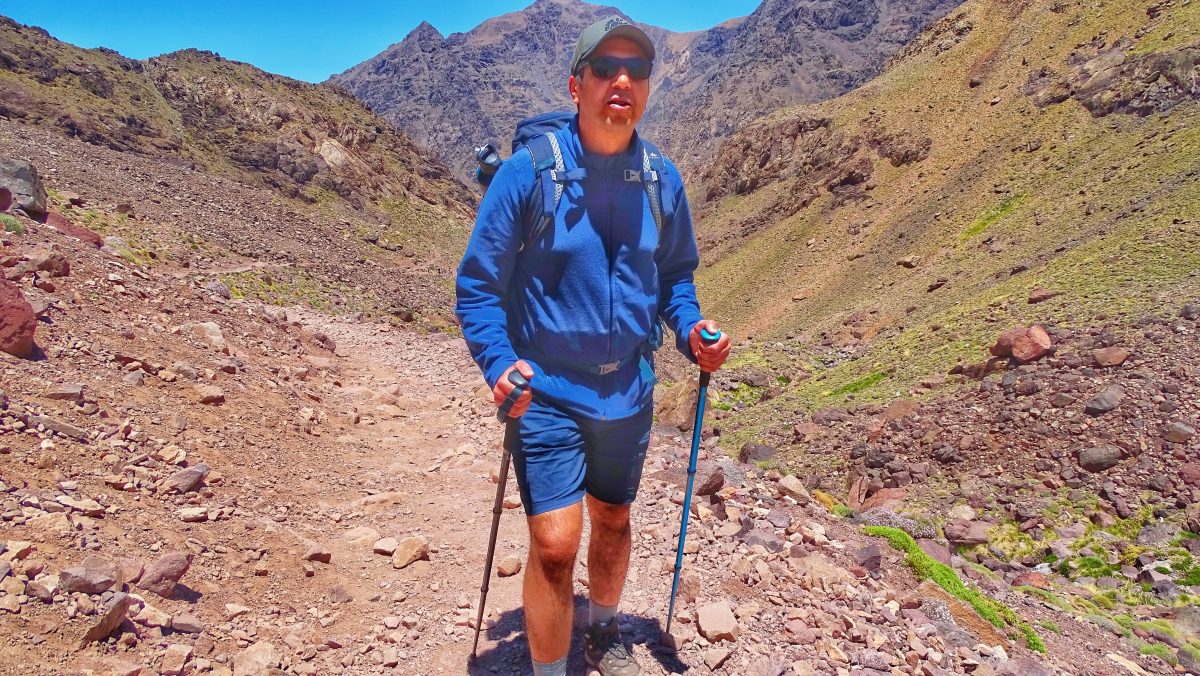
We leave Imlil, bathed in sunlight. The heat is already starting to set in, but the air is dry and easy to breathe. The trail, lined with dry-stone walls, climbs gradually. The scenery is breathtaking: lush green valleys, villages clinging to the cliffs, and in the distance, the peaks of Toubkal that seem to taunt us.

We stop in the first village along the river; we’re getting hungry. We settle in. We’re told that the court of the jinn is located here.
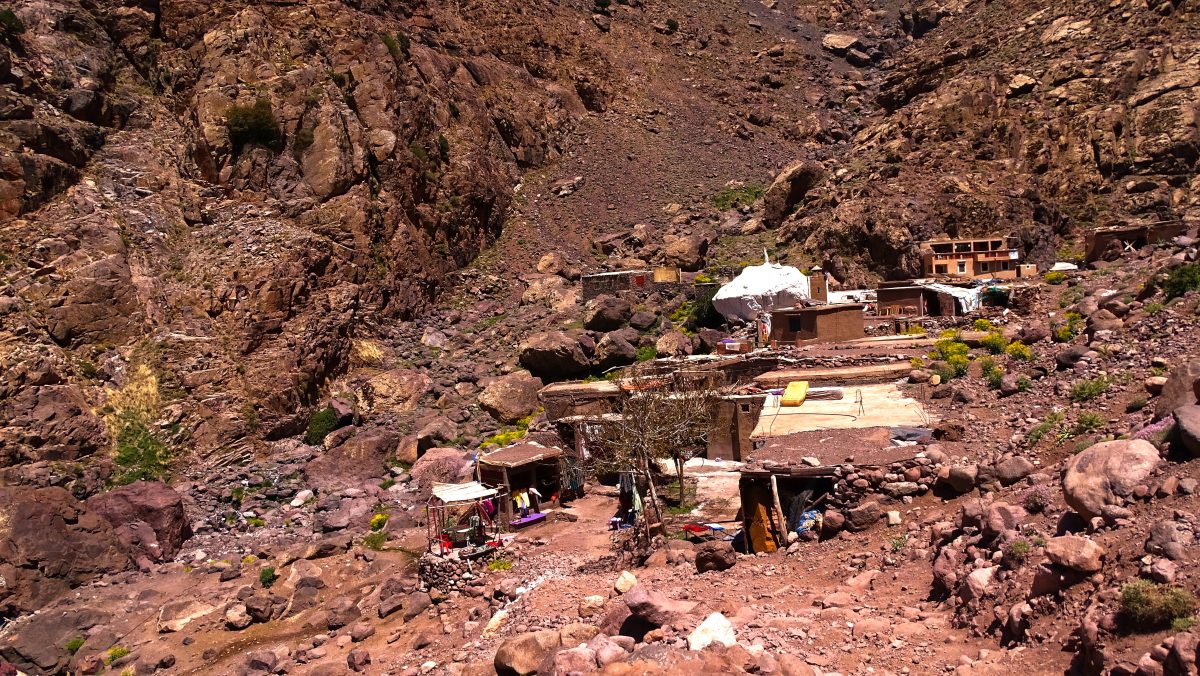
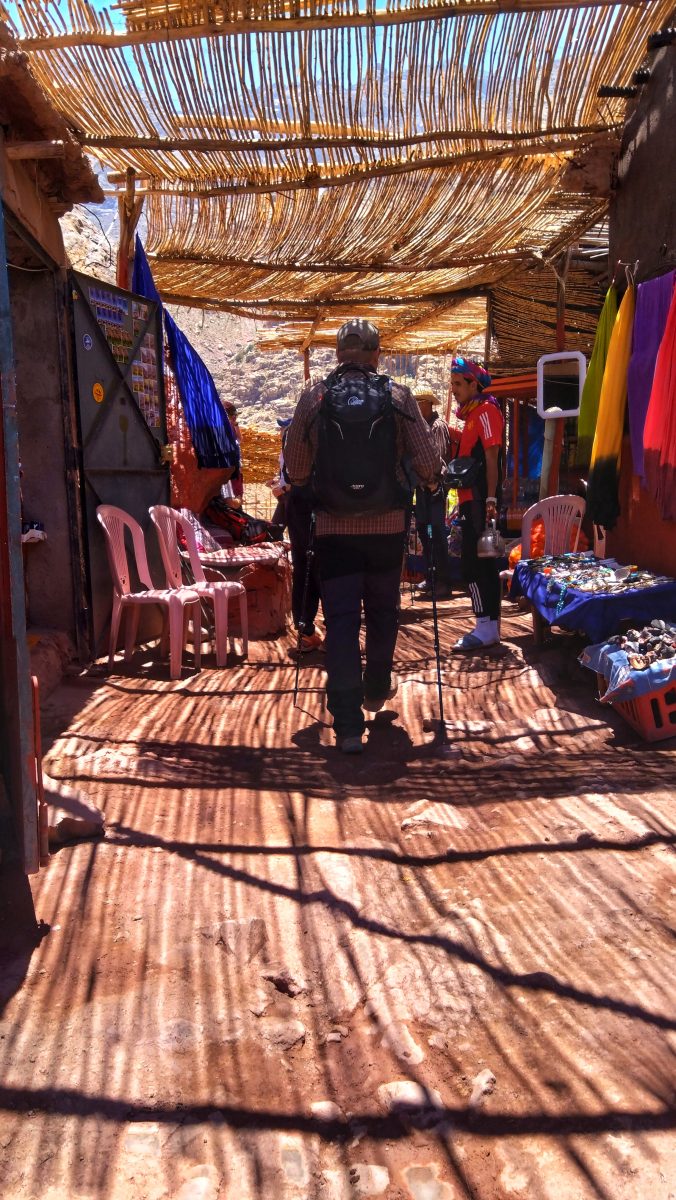
We resume the climb. Every step brings us a little closer to the sky. The climb is gradual but steady. We pass through small villages where the locals welcome us with warm smiles, offering us access to restrooms, cold drinks, and various trinkets.

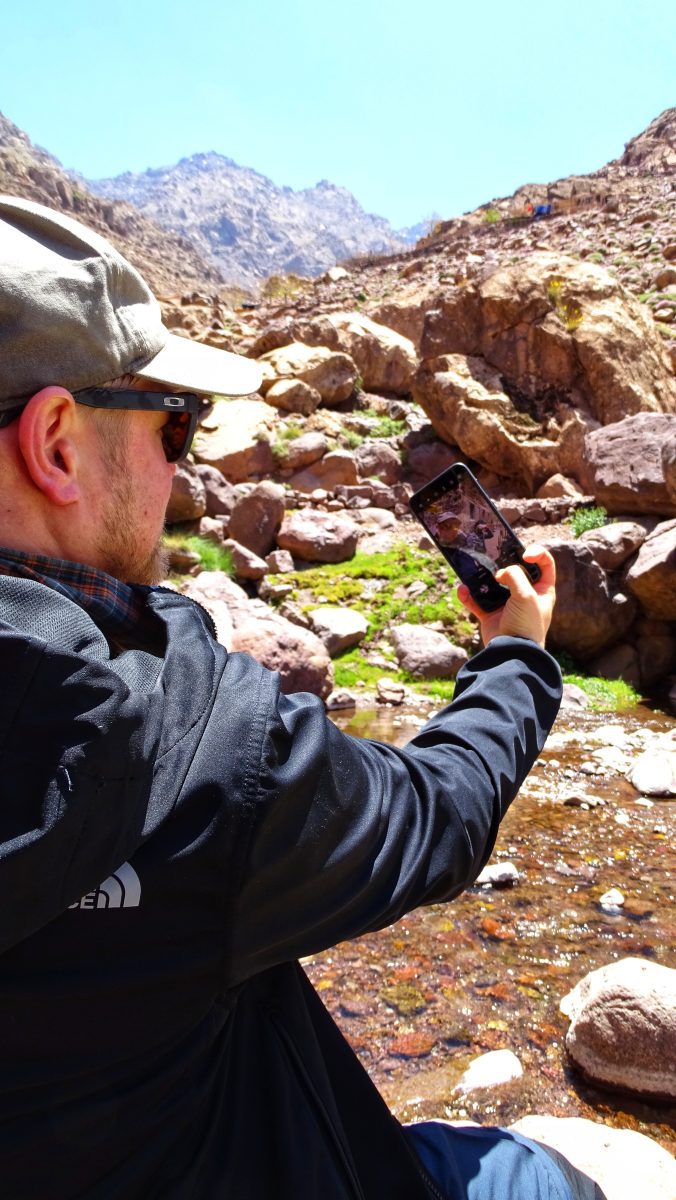
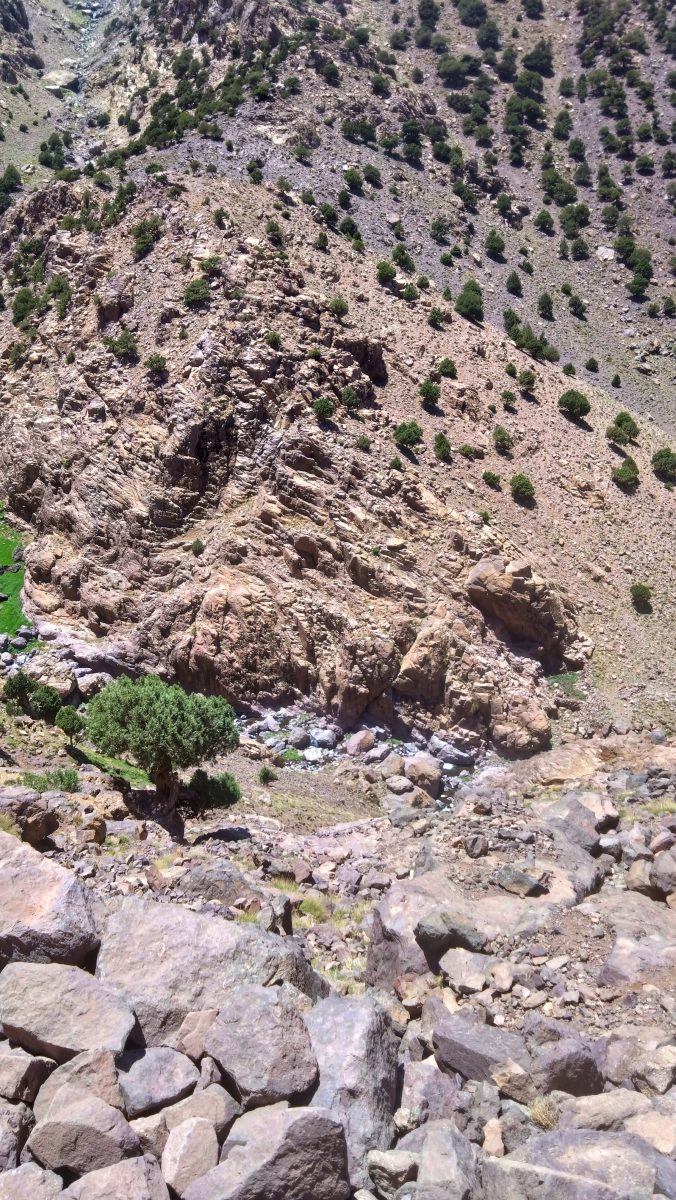
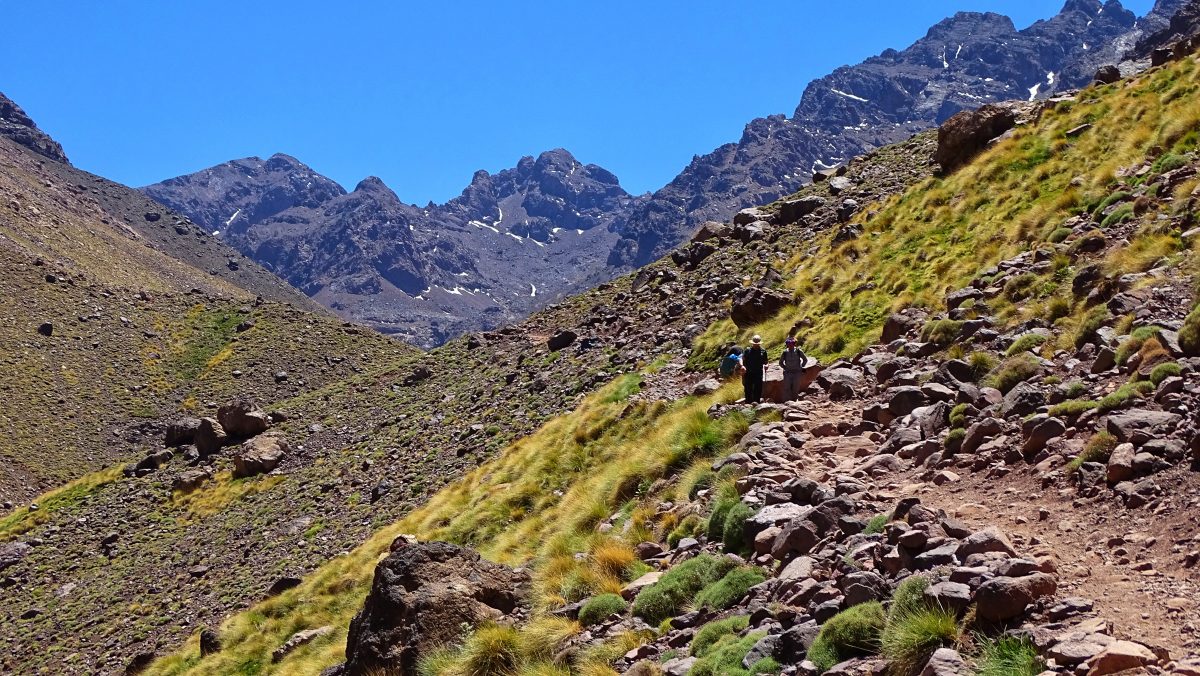
The climb is punctuated by encounters with shepherds and their flocks. One mountainside follows another; the snow has melted, giving way to mountain flowers—tinged with yellow, mauve, and other colors typical of rock garden blooms. Between the two mountain ridges, a river flows—its murmur is the only sound accompanying the birdsong.

The climb continues; we’re getting more and more tired, but the trail is still fairly easy to navigate. The higher we climb, the cooler the breeze feels.

With just one or two kilometers to go, my body is exhausted, and the pain has started to resurface. My right leg is struggling. With every step, I’m afraid I’ll sprain my ankle; my back throbs with pain. I’m worried my sciatic nerve might flare up. The breathtaking view numbs the pain.
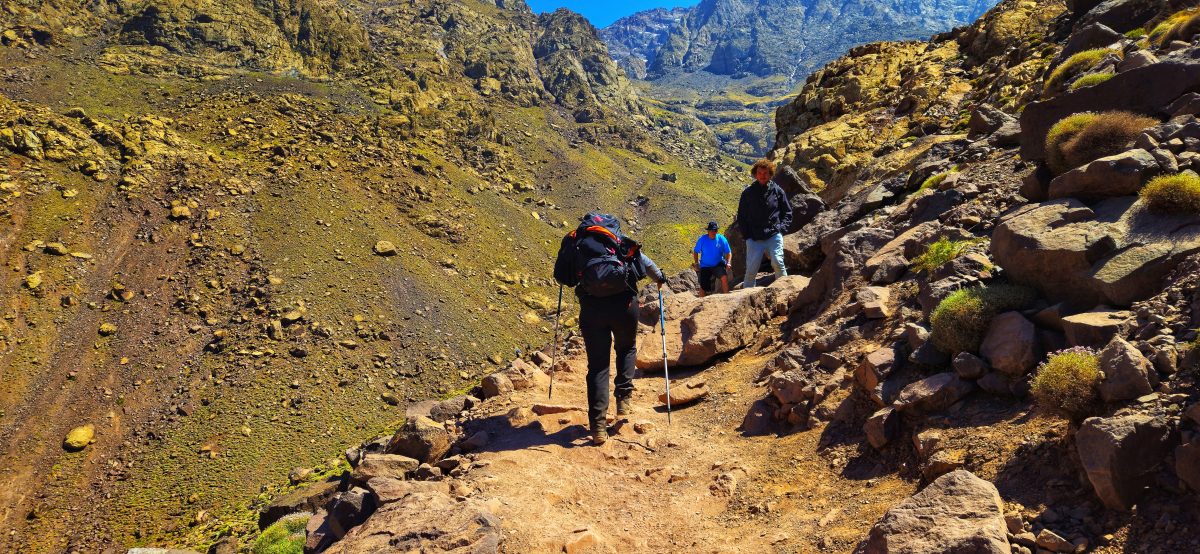
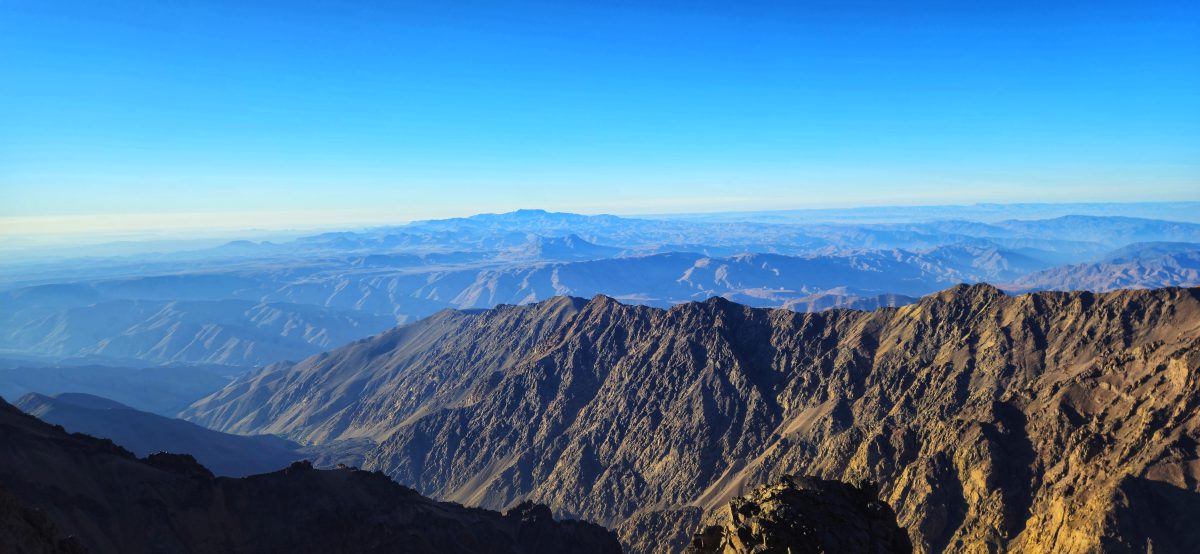
I see a house—at least, that’s what it looks like from a distance, or maybe it’s a mirage. I don’t know. The closer we get, the more I believe it’s real, and the guide confirms it! What a joy to see what looks like a mountain hut in the distance after those 14 km. We’ve finally arrived! With just under an hour until sunset, we reach the mountain hut. The mountains stretch as far as the eye can see, bathed in golden light.
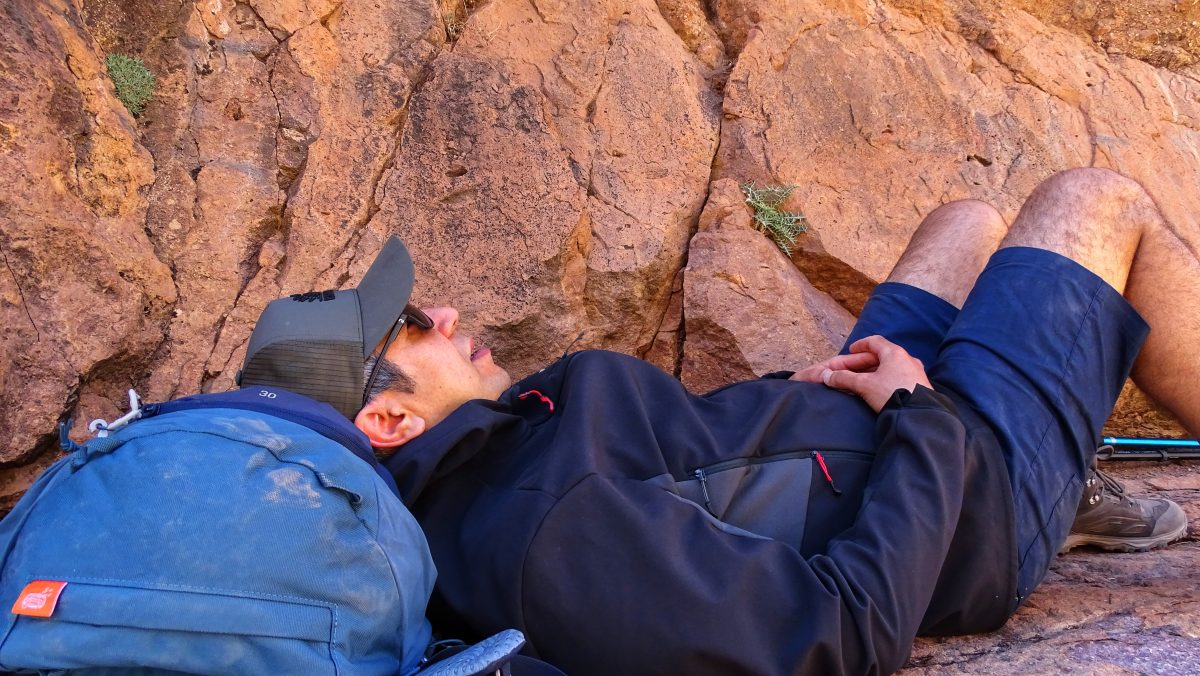
We rest and eat a tagine. The mountain hut is very basic and has no heating. We booked private rooms for 800 DRH; the showers and restrooms are shared. Our guide stays with us. It’s really chilly.Here is the link to the mountain hut.
Day 3: Toward the Summits

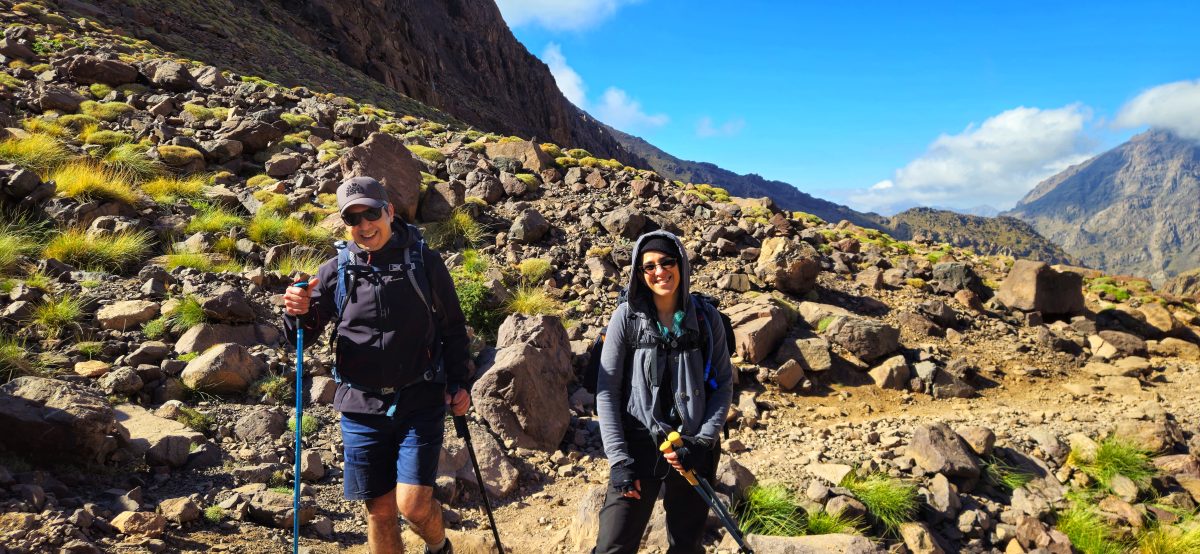
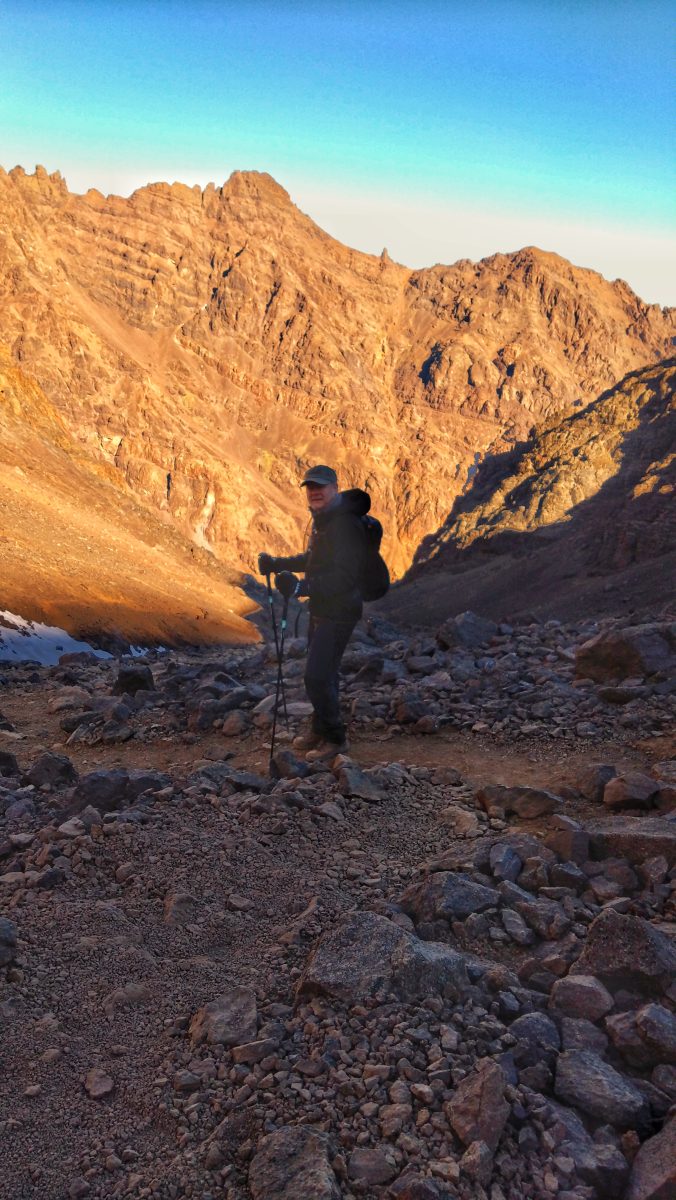
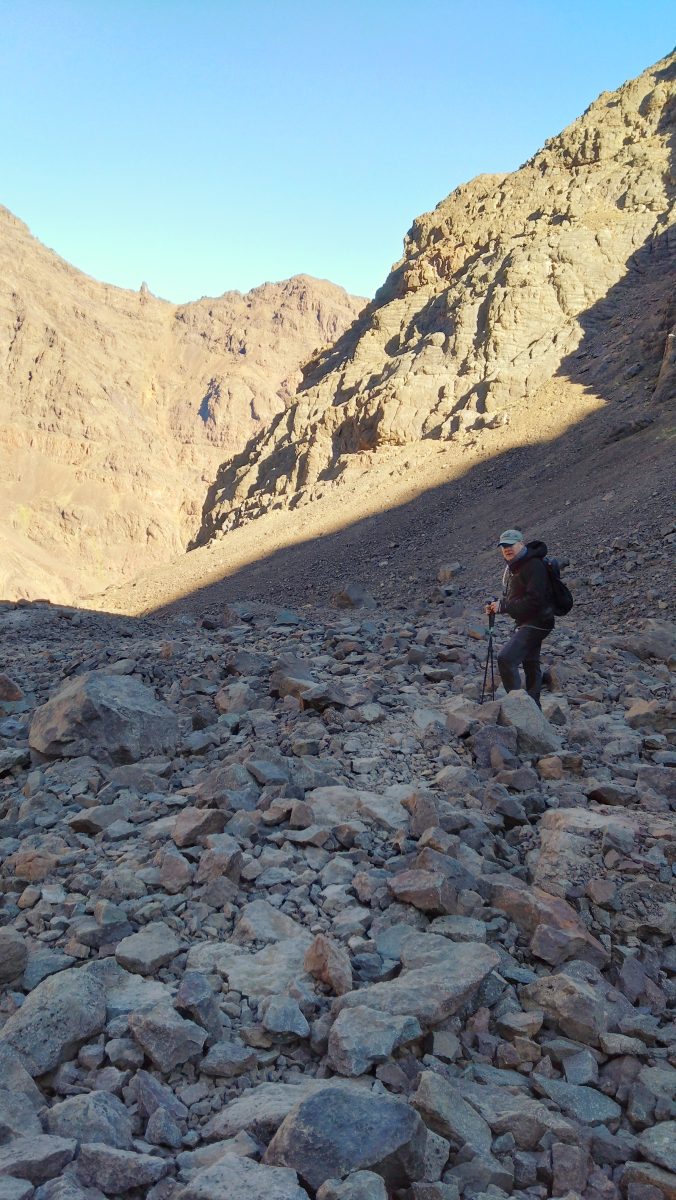
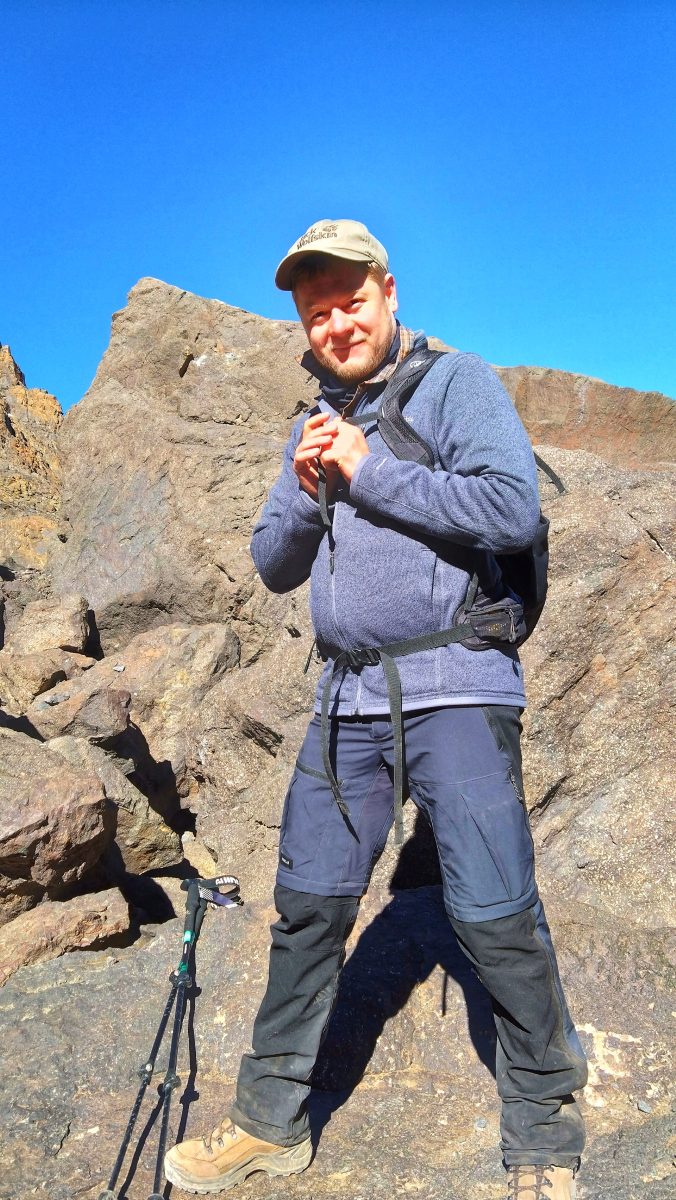
After a rough and chilly night, we get up at 4 a.m. to continue our ascent, leaving some of our gear at the mountain hut. We have 4 km left to go on an extremely steep climb. With headlamps on, we hope to reach the summit before dawn. The trail becomes increasingly difficult and slippery, and the cold creeps into our extremities. We make slow, laborious progress. The sky brightens as we continue this grueling ascent, and we stay motivated despite the cold. We look out for one another and help each other.

The cold is becoming more and more intense in our extremities. I try to recall all the videos and articles I’ve read about the climb, and none of them mentioned the difficulty or this biting cold—despite all the preparations we’d made. Hiking and intense sports like cross-country running or HIIT don’t prepare us for what we’re about to climb.

“Two kilometers to go,” the guide tells us. I’m completely frozen. My body refuses to move forward, but I push myself again and again. I’m having trouble catching my breath; I’m stopping to stand still more and more often. I know that if I sit down, I won’t be able to get back up. Only my steely resolve is keeping me going—my body is giving out on me. I repeat to myself like a mantra: I’m going to make it, I’m going to get through this, I’m going all the way—even though a faint, distant voice inside me is telling me to stop. NO! I can’t—not now. The sun has been up for a while.
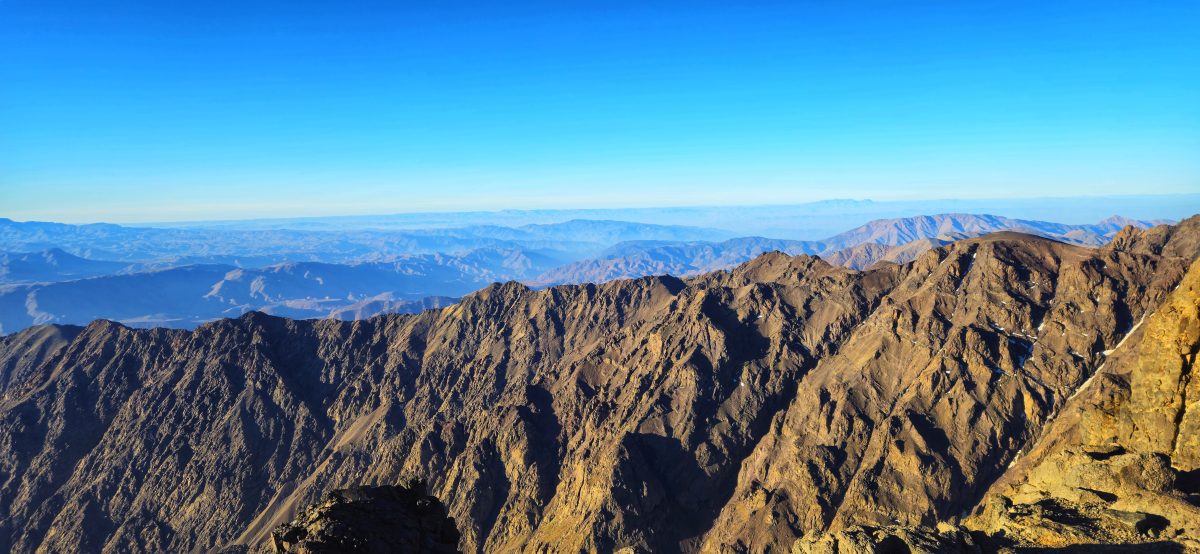
My glimmer of hope that I’ve made it is the ray of sunlight I see in the distance, reflecting off the mountain face. I finally tell myself, “Come on, there are only a few more steps to go.”
But it’s a mirage. That’s not the summit! I realize there’s still another climb ahead and that we haven’t reached the top yet. The guide tells me there’s at least an hour’s walk left. No! My body refuses, even though my mind is telling me to keep going. I think about the 20-kilometer descent in one go. I won’t make it. At this altitude, drinking or eating becomes a challenge in itself; shortness of breath means I have to take only tiny sips. A feeling of profound exhaustion washes over my entire body; every movement requires a superhuman effort. The altitude, combined with this exertion, triggers an excruciating migraine.
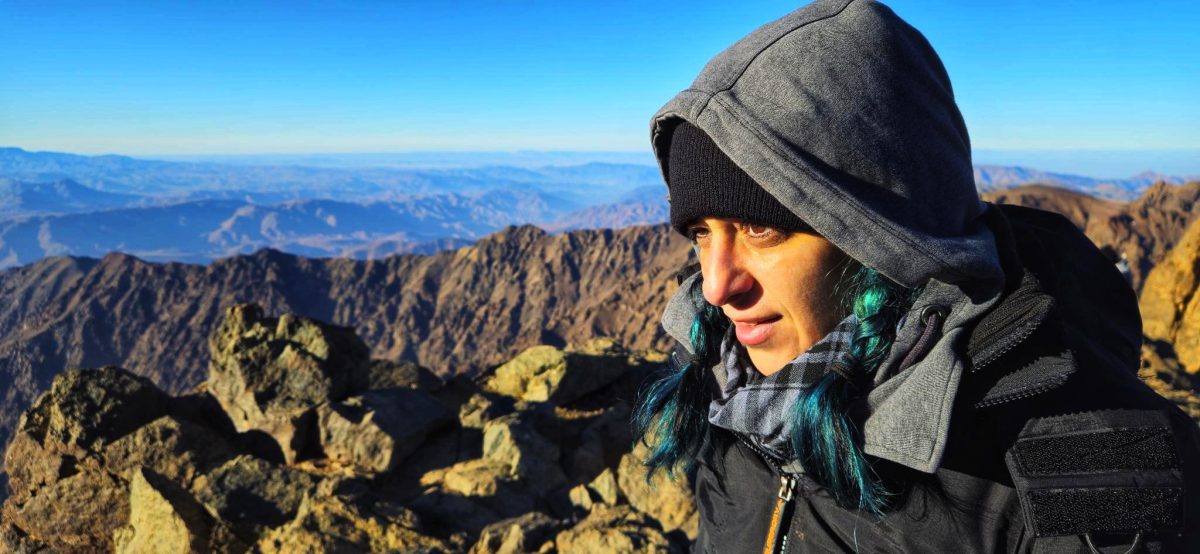
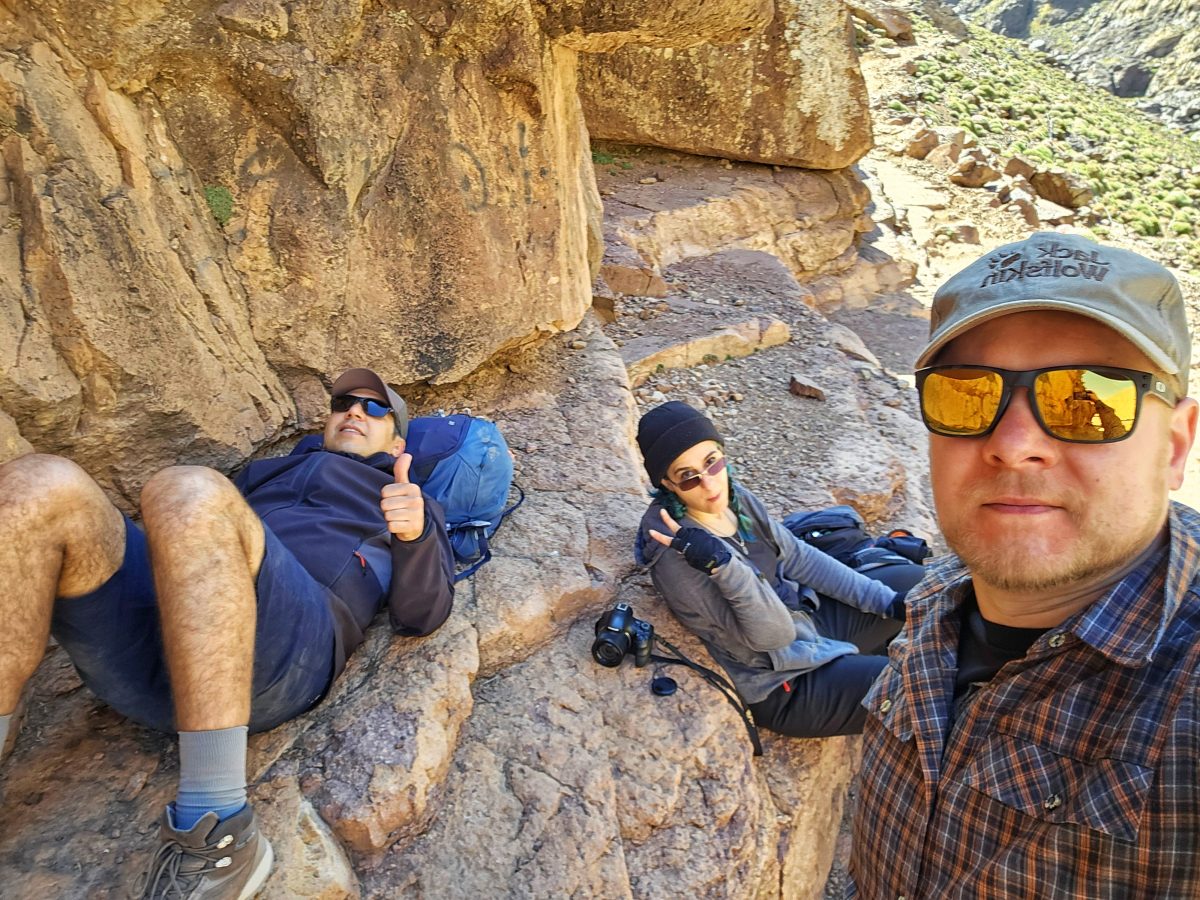
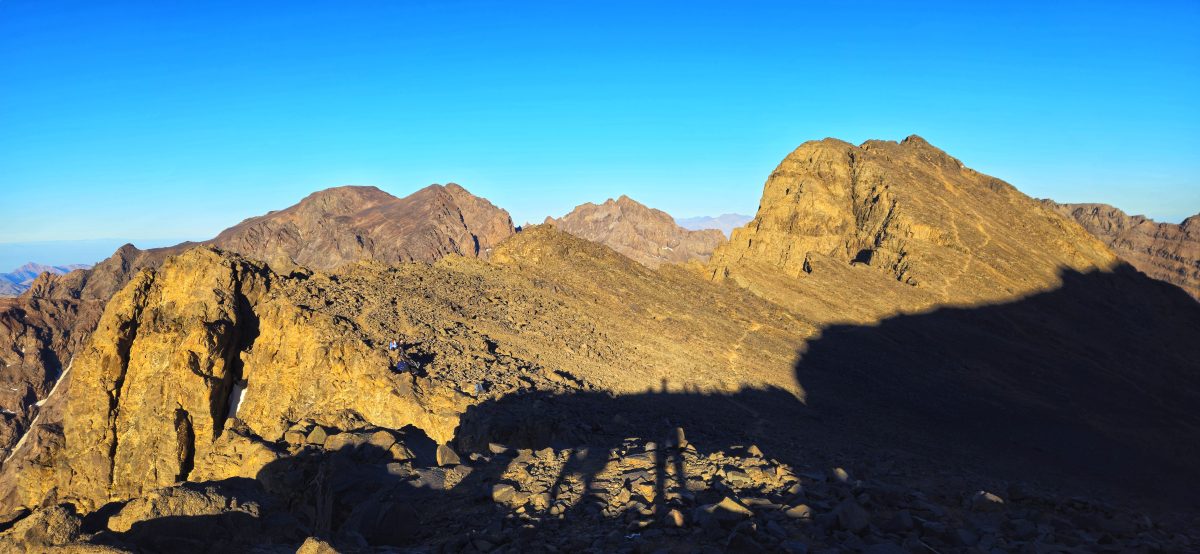
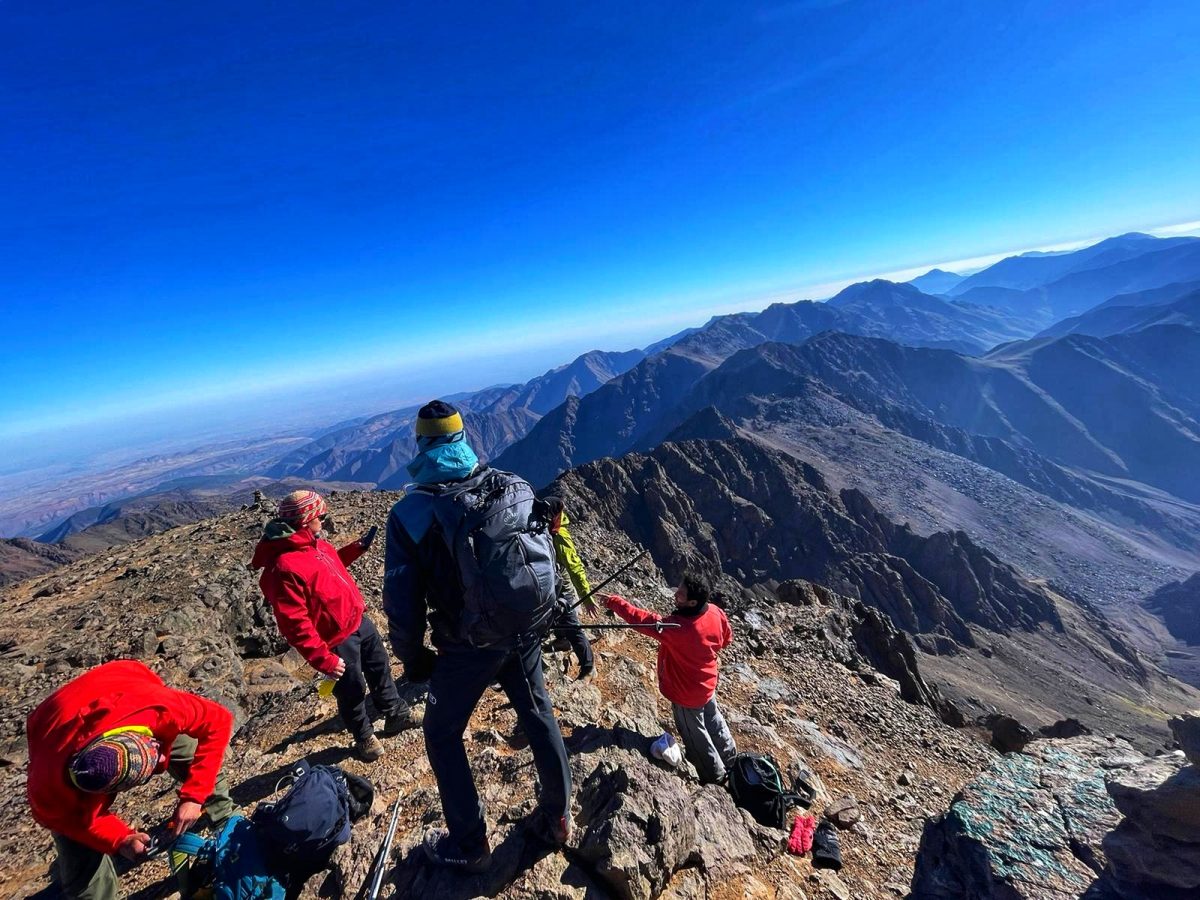
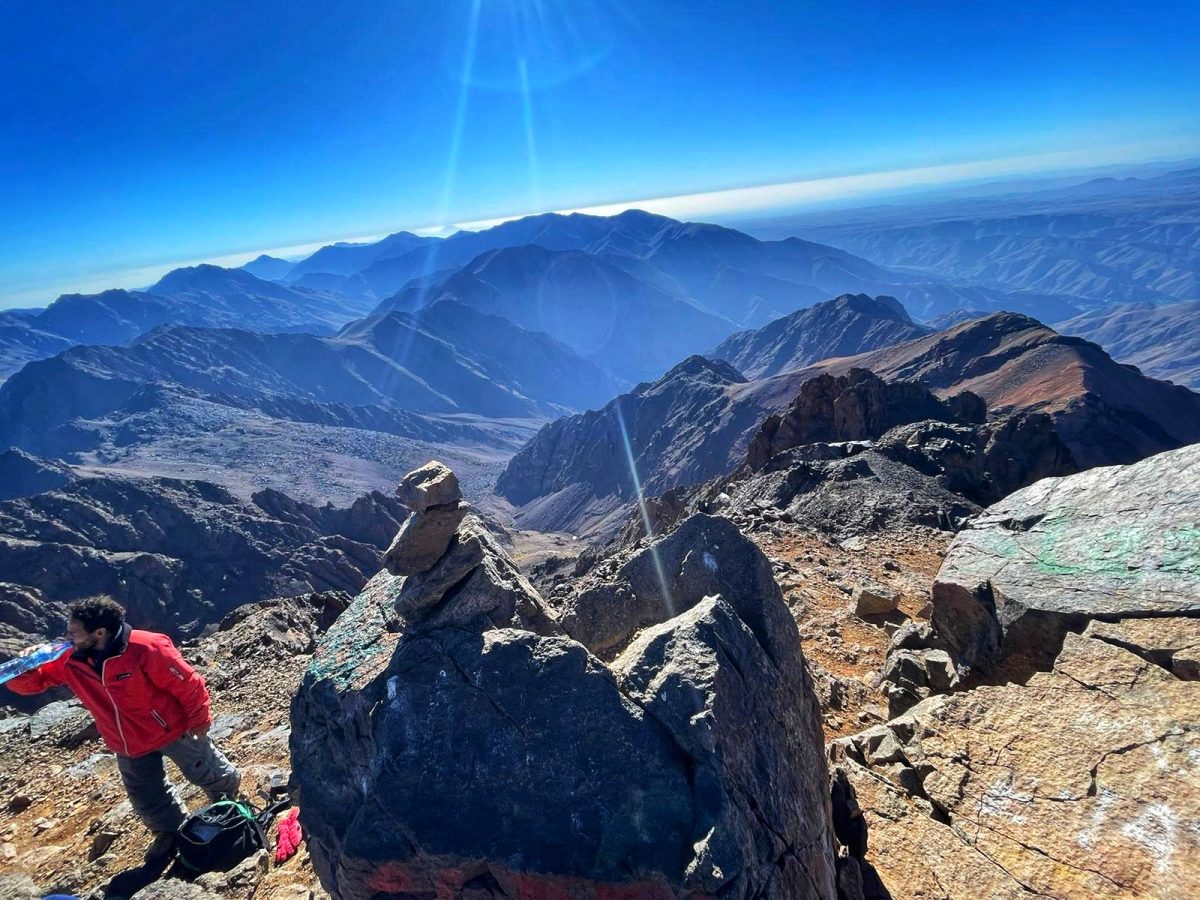
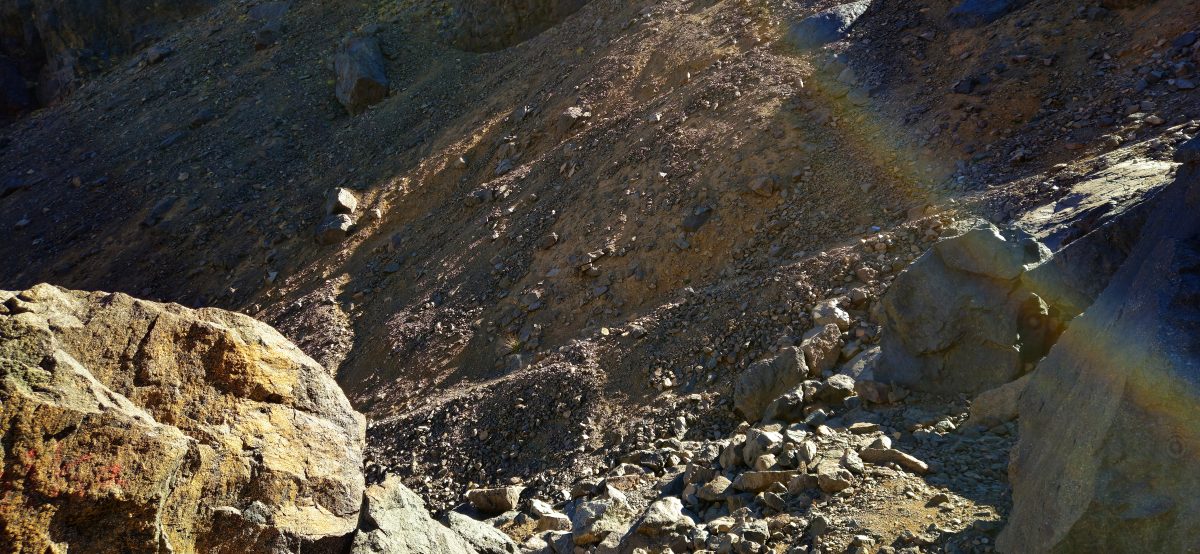
I’m forced to halt my ascent at 4,000 meters; the final 162 meters, with an even steeper gradient, are now completely beyond my reach. My fingers and toes, numb from the cold, no longer respond to me. My lips, a livid blue, betray my body’s distress. The view at this altitude is breathtaking, but the icy wind pins me to the spot. I can’t even sit down, for fear of getting even colder. We’re sweating, and it’s essential to keep moving. Two of my more experienced companions continue their ascent. The guide sends a message to another guide to let our friends know that I can’t climb any further and that we’re heading back down. After a while, when my legs stop shaking, I signal to the guide that I’m ready to head back down. Christophe, my partner—who’s also worn out from the effort—accompanies me on the descent.


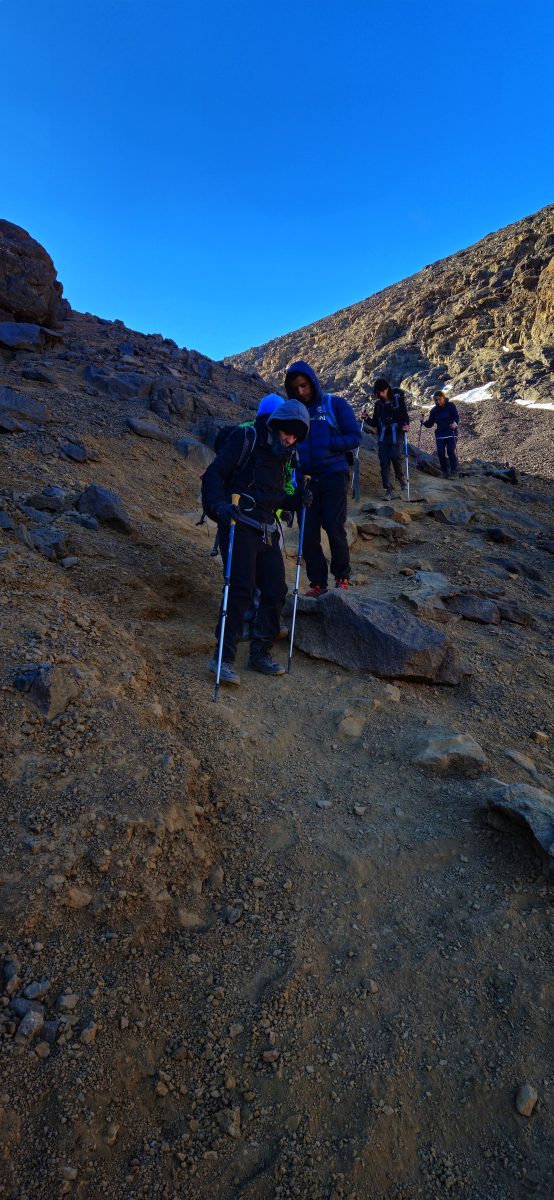
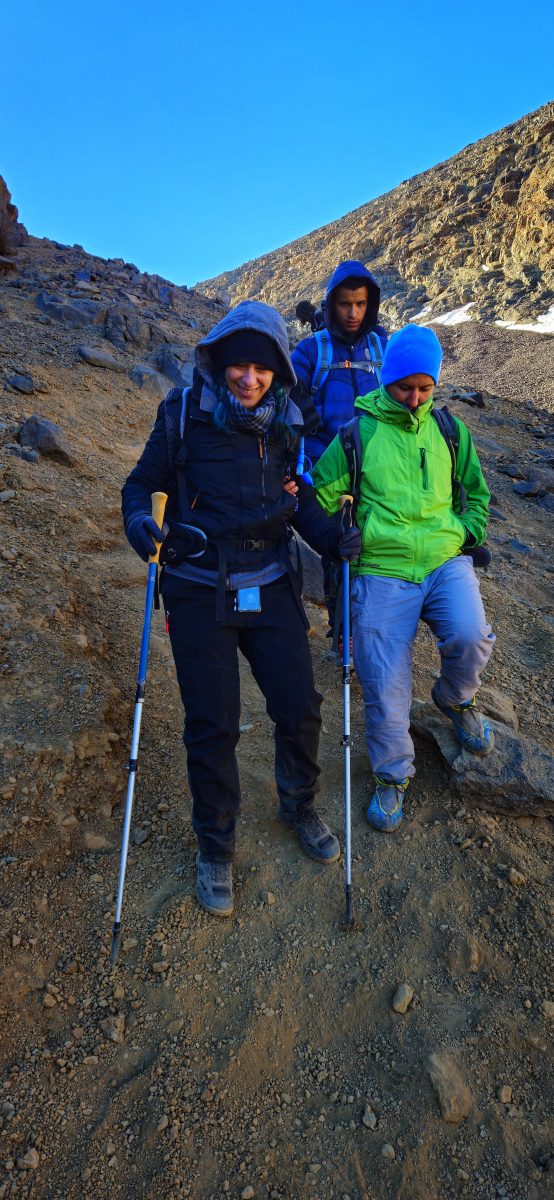
We hit the trail again, and I feel like I’m going to lose my fingers and toes despite the gloves. But changing the position of my legs for the descent feels easier—it even brings me some relief. I’m going down faster. After a few hours (I’ve completely lost track of time), we finally arrive at the mountain hut, but our friends still aren’t there.
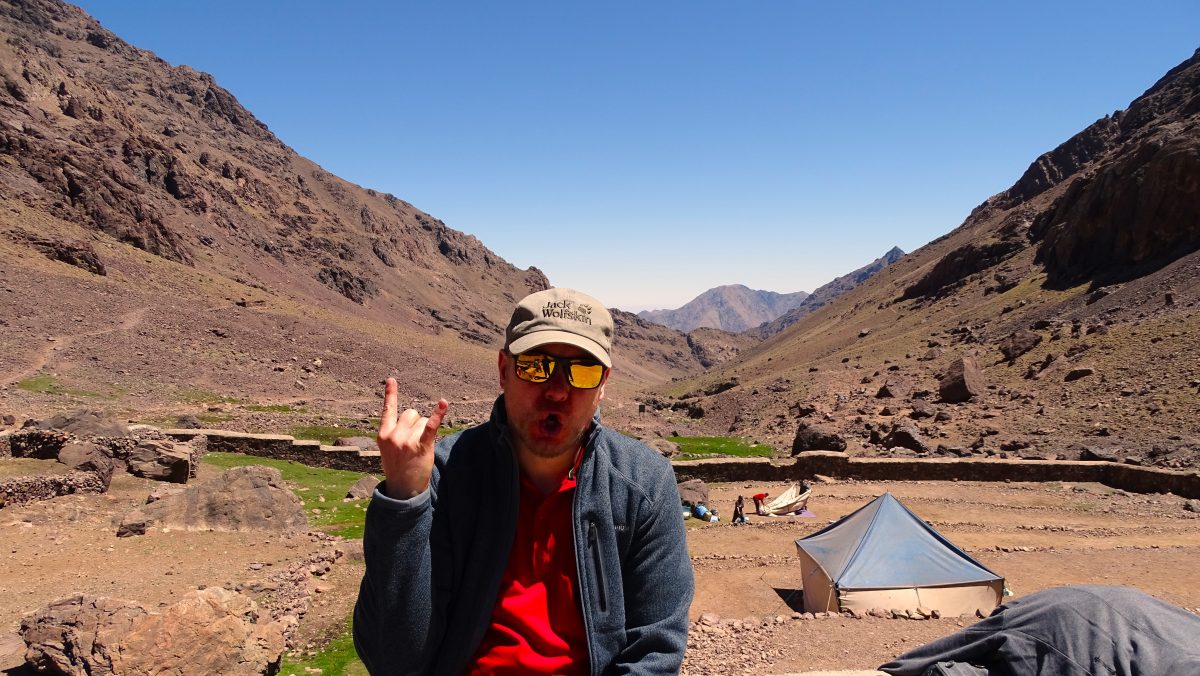
We rest while waiting for our friends to return, but we haven’t heard anything from them, which worries us. An hour passes, then two. We’d planned to return to Imlil today, so it’s time for us to head out.
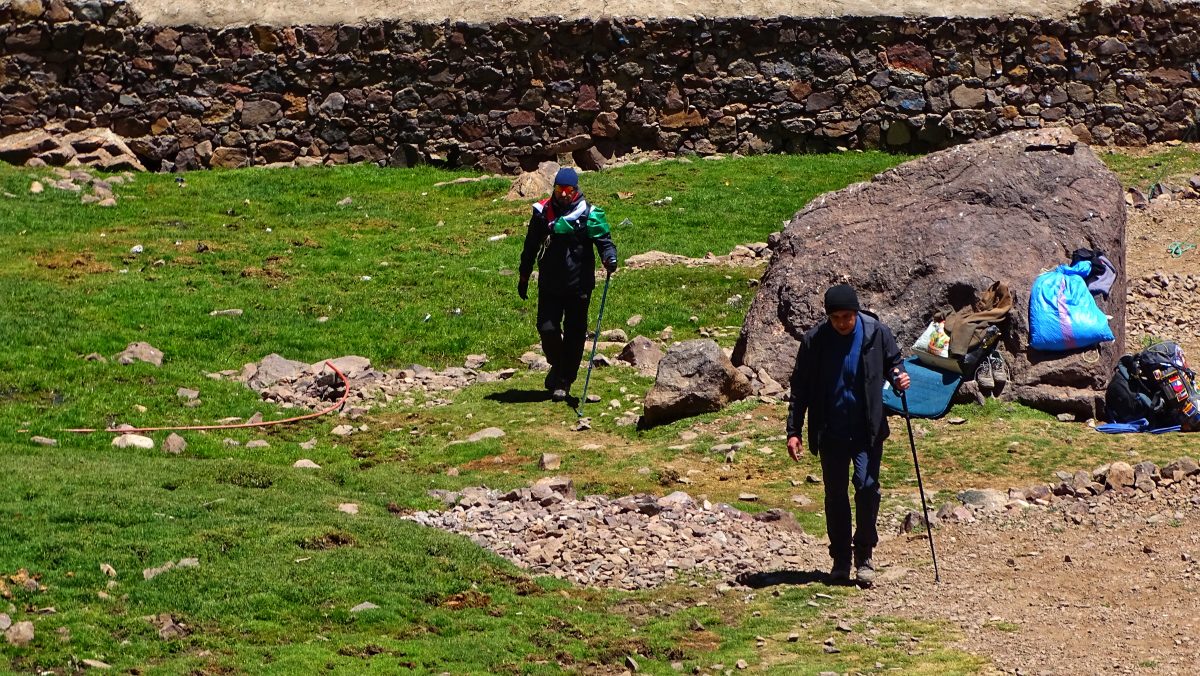
The guide tells us they’re heading down further because the guide who picked them up took a different route. That’s indeed the case—I can see them in the distance. They pack up their things, and we hit the trail again.
We cover the 14 km fairly quickly, but fatigue is setting in more and more, with our legs still sore from yesterday and this morning. It’s getting really tough.
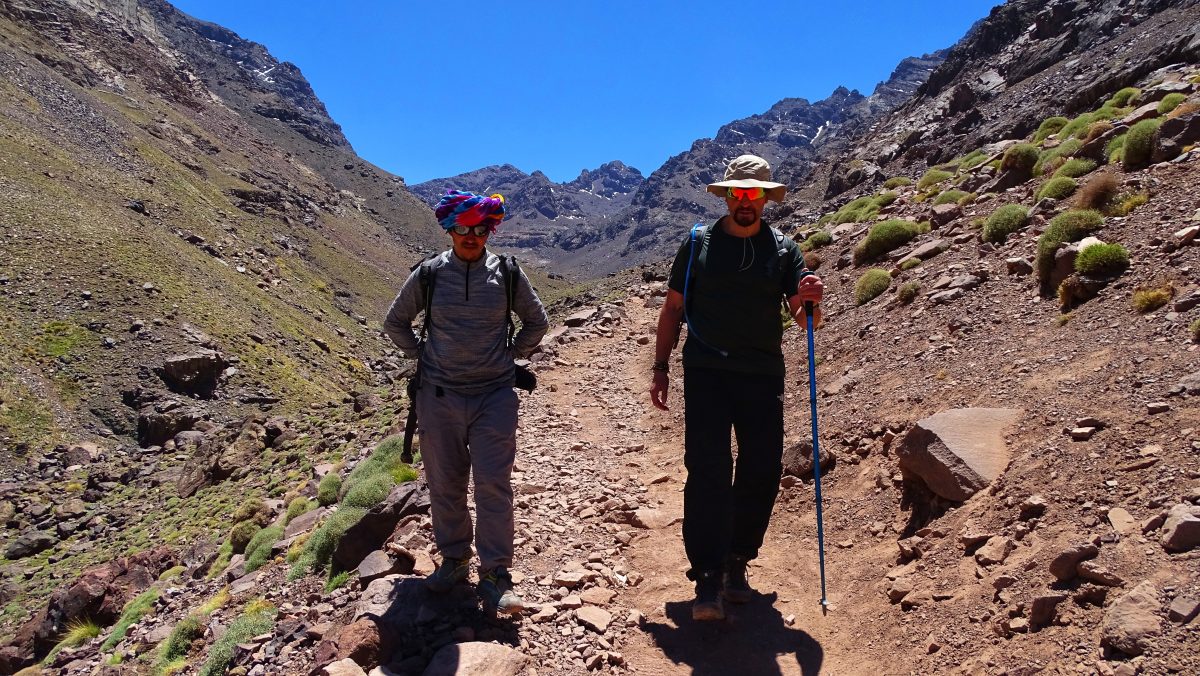
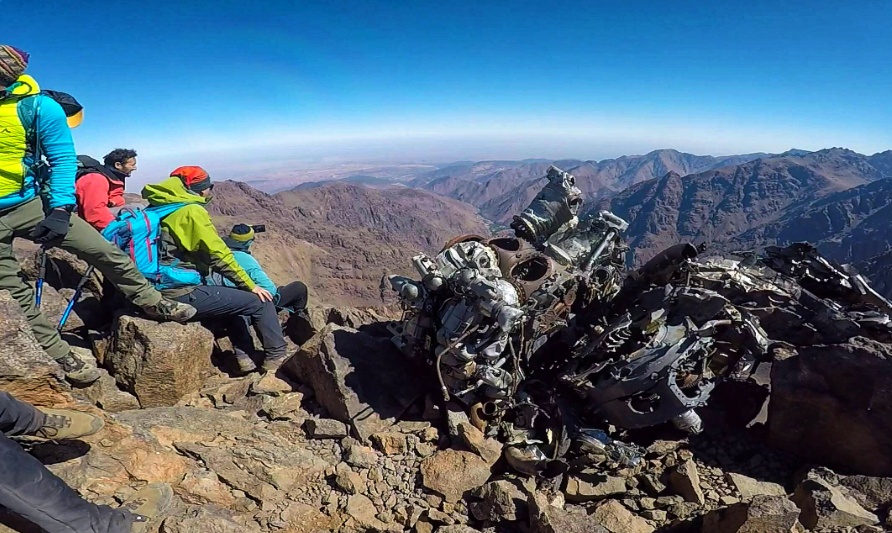
The majesty of the landscape captivates us, even though we’re exhausted! The boys tell us that they were led off course by a guide they followed, who took them to a plane that crashed into Mount Tibherine in the 1970s. Despite the various accounts we’ve heard, it was a cargo plane that crashed here, but we don’t really know why.You can find an article here.
We’ve found a place to stay in Imlil so we can rest. Now it’s time for a real vacation!
See you soon,
Your devoted Ninve.
I’m posting a few more photos:
Day 1 of the climb:


Day 2:



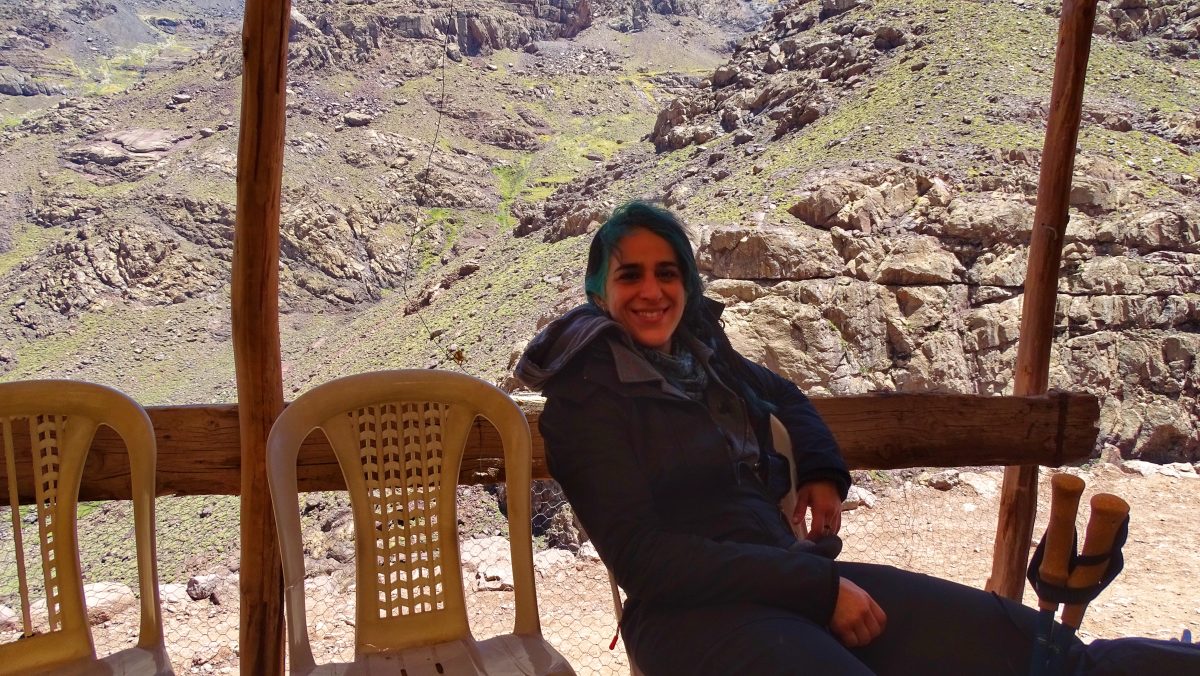

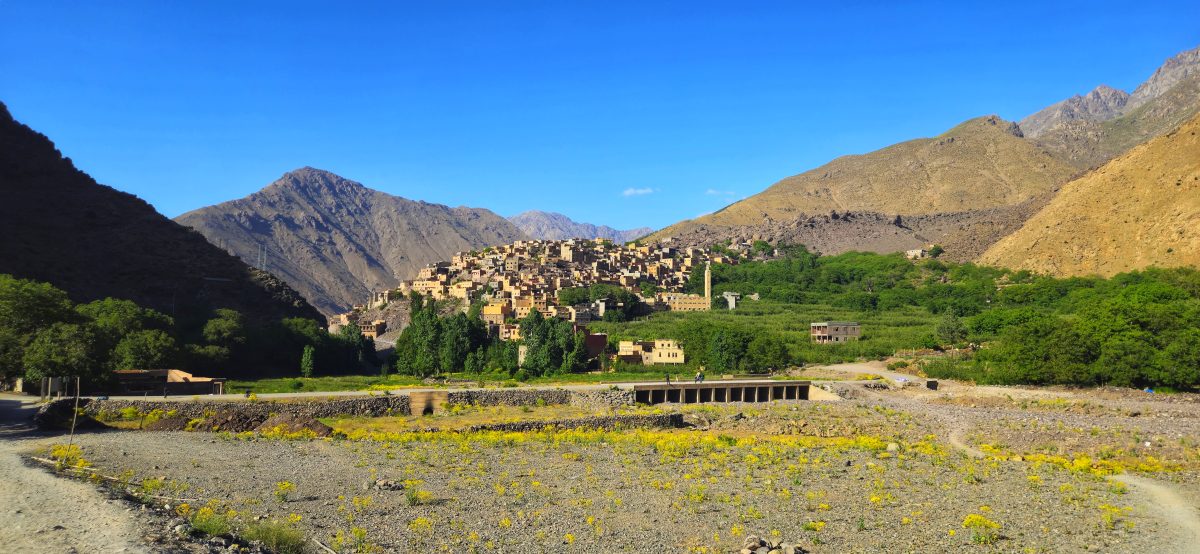
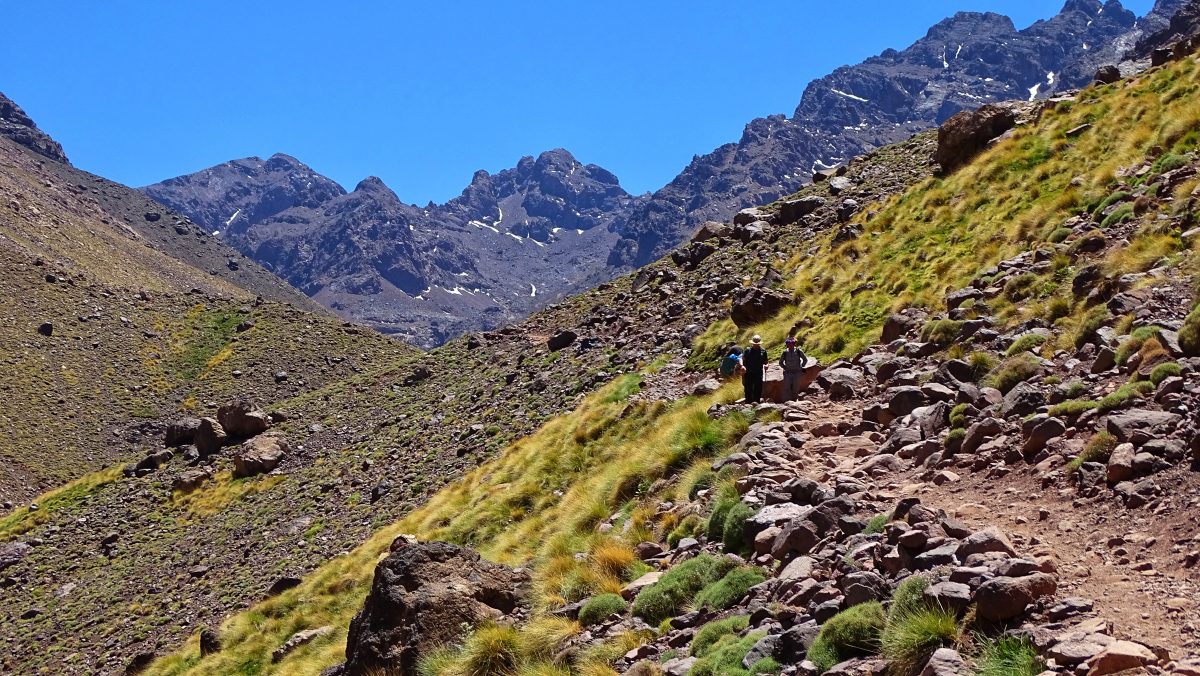
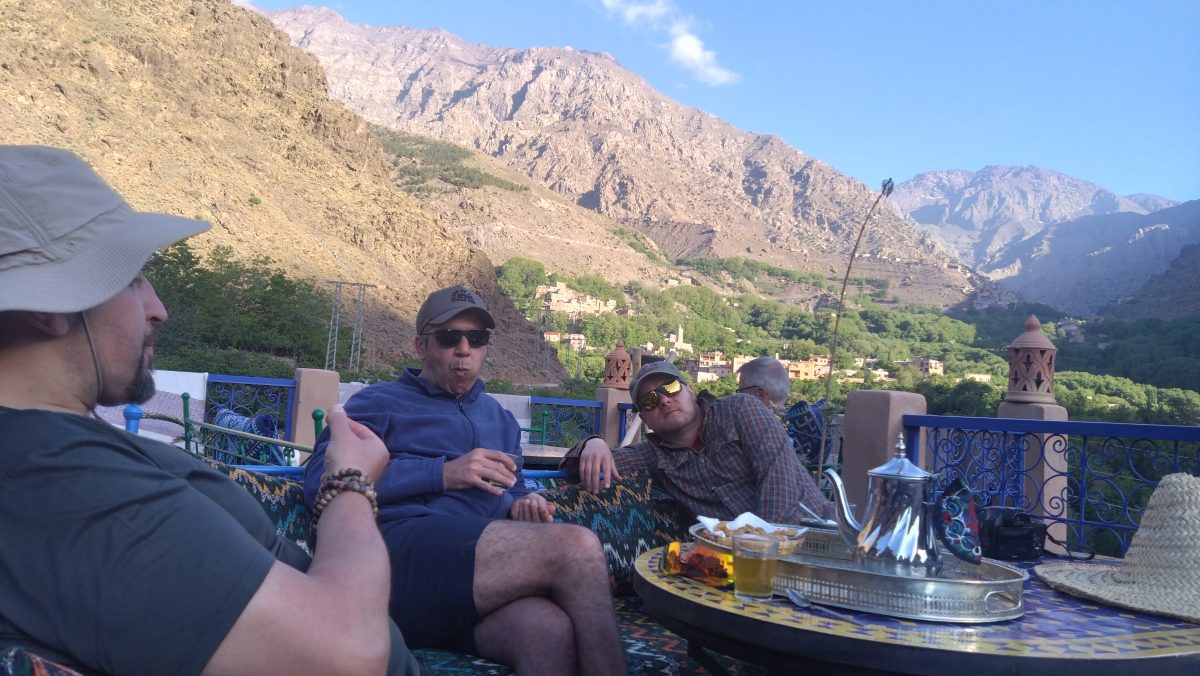
Our arrival at the hotel


You May Also Like
Album: Kanchanaburi and Its Famous Bridge.
El Nido la majestueuse : L’odyssée de Palawan