The Cotahuasi Canyon
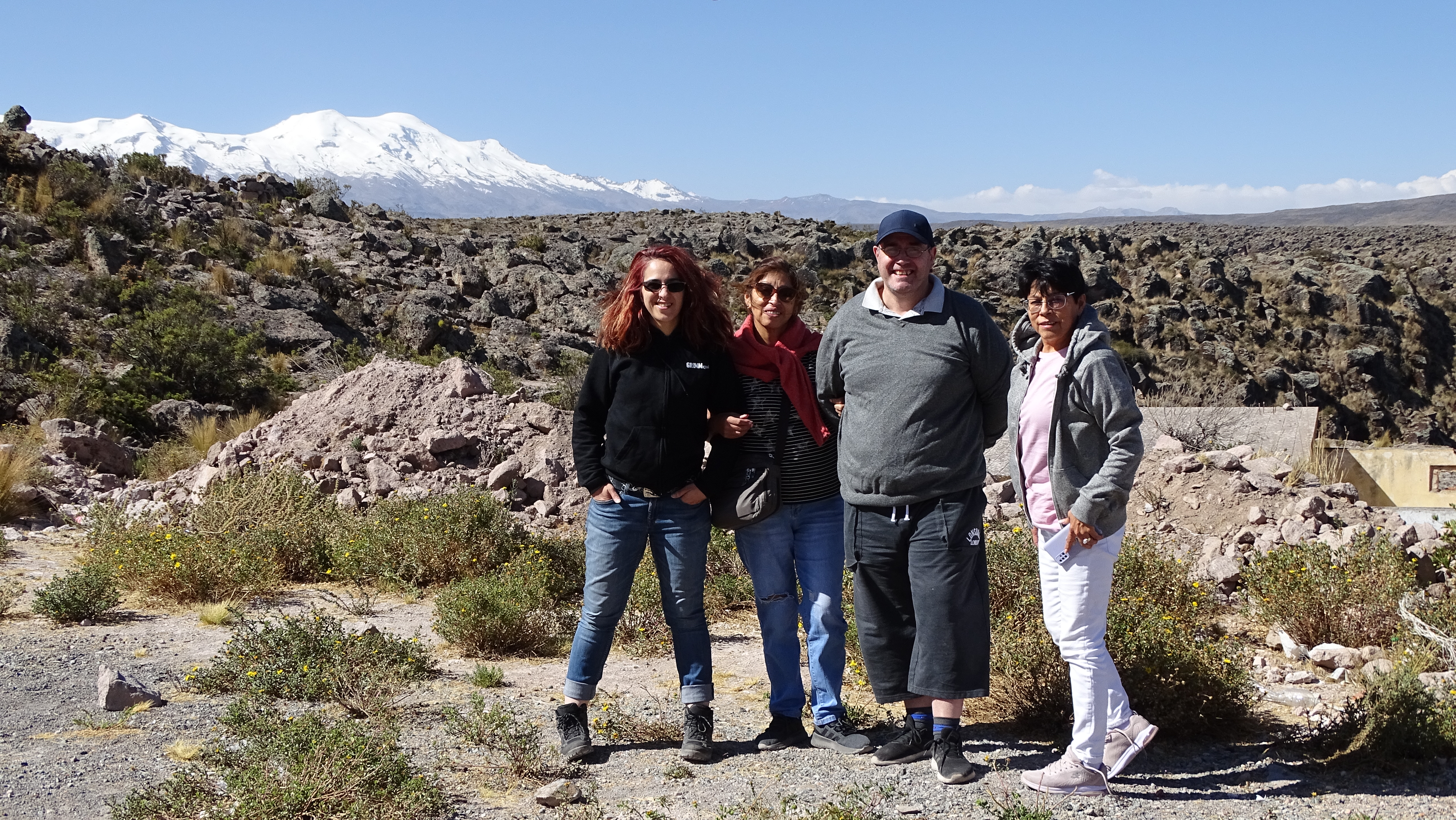
We left Arequipa at 9 a.m.
We passed through El Pedregal and Majes, which we had already visited, as well as Chuquibamba, known for its avocados and cheese. We drove through the 400 km of desert for nearly 8–9 hours, heading toward the snow-capped mountain to descend into the great Cotahuasi Canyon and reach the encircled city. The snow-capped mountain? What am I saying? Coropuna, the highest volcano in all of Peru, known by the ancient name “Apu” in Inca culture. One of the most sacred mountains for that culture. Passing through Chuquibamba, we climbed onto a plateau at an altitude of 4,700 meters; it was cold there despite the sun beating down on the car, and we struggled to breathe due to the lack of oxygen.
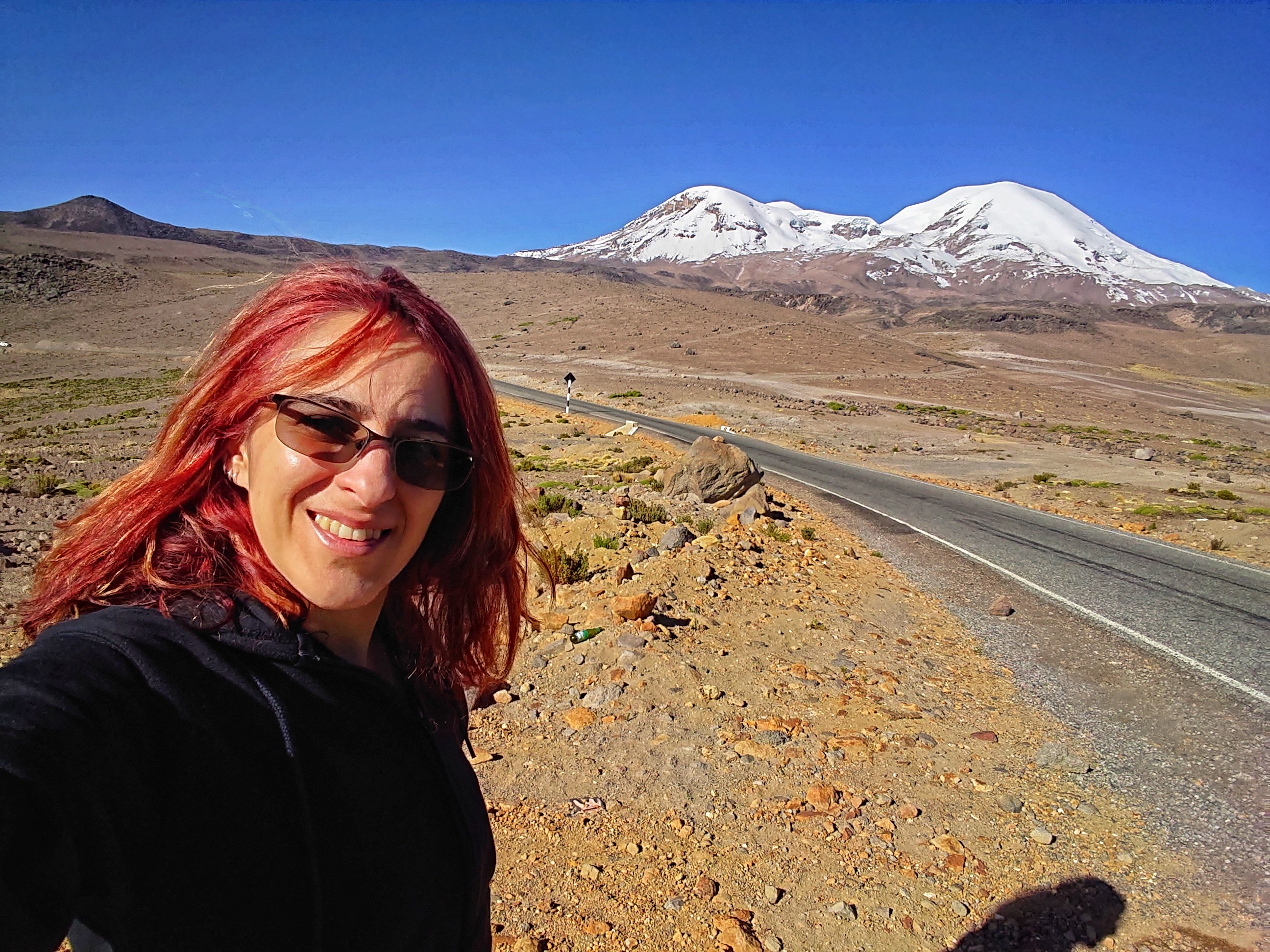
At this altitude, the body feels stressed; you have to stay calm and relax. I’ll admit that coca leaves help in this situation. We didn’t stay long at this altitude, but we did take a photo break. This rocky desert with the volcano on one side and another snow-capped mountain, Mount Solimana, on the other. A breathtaking view. No kidding—you know by now how much I’m drawn to volcanoes! Coropuna stands at an altitude of 6,425 meters; it feels so close and yet so far away at the same time.
These steppes stretching as far as the eye can see, dotted with mountains, are a sight of magnificence for our poor city-dweller eyes, which are used to seeing nothing but buildings.
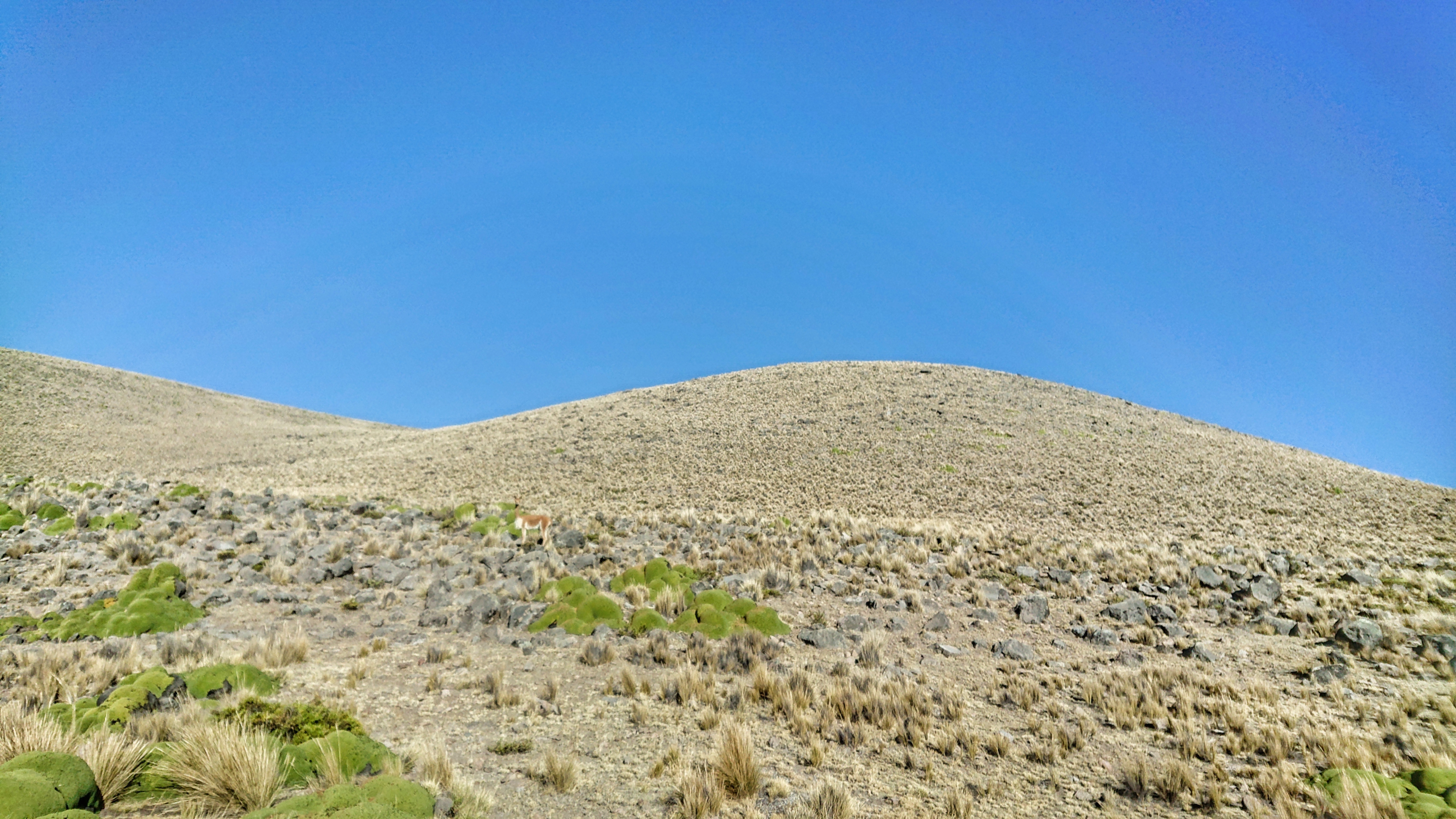
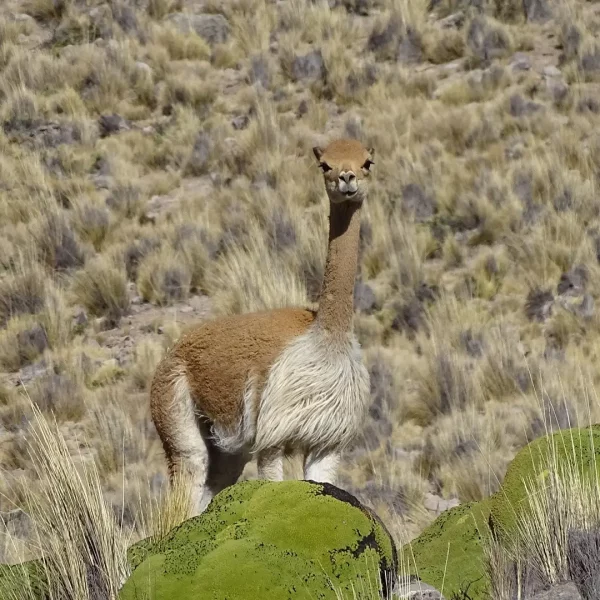
Rounding a bend, we came across a herd of llamas, alpacas, and vicuñas (you’ll find a short video clip at the bottom of the article). Out on this steppe, we stumbled upon these animals in the wild. What a sight!
That said, the twists and turns made us carsick. Our driver—none other than Howard’s father, Senior Fernando—knows the region well since he was born there. You can imagine his driving style under those circumstances.
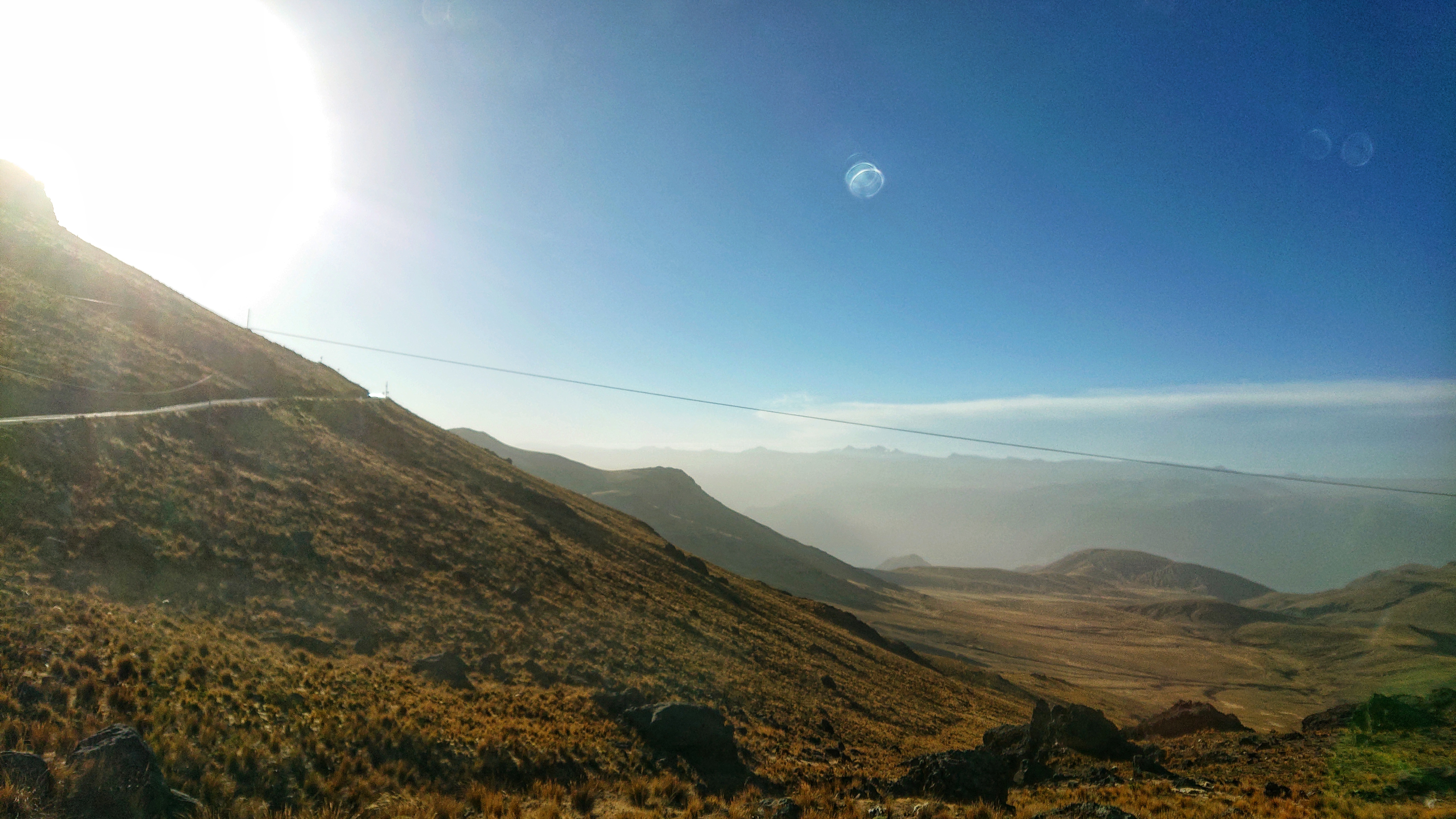
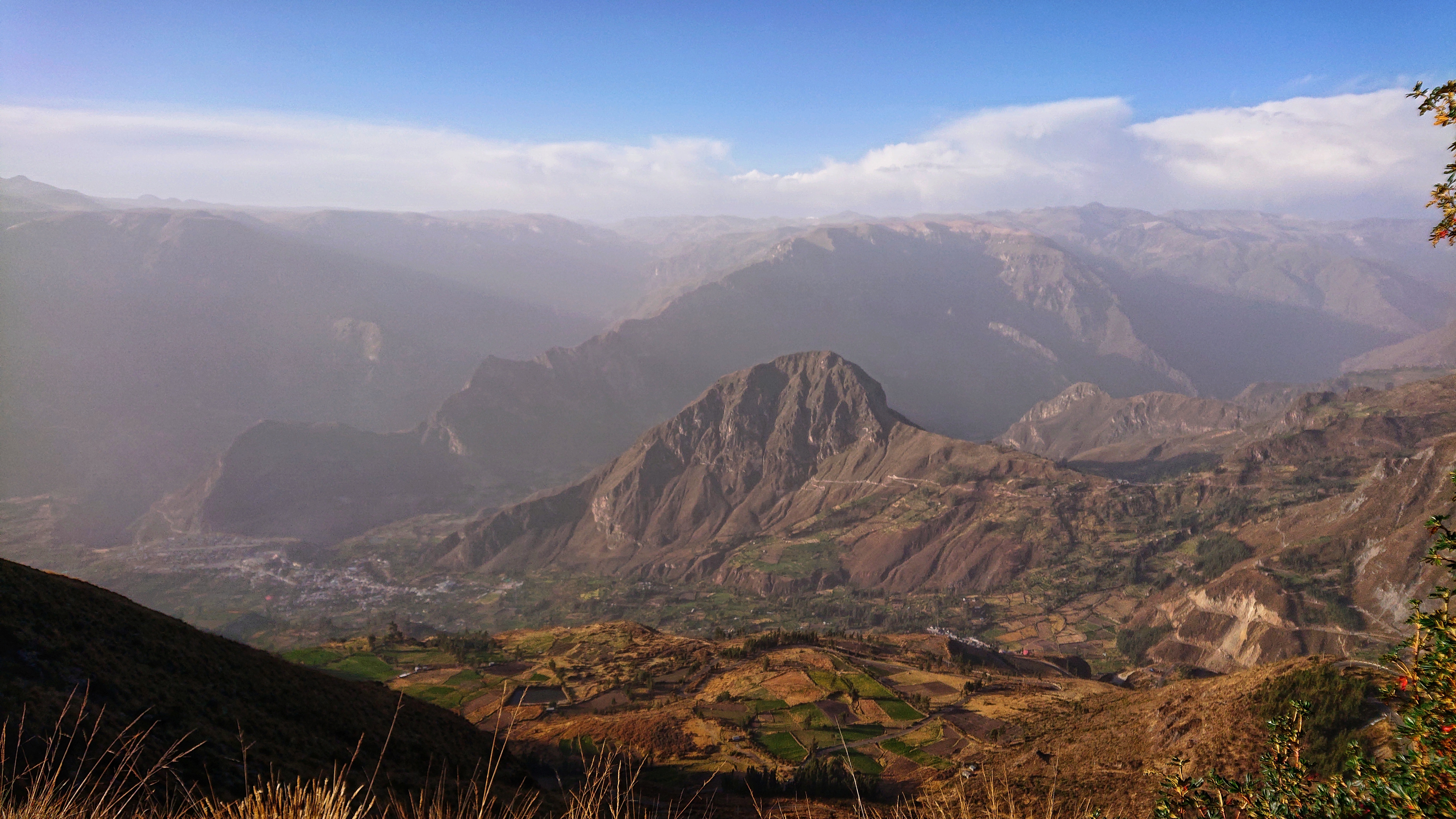
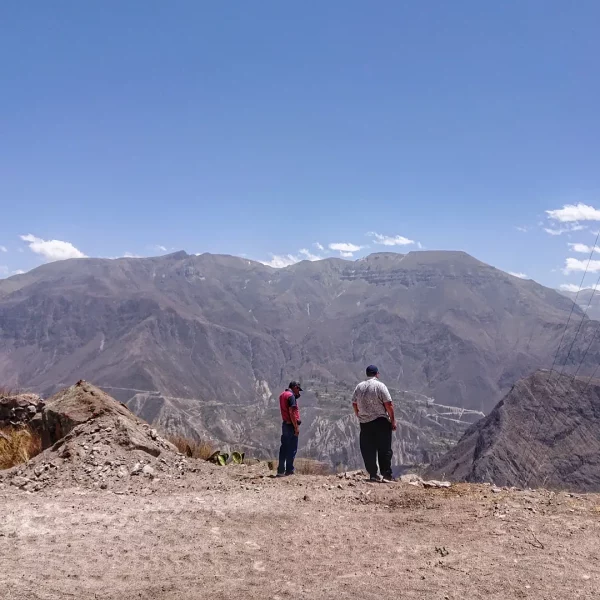
Our horizon grew increasingly distant and became harder and harder to make out until we reached the Cotahuasi Canyon from the highlands. After seeing the arid high plains, the sight of greenery and the terraced plantations clinging to the mountainsides was a pure delight for our eyes. We stayed up there for a little while to admire this exceptional view of a canyon so deep that it made me dizzy.
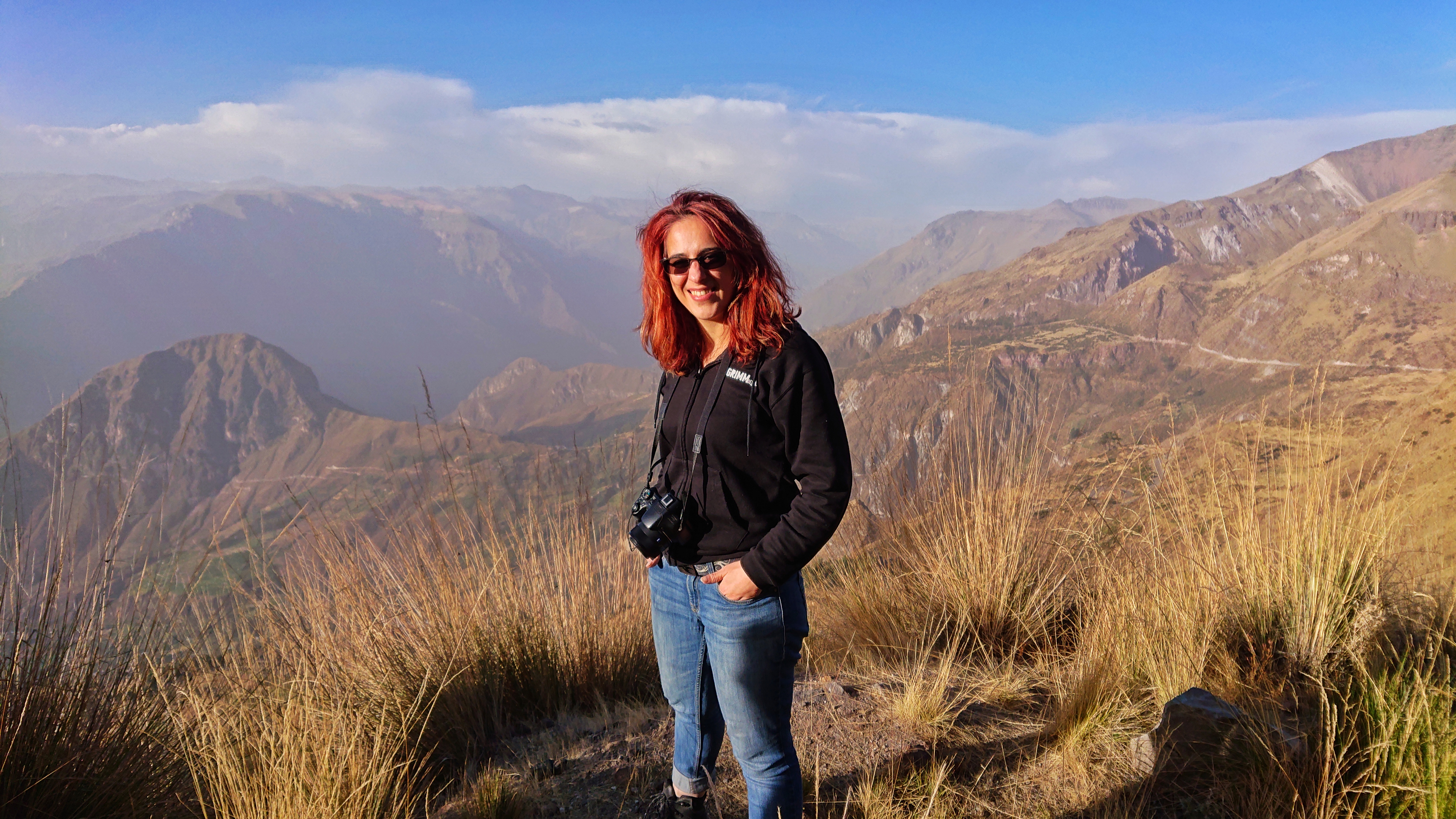
And yes, I’m afraid of heights, but I love that feeling of fear in my stomach that makes me dizzy. Even though I don’t dare get too close to the edge, since I’m not sure my legs won’t give way or that I might lose my balance—which happens to me from time to time. Yes, it happens to me, and that’s why I don’t get too close to the edge. Although, come to think of it, I’ve noticed over the past few weeks that my episodes of dizziness are becoming less and less frequent. Strange, isn’t it?
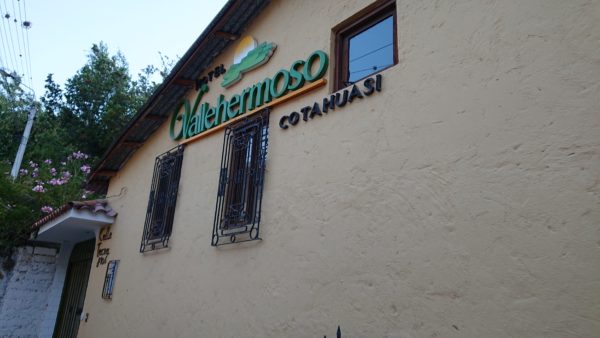
We arrived at our hotel, the Vallehermoso, around 7:00 p.m., just in time to see the last rays of sunlight fade and enjoy the hotel garden. We also discovered that the hotel belongs to the Howard family. No sooner had we dropped off our things than we set out again to explore the village. We looked for a place to grab a bite to eat and then go for a walk. I did notice, though, that the village quieted down pretty quickly—it was barely 9:00 p.m., and there wasn’t a soul in sight.

In the morning—or rather, I’d say, at dawn or sunrise—we have breakfast so we can set out on the hike, which is best done while the sun isn’t yet high over the valley. Our driver takes us to the most beautiful waterfall. We drive a short stretch along a road through the mountains—a road built into the mountainside—and then we begin our hike. It’s already starting to get hot, and it’s barely 8 a.m. The trail is marked by stones painted white. I have to admit that it’s highly recommended to follow them, because as soon as I strayed from the marked path, I slipped on the pile of rocks and dust.
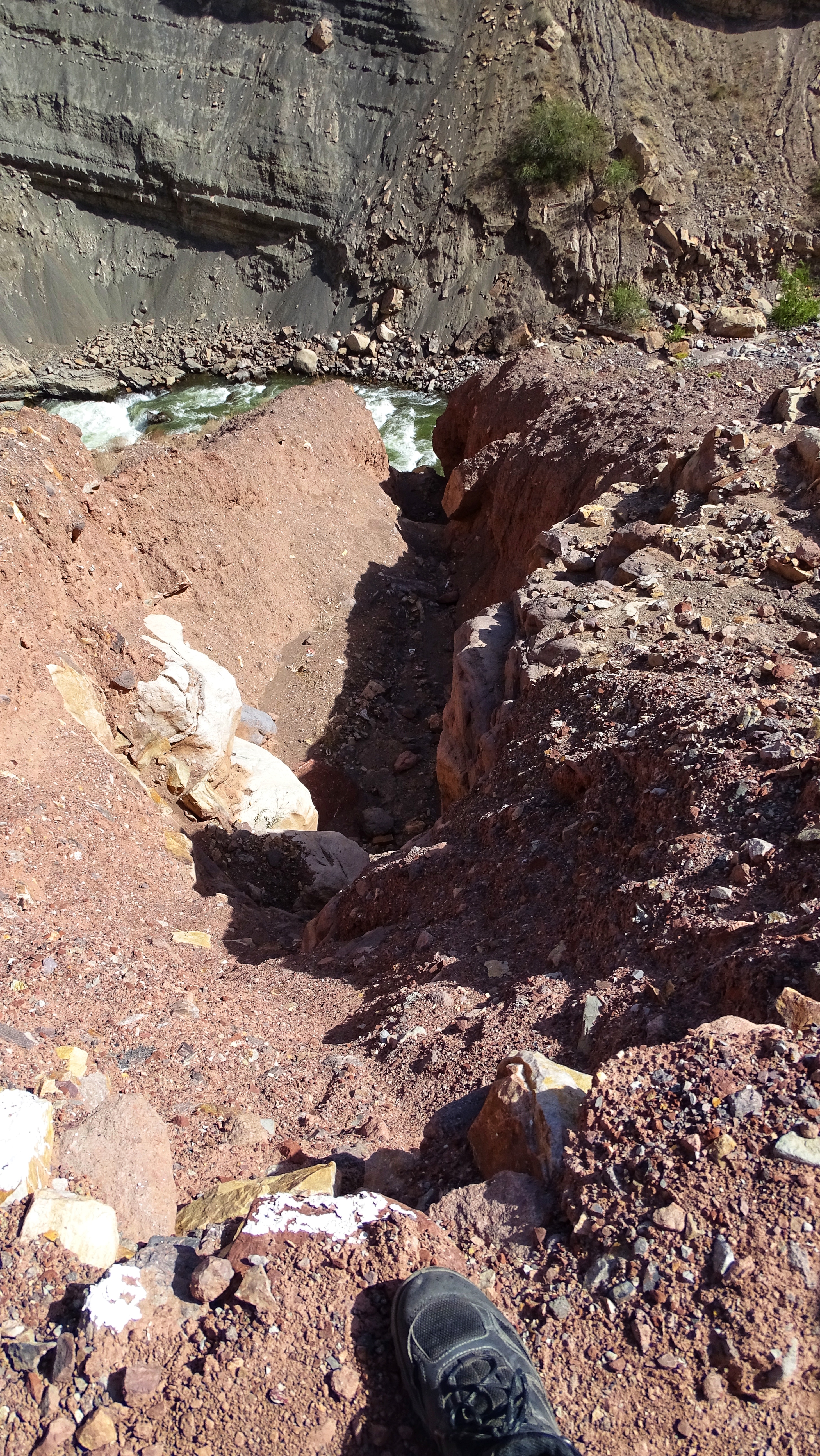
We could hear the river a few meters below us. The water flowing and crashing against the rocks—such a soothing sound for people who had endured the drought in Arequipa and El Pedregal. We really wanted to jump into the water—the sight of it was so refreshing.
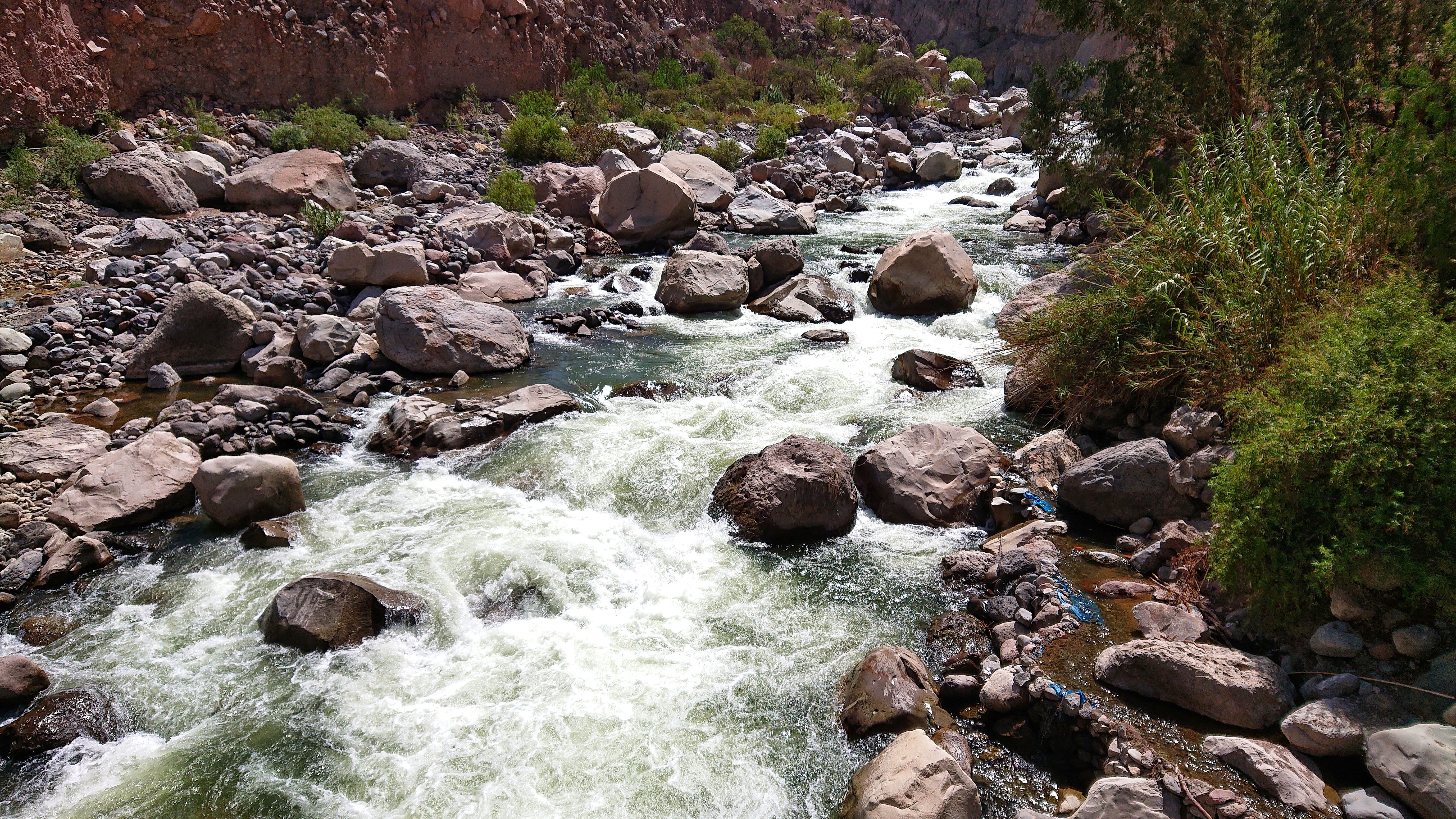
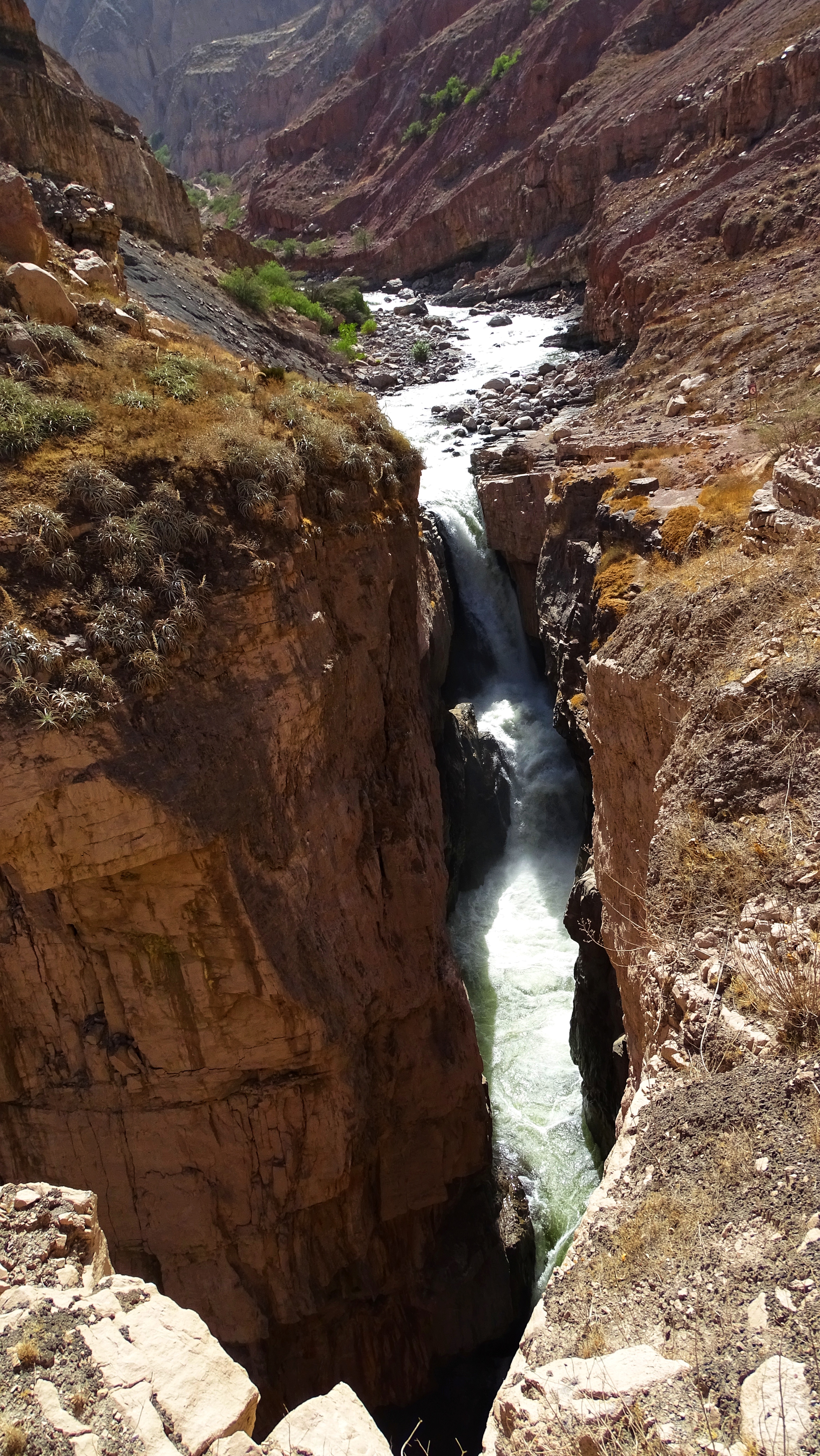
We continued like this for nearly an hour before climbing slightly back up toward the waterfall. That’s when we realized the canyon was even deeper than we’d imagined. The waterfall is at least ten meters deep, and we could barely make out a second waterfall cascading even lower. I really feel like this canyon is much deeper than the Colca Canyon I visited in 2019. If you haven’t read about my previous adventures, I invite you to scroll down to my posts about Peru (orhere).
On the way back, we toured Howard’s family’s properties and farmland. When we pulled up in front of the family home, I had another feeling of déjà vu.
I haven’t told you yet that for the two weeks leading up to my departure, I had a lot of dreams, some of whose images or sequences have remained etched in my memory. I have to say that I’ve been paying close attention to my dreams for a while now. But since I arrived in Peru, I’ve frequently had feelings of déjà vu—far too often, in fact. I don’t know what that really means.
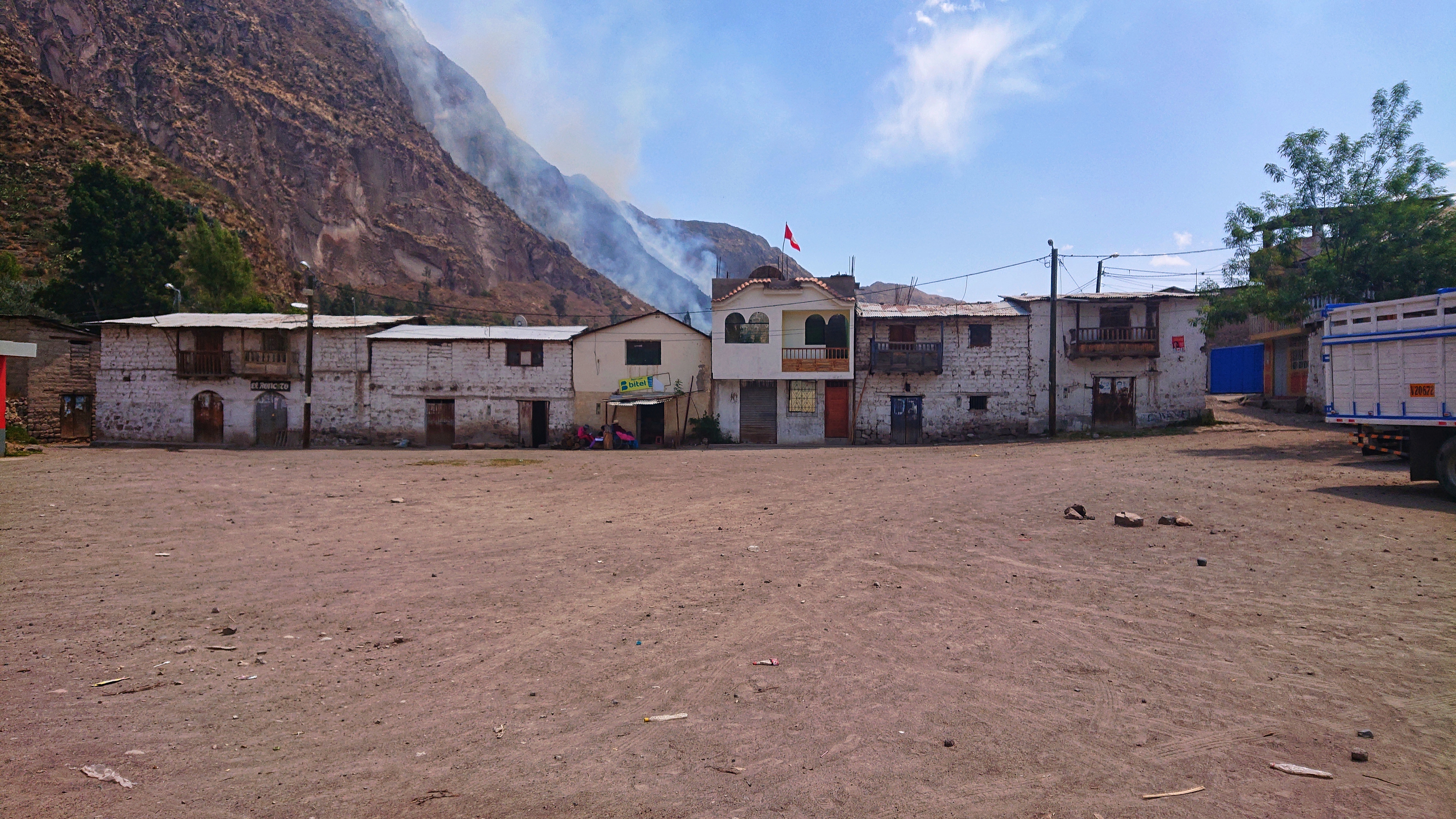
I know that the village square where Howard’s grandparents’ house is located—I saw it in a dream; I’m absolutely certain of it. Over the course of two weeks, places I’d never seen or people I’d never met—I felt like I knew them, and it wasn’t just a vague feeling; sometimes it was a sequence lasting several minutes that I’d relive.
Take the example of this town square: at the exact moment we got out of the car, I took a photo of the square and Erika’s aunt—whom I hadn’t met before leaving for Peru—who said, “Oh, that’s the town square,” and at that very moment, I think about how deserted and spacious it is, and how it resembles a Western movie set as I let my gaze sweep across the entire square—the colors, the church, and the graffiti!
Yes, I dreamed it. I know it. I had that feeling of déjà vu in Howard’s apartment, but also in Mollendo, when I was messaging Erika while looking for a place to stay. I know I dreamed that, too. It’s a feeling that’s becoming increasingly strange and frightening after all these moments. Before this trip, I used to have feelings of déjà vu, but not as frequently and not so filled with doubt. It’s weird, though.

We ended up having a light merienda before heading to a natural hot spring with water over 40 degrees, which originates from the Coropuna volcano and is filtered through the mountains of the canyon before reaching this spot. As a result, there was no smell of sulfur, unlike at some natural springs.
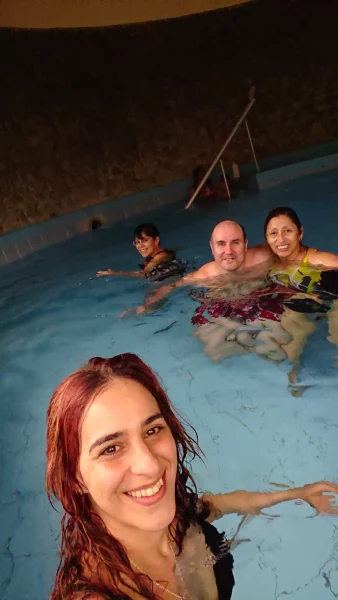
We’d been dreaming of it; we took a dip and rehydrated our skin, which had been parched by the dry weather of the past three weeks. We stayed there until nightfall. It did us a world of good and left us exhausted at the same time.
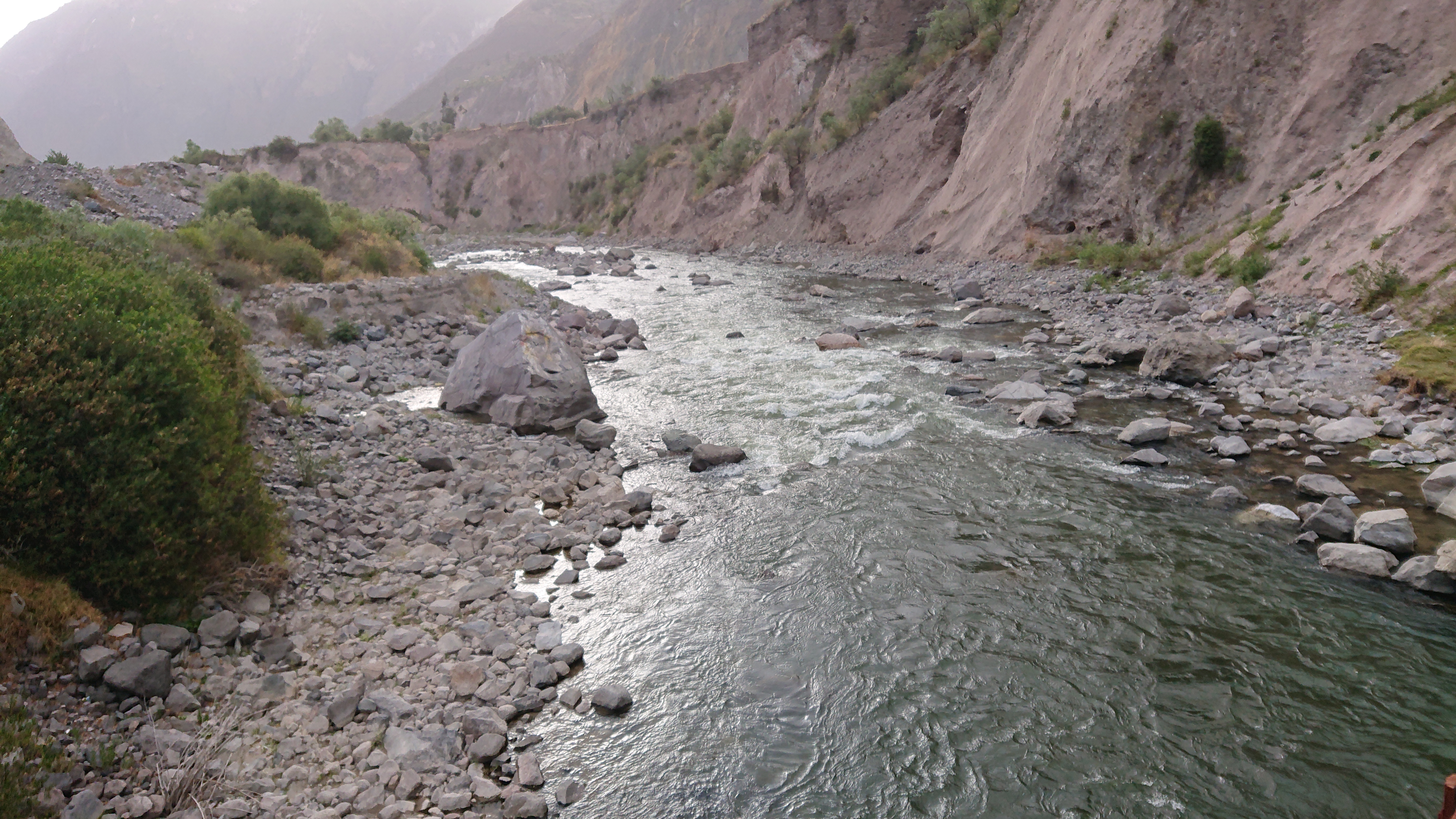
As night fell, we had dinner at a traditional restaurant that served trucha—trout from the river we’d followed that morning. It was absolutely delicious.
This morning, we had to get up at 4:30 a.m. because we had an appointment in Arequipa at 2:00 p.m. for Howard’s birthday. We ordered breakfast for 5:00 a.m., and by 5:30 a.m., we were on the road. The drive back was exhausting.
For Howard’s birthday, we went to a restaurant that served quite a few Peruvian dishes. But as always, the portions were so huge that two of us could have shared each dish. In the evening, we went to Howard’s cousin’s house for dessert. We said our goodbyes—it’s our last night in Arequipa. Tomorrow evening we’ll fly to Lima, and Howard is heading back to the mine for the weekend.

Below you’ll find the video and a photo album of Cotahuasi.
Yours truly, Ninve,
[Best_Wordpress_Gallery id="42" gal_title="Cotahuasi Canyon"]


You May Also Like
Photo Album – Kalibo to Boracay Trip
High above, the ramparts of the old city