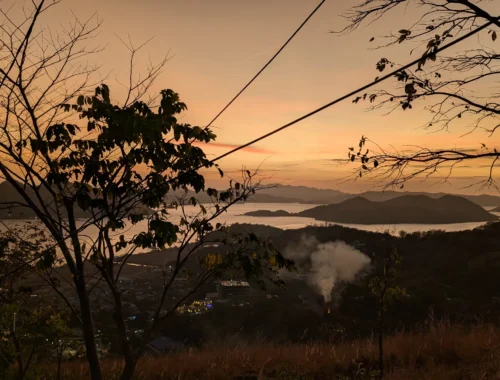
Let's head to the jewel of Italy
We’re heading to the Amalfi Coast—Sorrento, to be exact. We’re leaving earlier than planned for a nearly 10-hour night drive. It’s a tedious drive because, as we approach Naples, the Italians drive terribly—they never stay in their lanes, and it gets even worse! You’d think they were all under the influence of alcohol. The last two hours were absolutely grueling. We kept ourselves going with shots of strong coffee and energy drinks so we could arrive safe and sound—and, most importantly, wide awake!
In Naples, I catch a glimpse of Vesuvius in the distance. I’ve read so many stories about the eruption that engulfed the surrounding villages and the infamous Pompeii in 79 BC. My favorite book on the event will always be the one by Edward Bulwer-Lytton, published in 1834: LThe Last Days of Pompeii.
I can’t wait to visit the ruins of this ancient world frozen in time and lava.
We arrive on the coast between Sorrento and Lubrense to relax on a lounge chair and get some sleep before checking into our lodging: Casa Pendola.


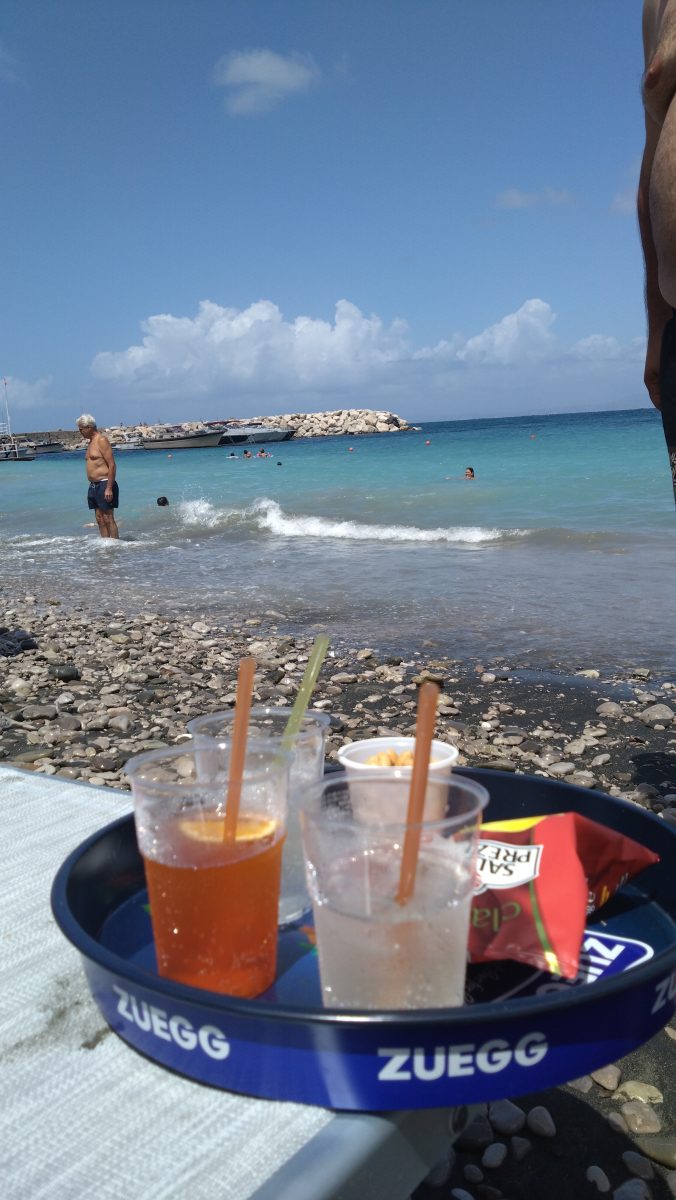

Around 2:00 p.m., after eating, we head inland to our lodging. We spend a little time there, meet the owner, who tells us there’s a pool—which we hadn’t seen mentioned in the listing—and goes over a few rules regarding breakfast and check-out. Then we headed back to Amalfi for the evening.

Amalfi was founded either by the Melfi family or by the Romans, but it’s clear that the earliest documents mentioning the city date back to the 6th century. The city grew in strength and power fairly quickly thanks to its maritime trade, which focused primarily on slaves, as well as grain and salt. It exported wood to Egypt and Syria and imported silk.
By the 9th century, Amalfi merchants were already using gold currency, while most of Italy was still operating on a barter economy.


Completely exhausted, we head back to our lodging to crash right away!
Positano
After waking up and having breakfast super early, we hit the road for Positano.
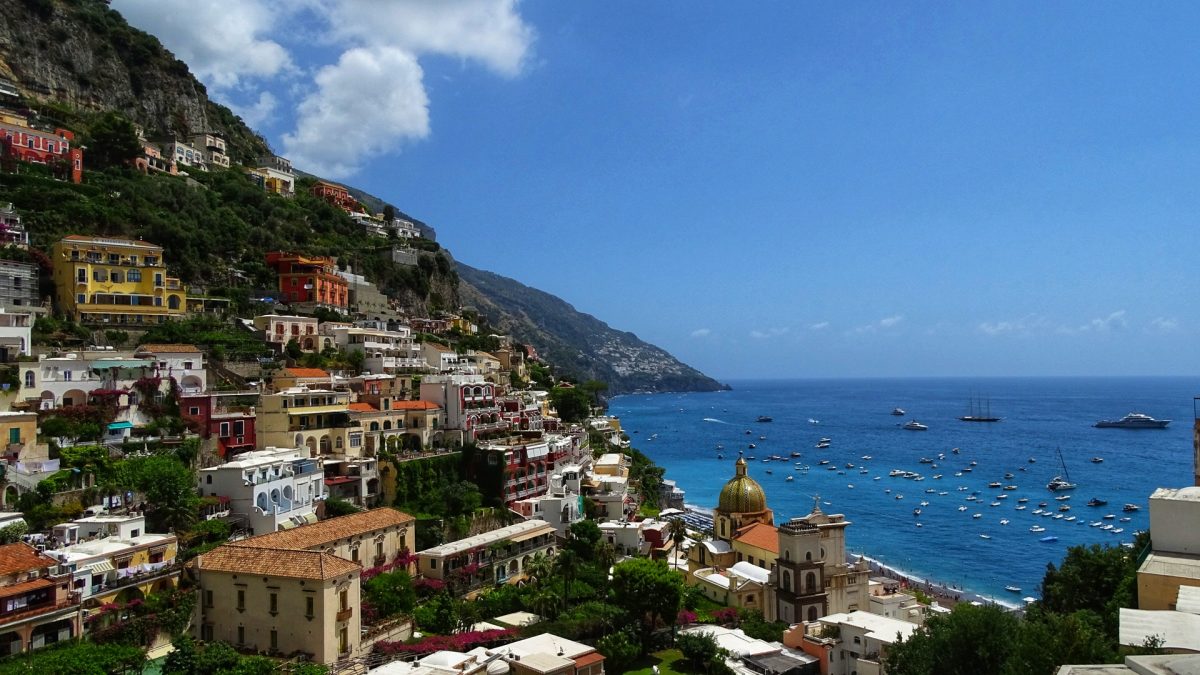
When you think of the Amalfi Coast, you think of all its coves and colorful houses perched high on the mountains, overlooking the sea and all its creatures. It’s here, in these waters, that ancient mythology tells us Odysseus encountered the sirens.

After walking in temperatures around fifteen degrees against a mountainous backdrop, the warmth and the salty sea air do us a world of good. We’ve found another way to recharge. Despite the crowds, we still manage to find some quiet spots.

One small downside: parking spots are scarce and, by definition, very expensive. Expect to pay at least €50 for 2 or 3 hours, during which you have to leave your keys so they can juggle the car rotations.



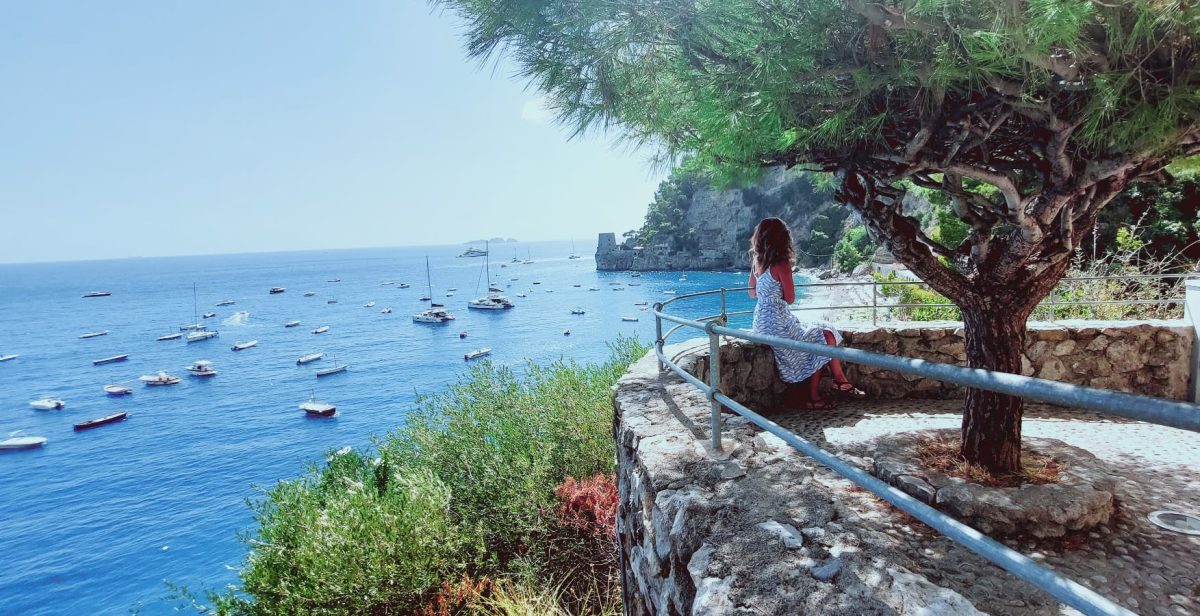
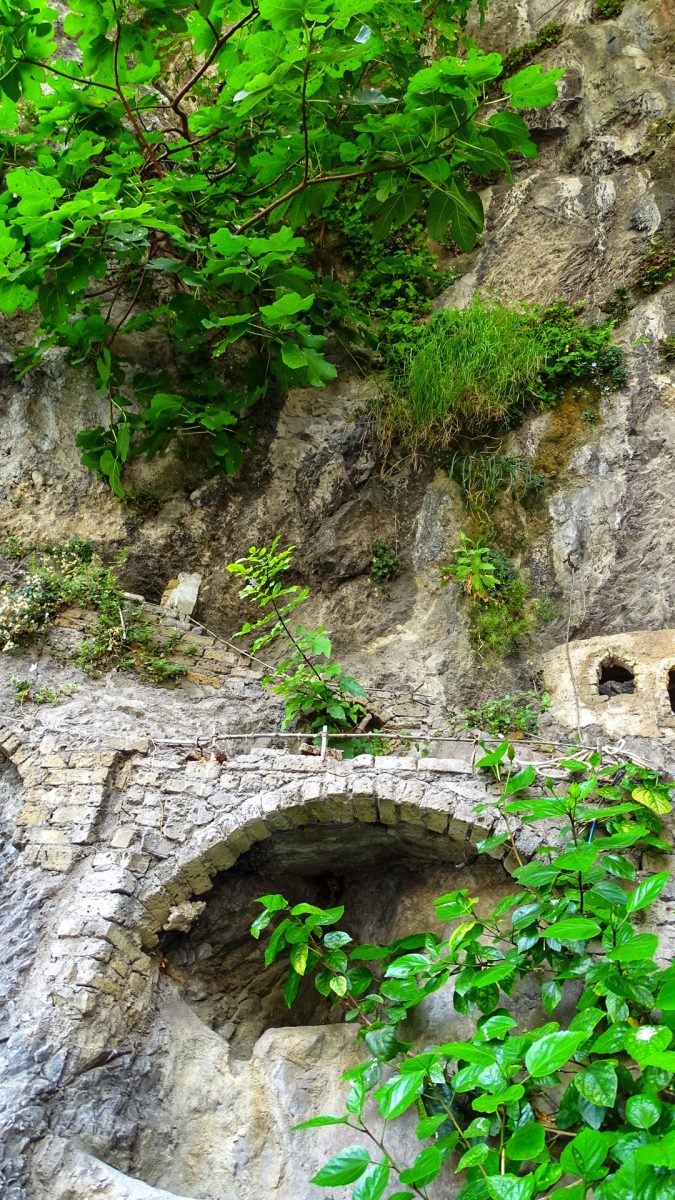


It’s said that Positano was first settled during the Paleolithic era, but mythology tells us that the town was built by Poseidon out of love for a nymph.
After a Roman occupation that led to the town’s development, a Norman occupation followed in the 11th century, then came an Aragonese invasion, and finally raids by Saracen pirates and, later, the Turks.
To defend themselves against repeated pirate raids, the people of Positano built watchtowers, including those at Fornillo, La Trasita, and others further inland.


Later, in the 17th century, trade in spices and silk (among other goods) flourished in the region thanks to Positano’s fast ships. This led to Positano’s most prosperous period, the 18th century, as evidenced by the Baroque villas with terraces overlooking the sea that characterize that era.

After this long day of walking, climbing up and down the cliffs, and passing from coves to terraces, it’s time to head back, because tomorrow we have a date with Pompeii.
See you soon,
Ninve


Lake Braies, the majestic

You May Also Like
A short walk away from the city
Aplao, the Fertile Valley