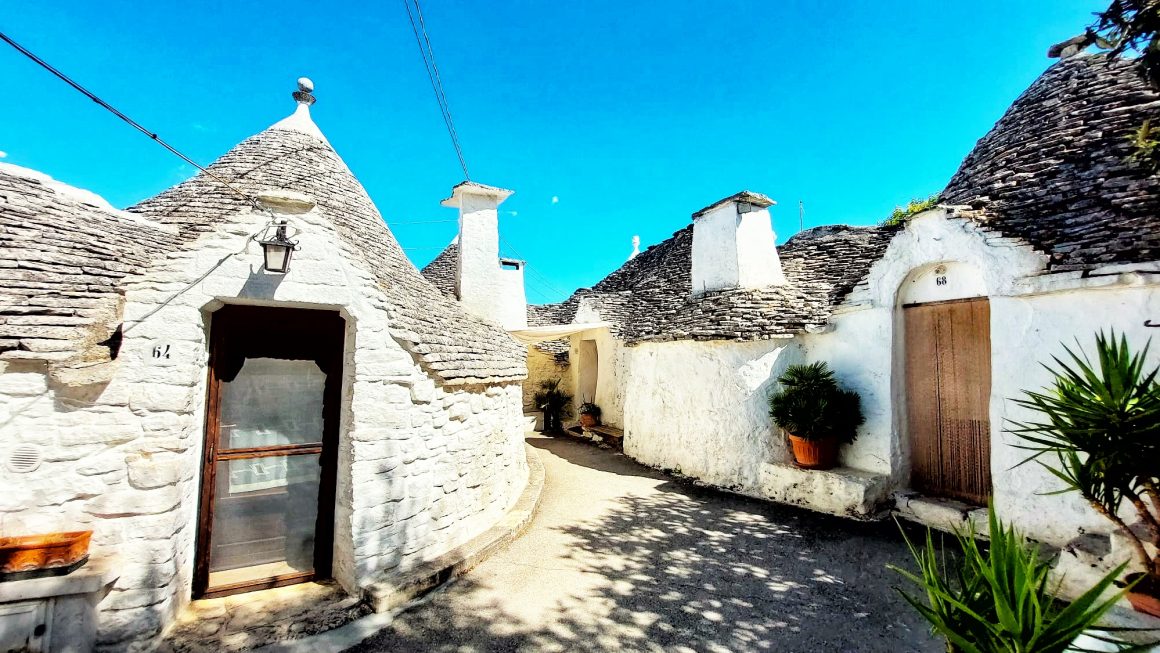
Alberobello and its trulli in Puglia
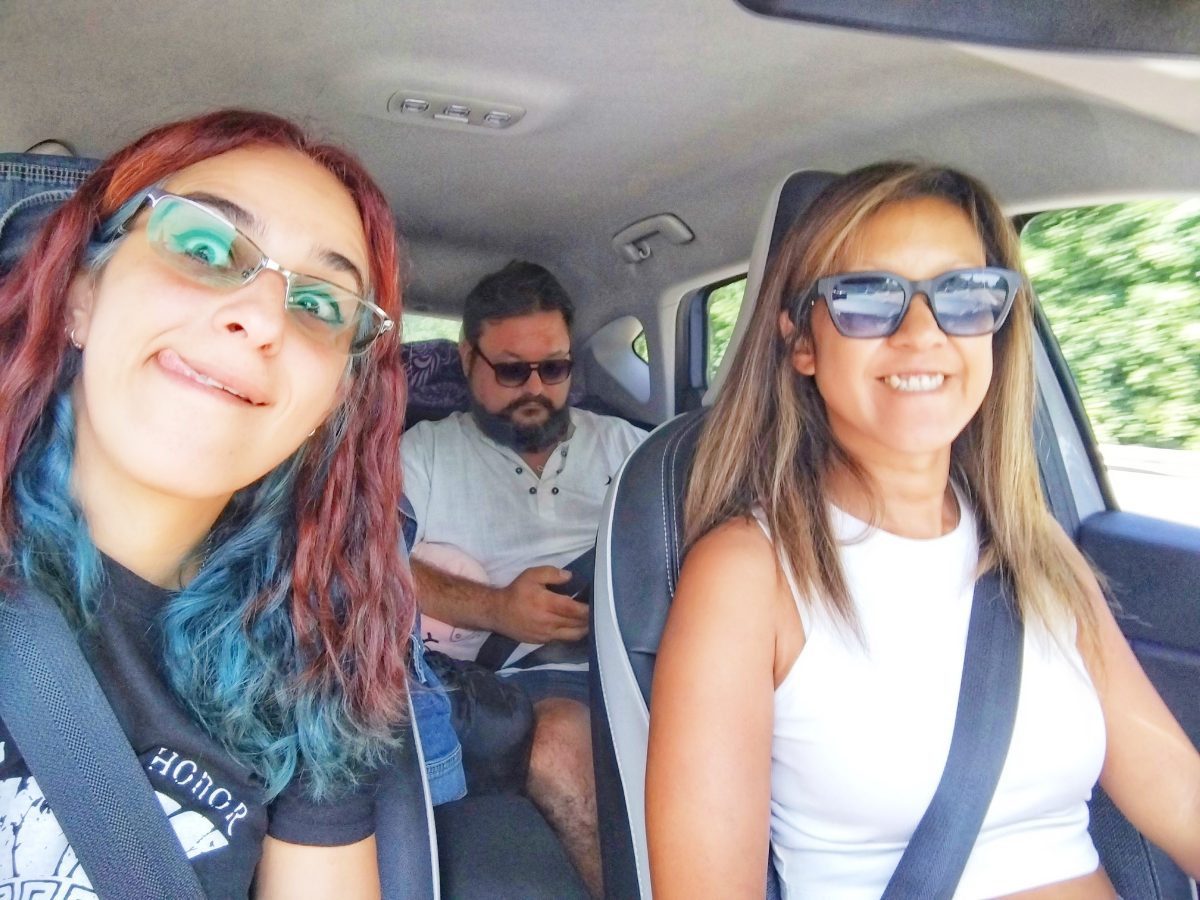
We hit the road early this morning to head down to Puglia,
With another ten hours or so under our belts, we realize we’ve bitten off more than we can chew with our travels; fatigue is building up and really setting in.
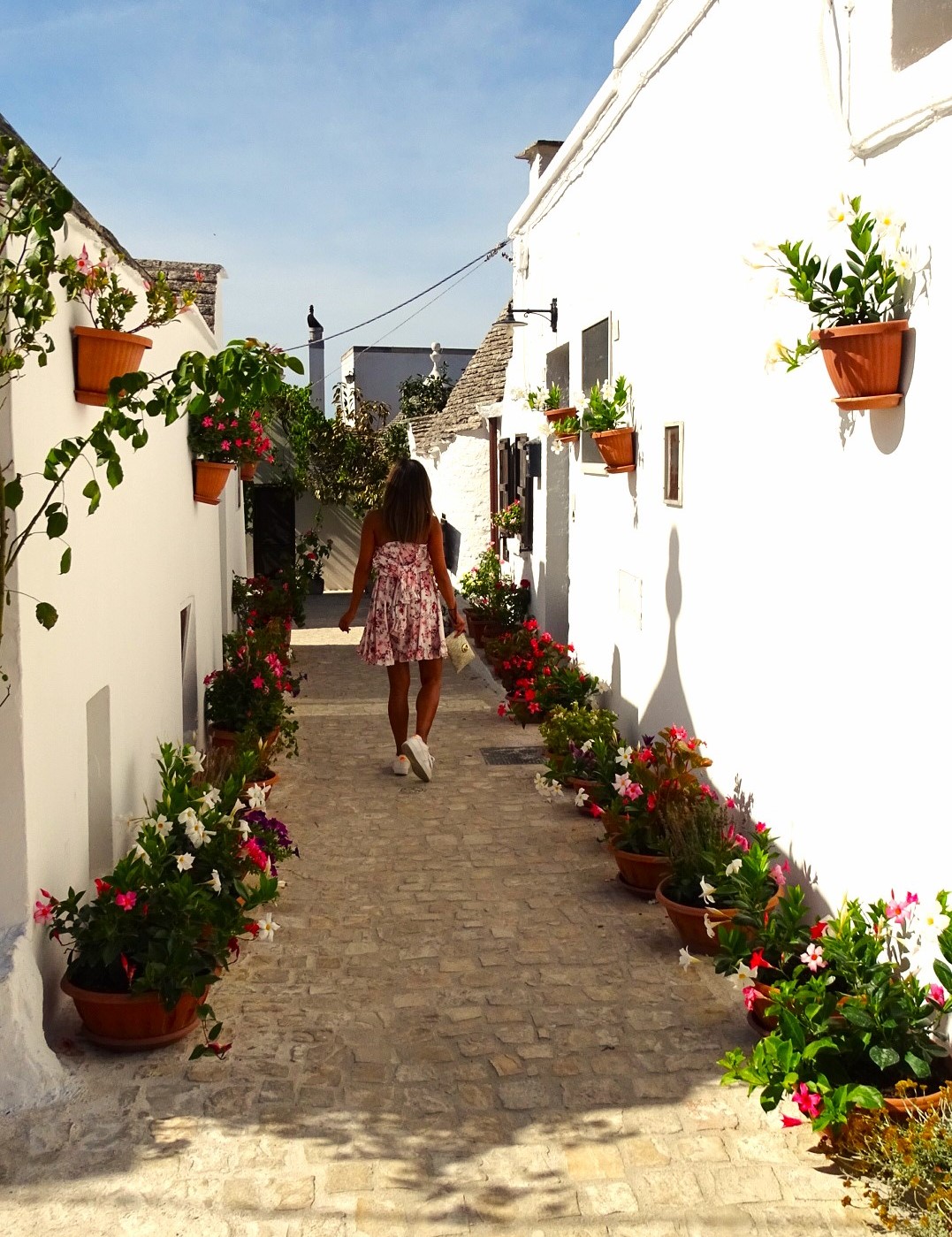
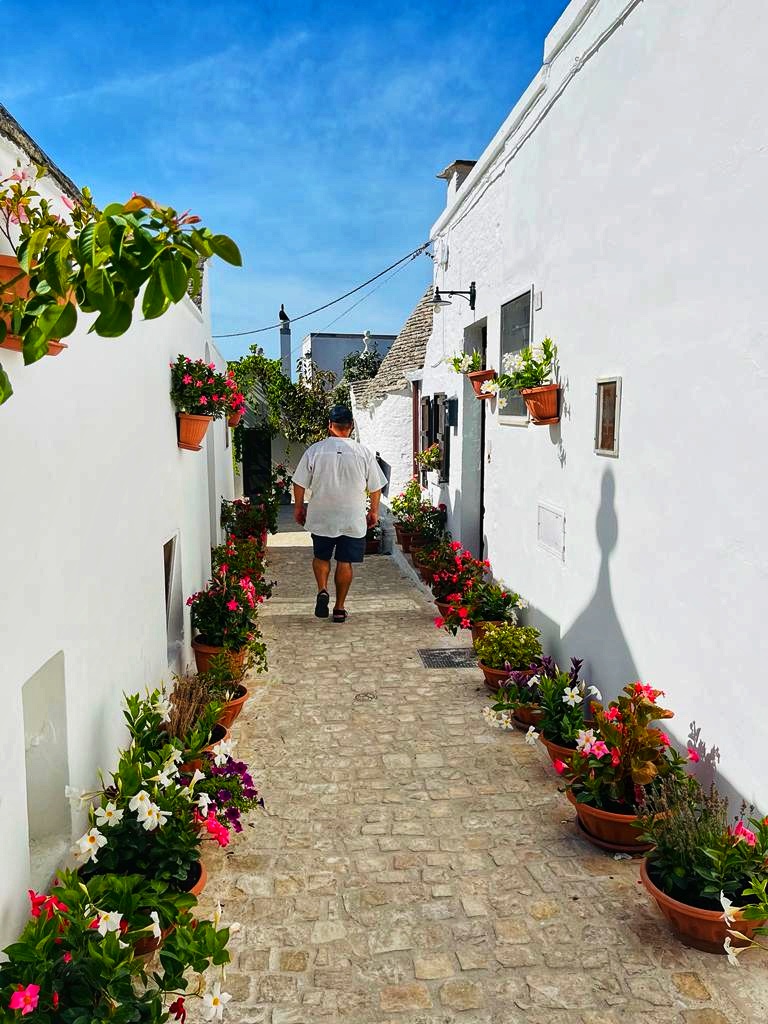
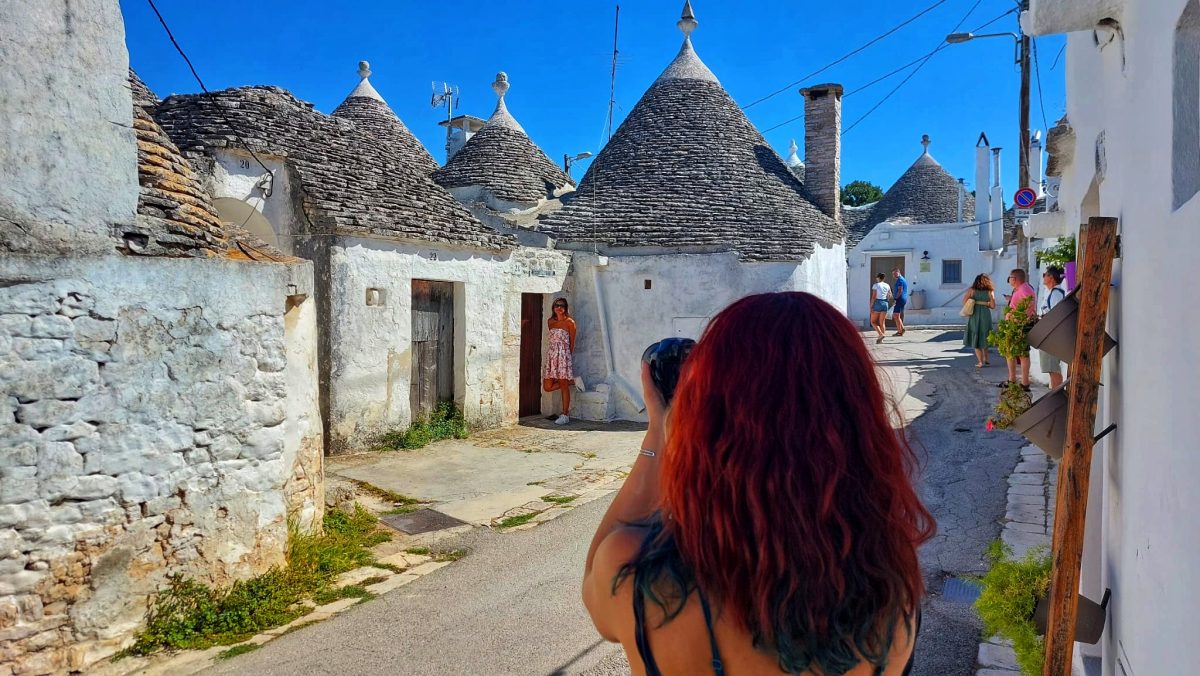
After this long drive, we arrive in Alberobello and its famous village of trulli—tiny white houses with pointed roofs.
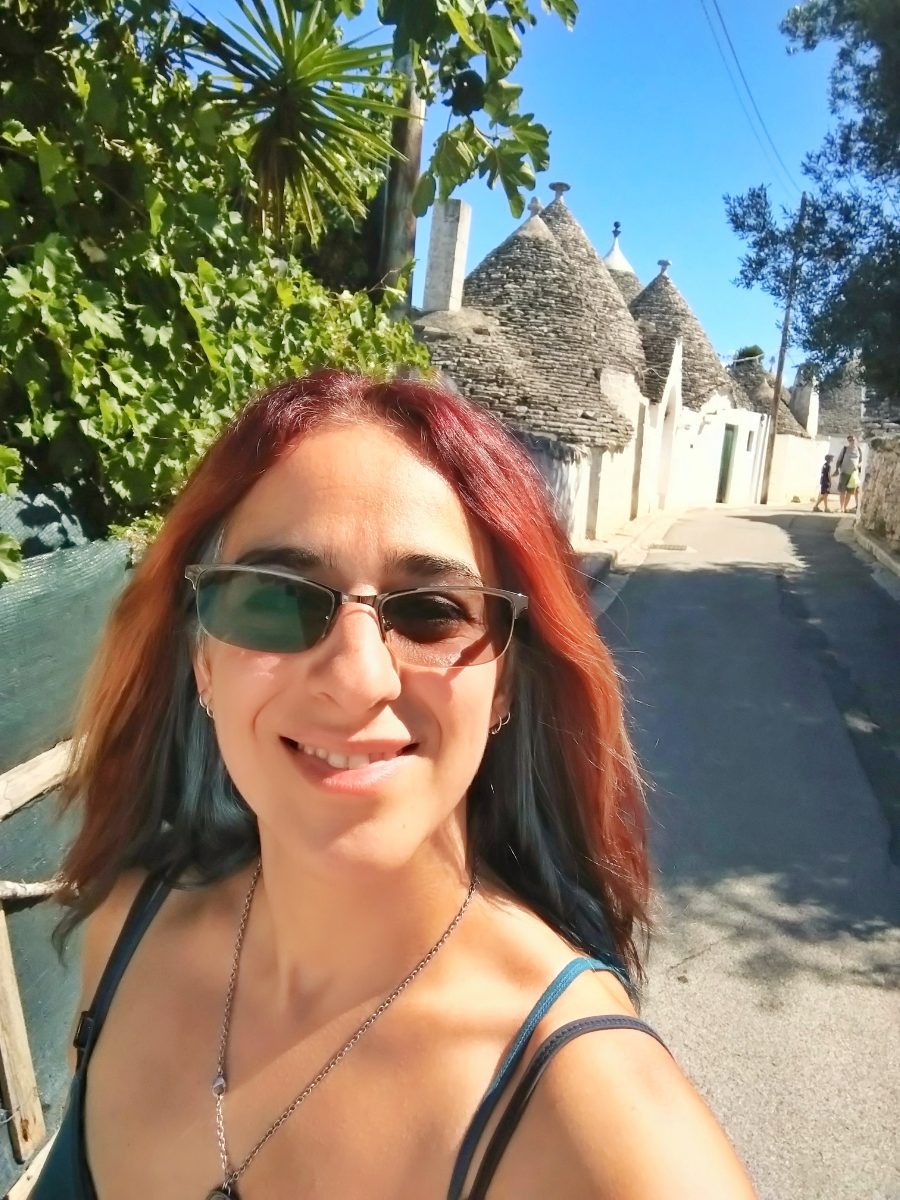
The trulli are dry-stone dwellings, typical examples of mortar-free construction—an ancient technique dating back to prehistoric times.
The dwellings, topped by their conical roofs, are built with limestone pebbles gathered from the surrounding fields.
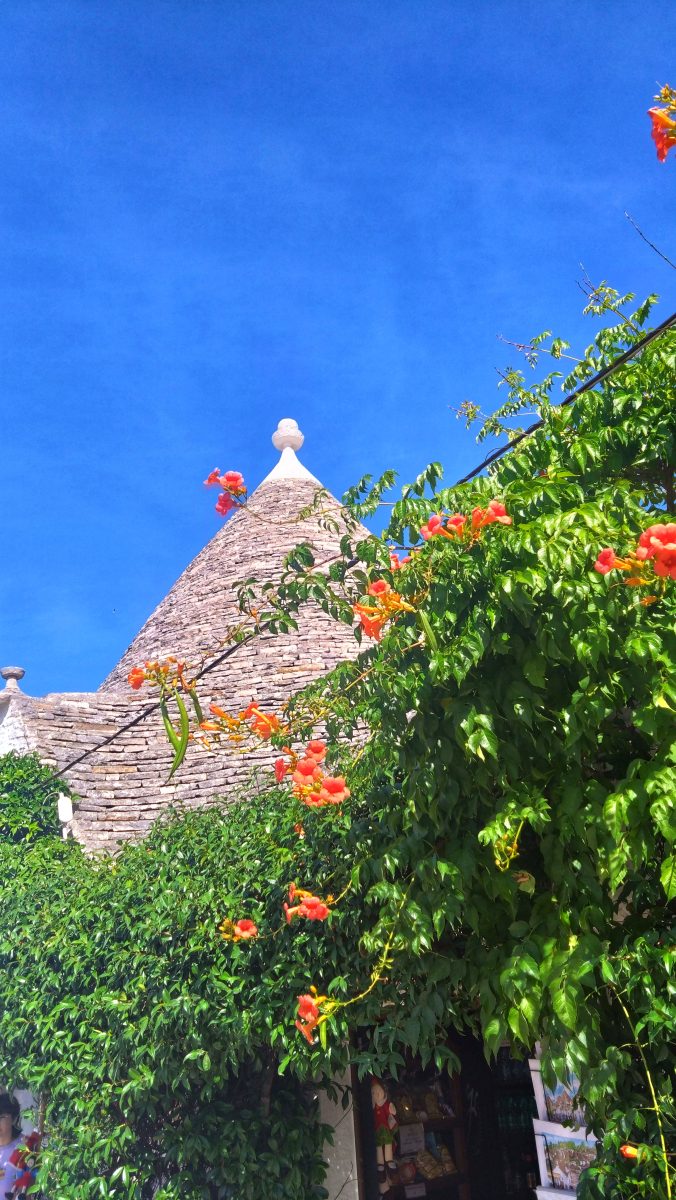
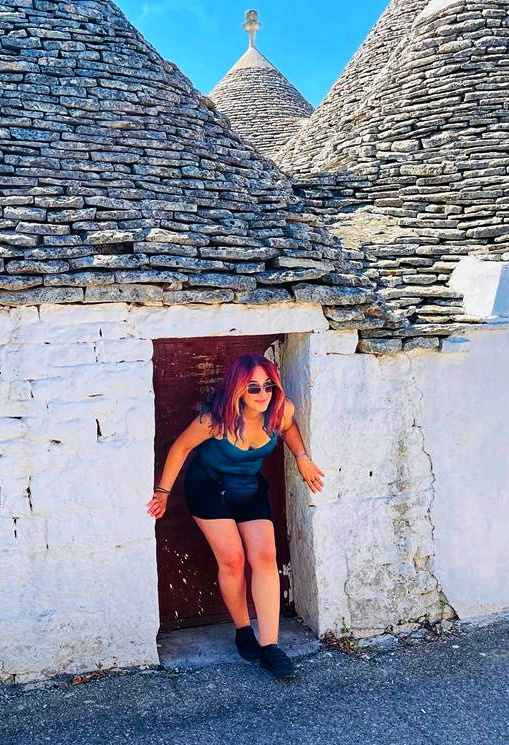
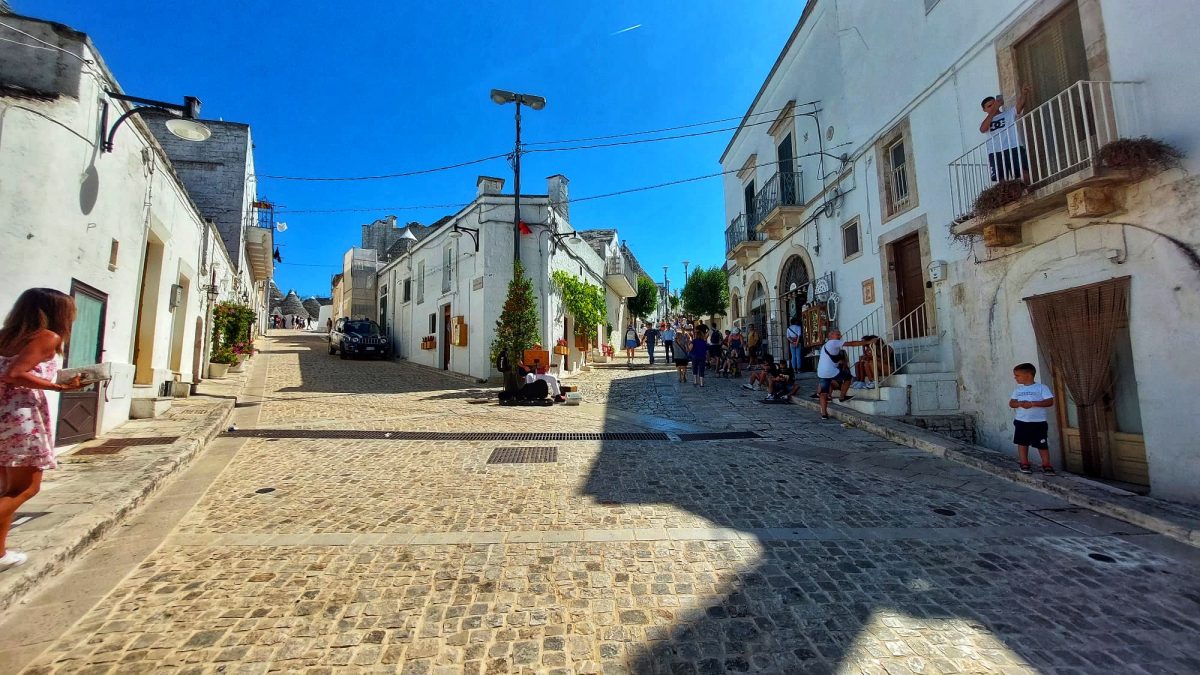
The town center is home to about a thousand trulli. The main street is a shopping street lined with numerous souvenir shops. I find this a shame because the village seems to offer nothing but the same items over and over. I would have preferred to see accommodations available to both tourists and villagers.
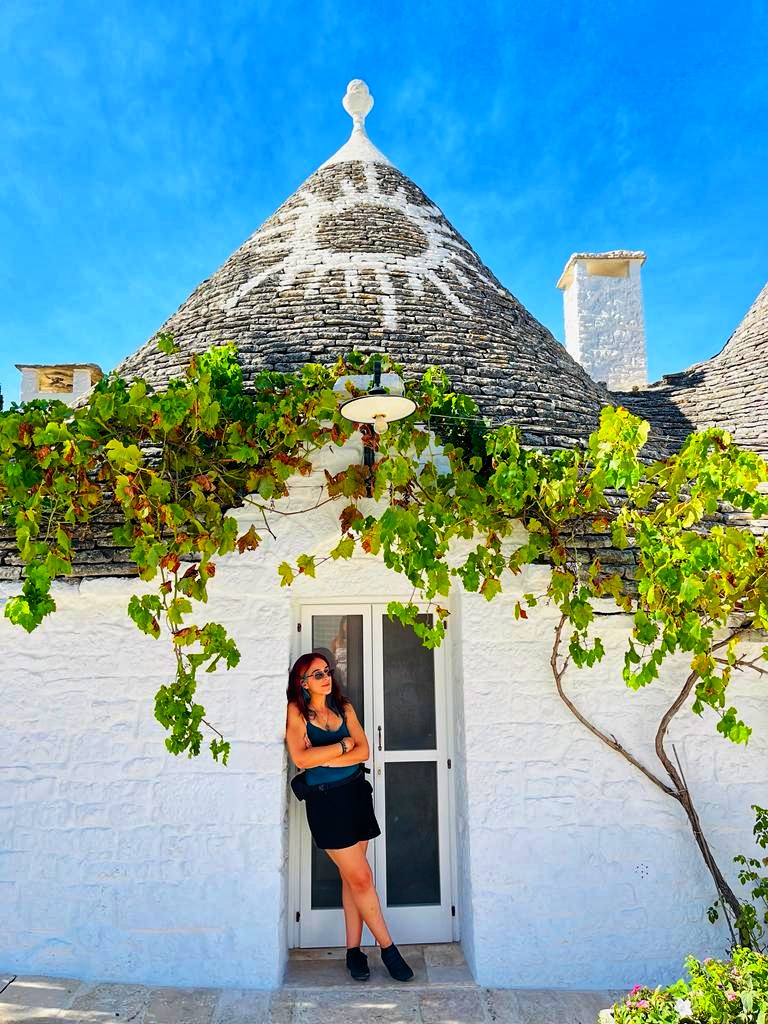
The origins of the trulli are believed to date back to the 15th century. From what I’ve read on the subject, historians are divided on the reasons that led the local inhabitants to adopt this building style, as well as on the mysterious symbols adorning the roofs. Alberobello and its trulli have been designated a National Monument of Italy since 1930 and are part of UNESCO’s World Heritage Sites.
A Bit of History
Toward the end of the 15th century, humble peasants were granted permission to develop and cultivate the fertile lands of what would become Alberobello.
For shelter, these poor souls could build only with tree trunks, branches, and mud.
But these structures offered little protection against the harsh winter weather.
Fed up, it was not until the mid-16th century that they were finally granted permission to build permanent structures—on the condition that they use no lime and that the construction be dry-stacked. The local lord argued that if the peasants were unable to pay their taxes and/or debts, their homes would be demolished—a task made all the easier since the stones were simply stacked one on top of the other.
The trulli were born. The name derives from the Latin *turris* and the Greek *torulos* or *trulla*. This name is reminiscent of the towers of ancient castles. (source: Wikipedia)
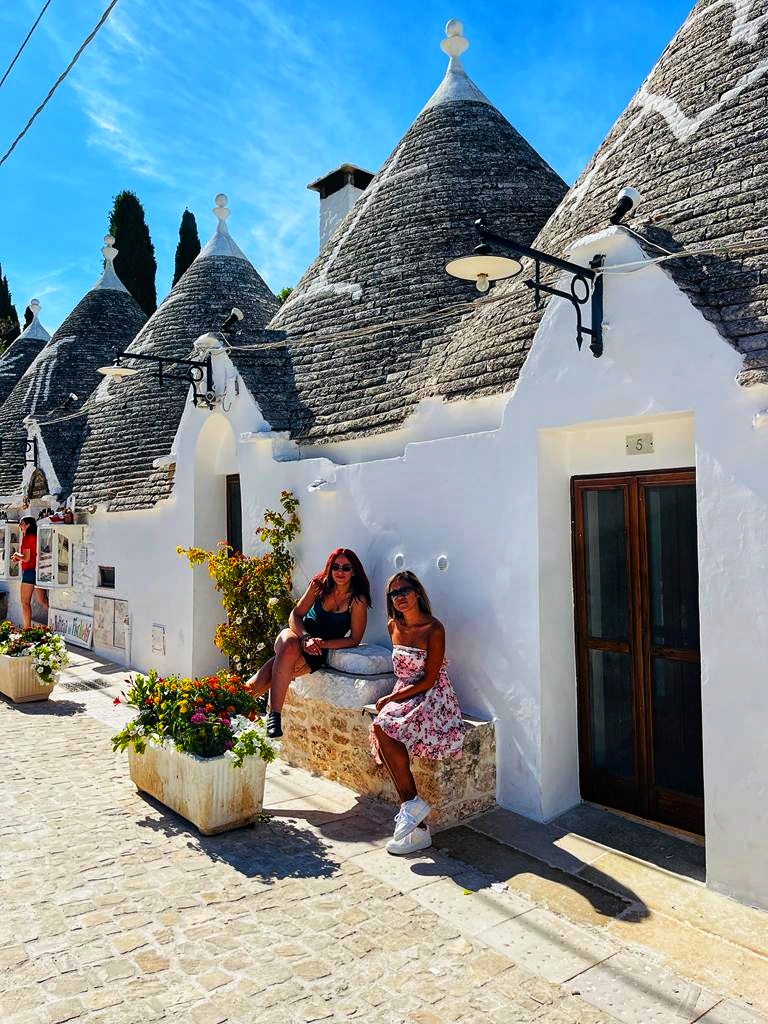


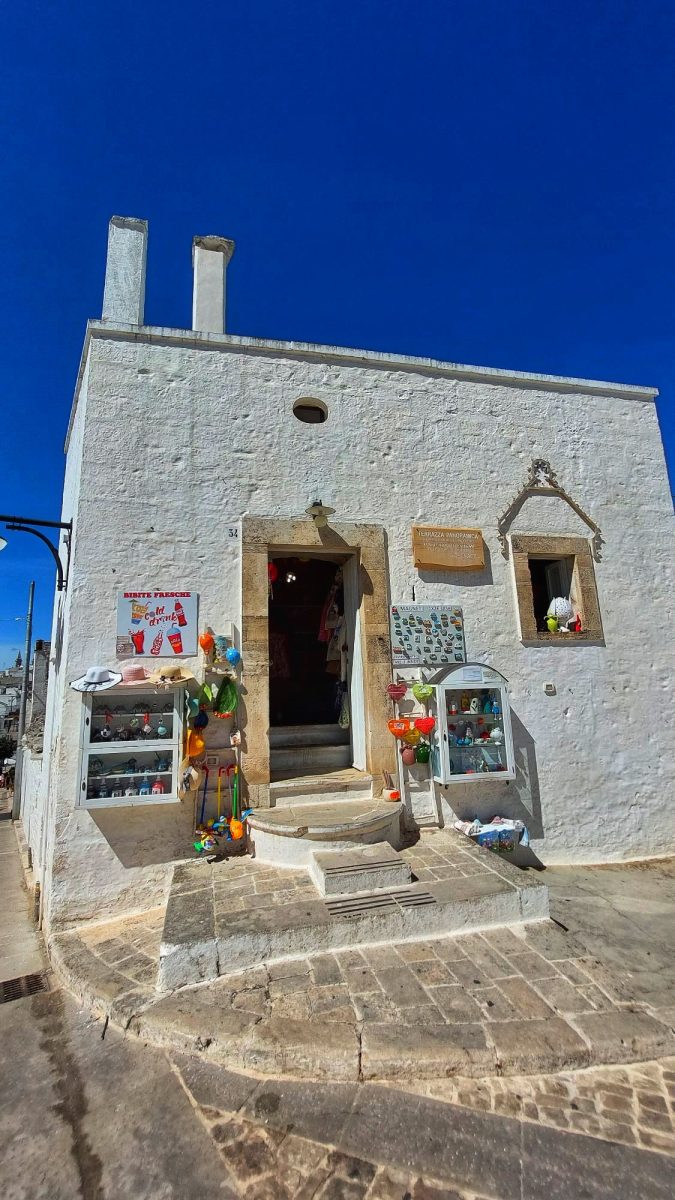
Completely exhausted but still unable to check into our lodging, we decided to wander around the area, even if it meant grabbing a drink nearby. But fatigue was setting in more and more. The crowds in the village’s narrow streets made us lose our patience at times.
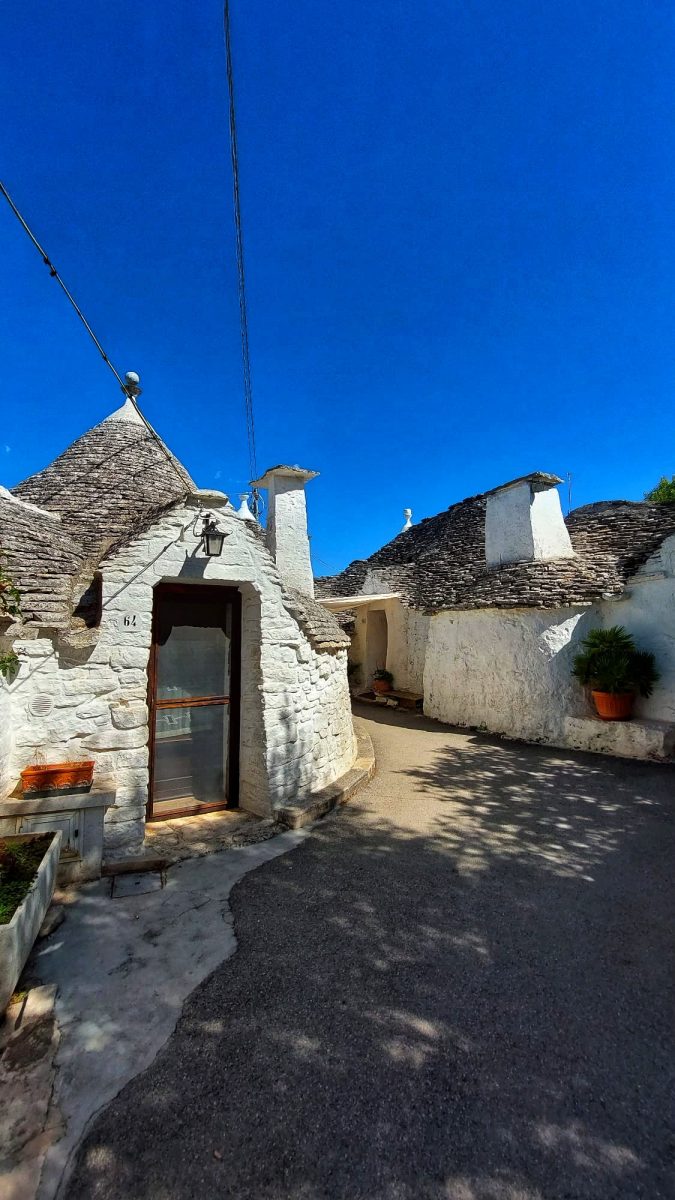
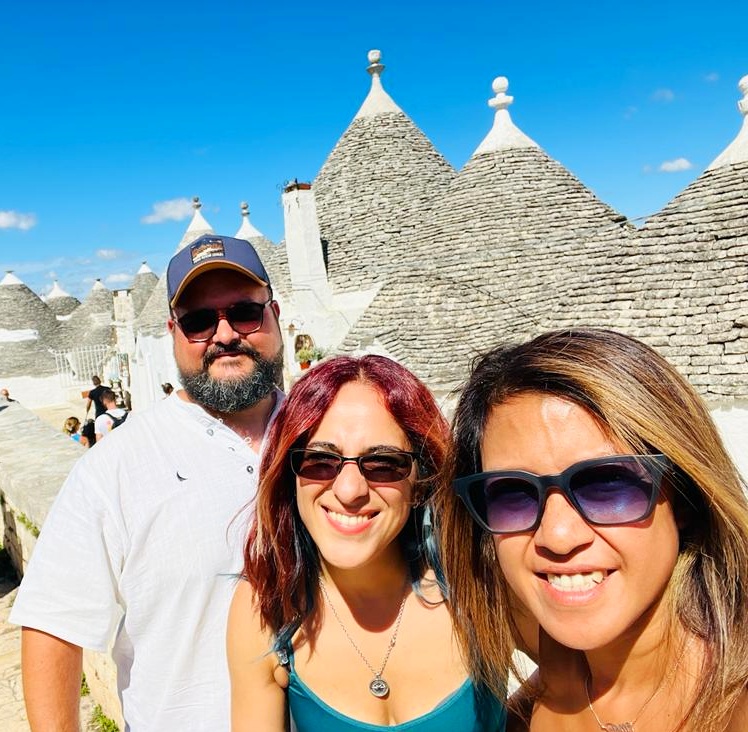
In the end, time flew by as we took photos and enjoyed a long stroll through the village. Around 4:00 p.m., we headed back to our lodging, a complex with a pool,Casa Camelia, AgriFamily Village. We settled in, and the owner told us there would be a small party. We went grocery shopping for dinner and spent the rest of the evening there. It was a night with plenty of drinks.
Tomorrow, we’re heading to Polignano a Mare, near Bari.
Good night, friends,
Ninve
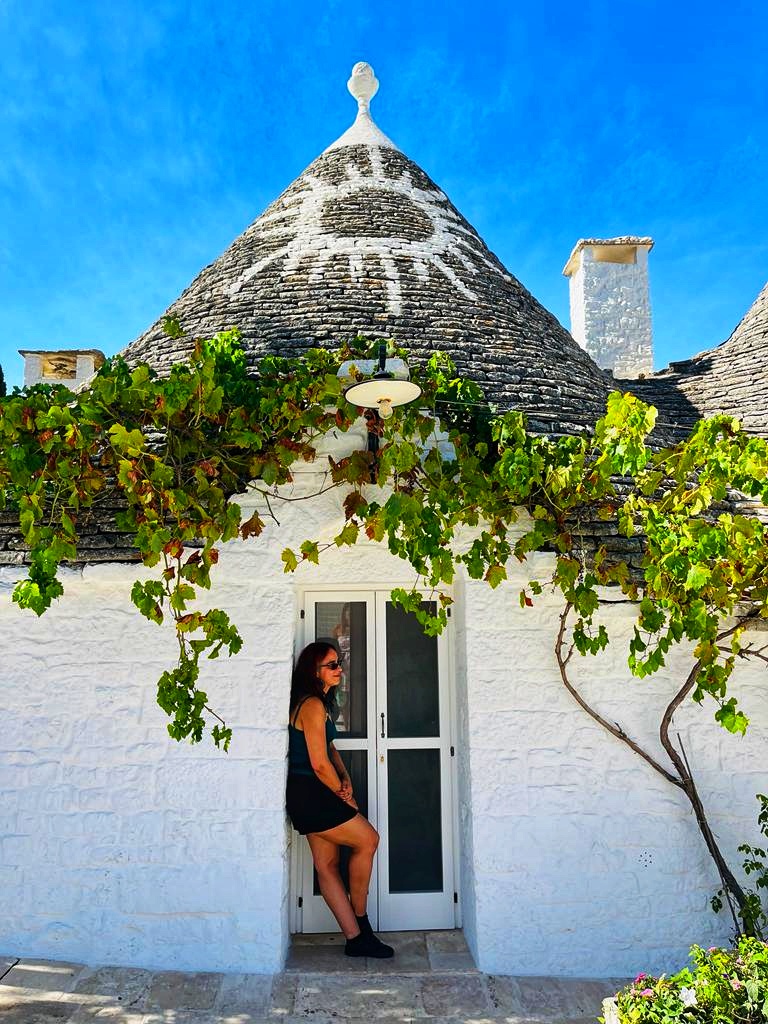
A few more photos of the village: