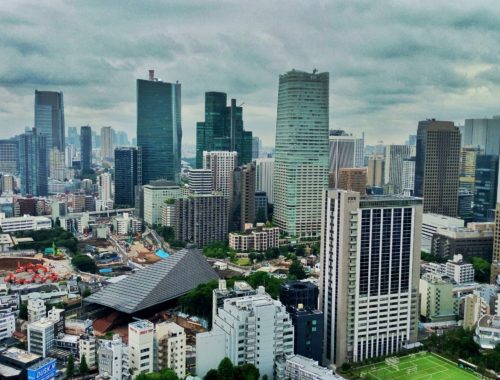
A Walk in the Rain
All in all, coming from Belgium, it never stops raining here. Of course, we all want to travel in gorgeous weather with a constantly blue sky—maybe with a few pretty little clouds to get the best photos—but I also like to see this side of the places I visit. Simply because it adds a different kind of charm.

The misty mountains, the shimmering white pavement of the Stradun—and there are far fewer people around, too. Perfect for snapping a few photos without anyone in the shot. It also gives us a chance to explore the little shops while we try to take shelter from the heavy downpour. In short, I’m always prepared for both rain and sunshine.

On this rainy day, there isn’t a single moment of respite from the weather. The sky is in tears—no way to console it. So, when my host asked me about my plans for the day, well… I had no idea; I told her I’d see. Finally, after passing the old abandoned building from yesterday, I took the first set of stairs leading upward, toward infinity and beyond.

I walked past a cemetery whose sculpture at the entrance caught my eye. Dark skies and torrential rain—perfect weather for a stroll through a cemetery. I discovered vaults and graves dating back more than two centuries.
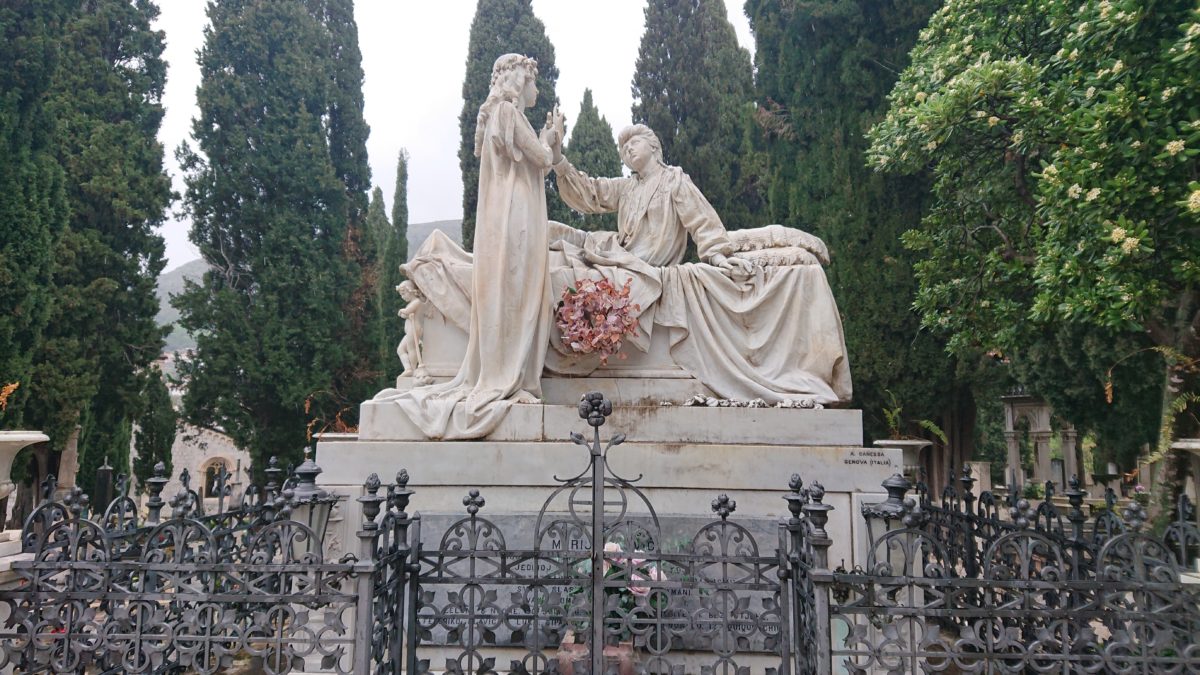
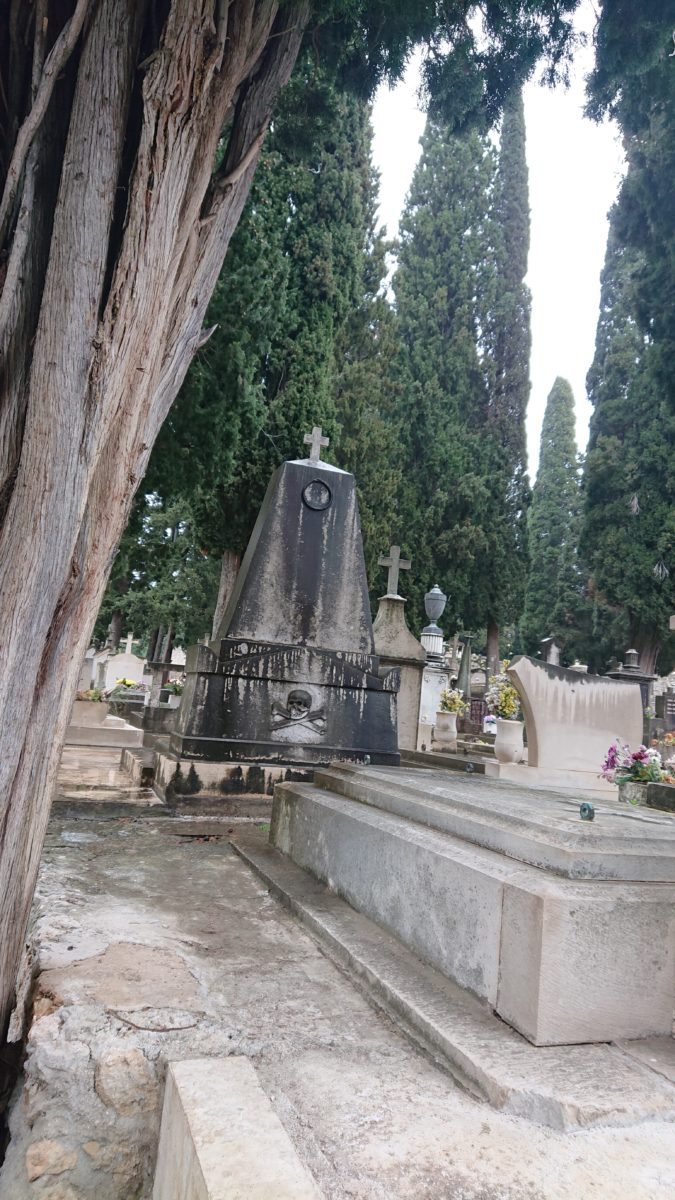
After walking around the cemetery, I continued on my way without really knowing where I was going—until I arrived at a park with a sweeping view of the fort: Bogišićev Park. It was built in the early 20th century and dedicated to the famous scientist Balthazar Bogisic. Stunning!
Dubrovnik has an intoxicating scent of jasmine—it’s one of the plants, or rather, trees, that you find everywhere. And in this park, I find nothing but trees in full bloom. So, with the rain, there’s a mix of the scent of the forest floor and jasmine that, surprisingly, is quite pleasant.
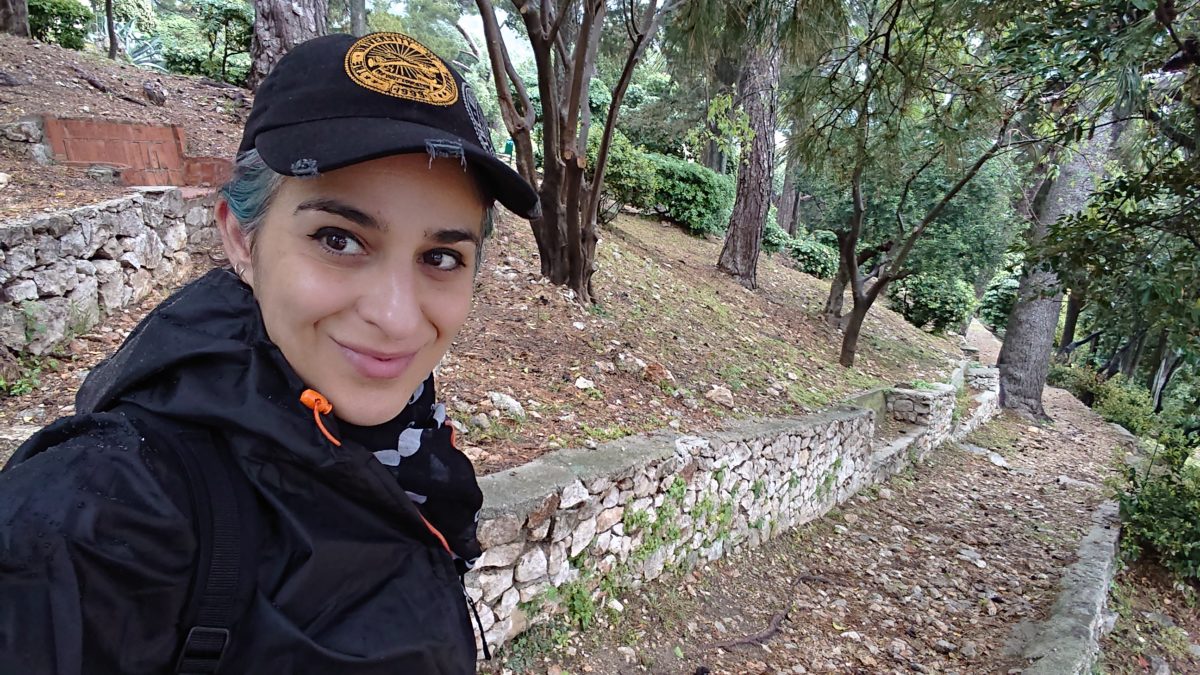

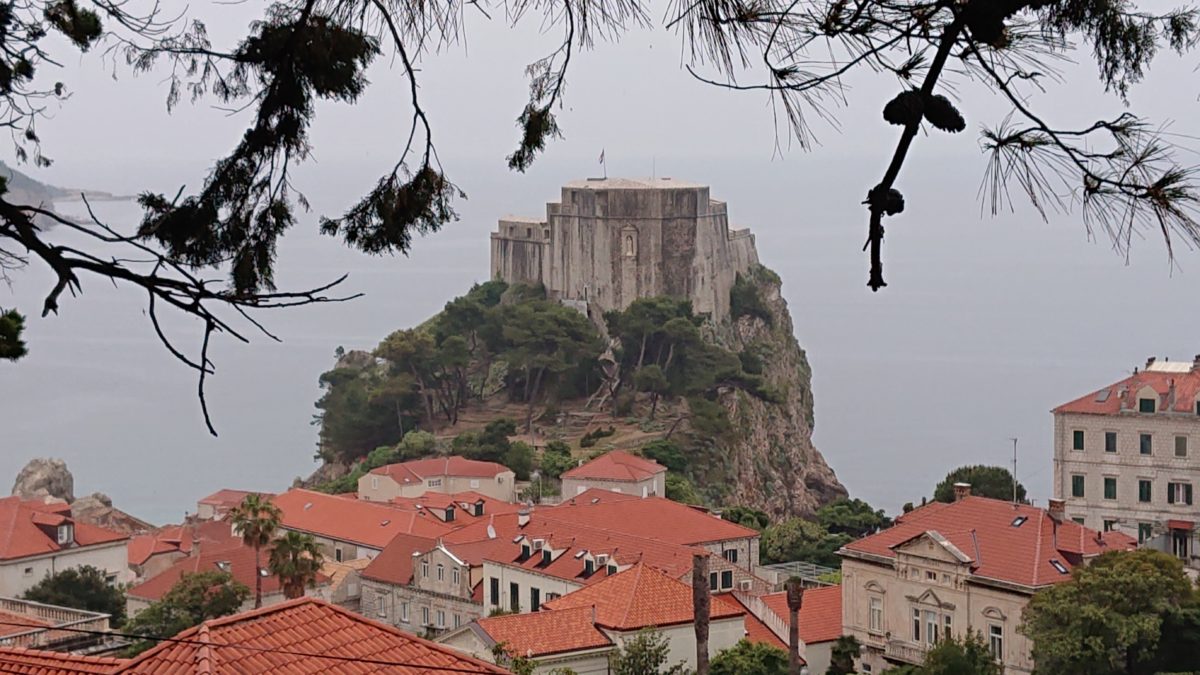
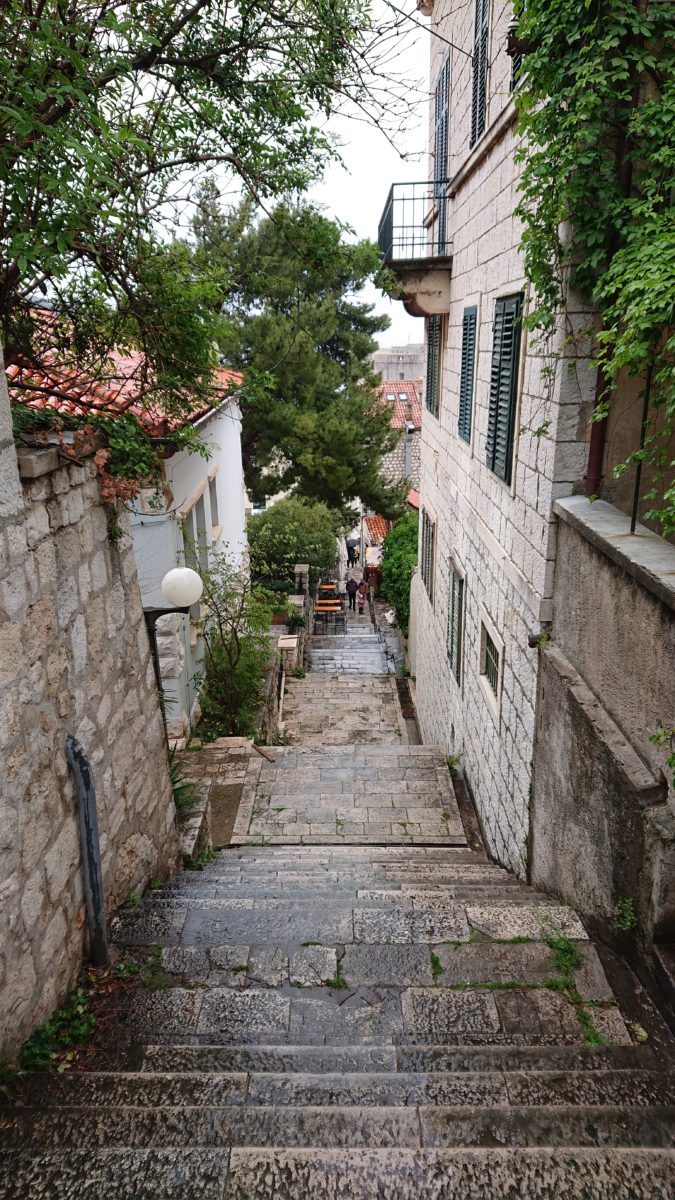
Leaving the park, I continue to my right, where I find a seemingly endless staircase that takes me back down toward the city and allows me to walk around the ramparts from the outside. It’s just as impressive from this side, too!

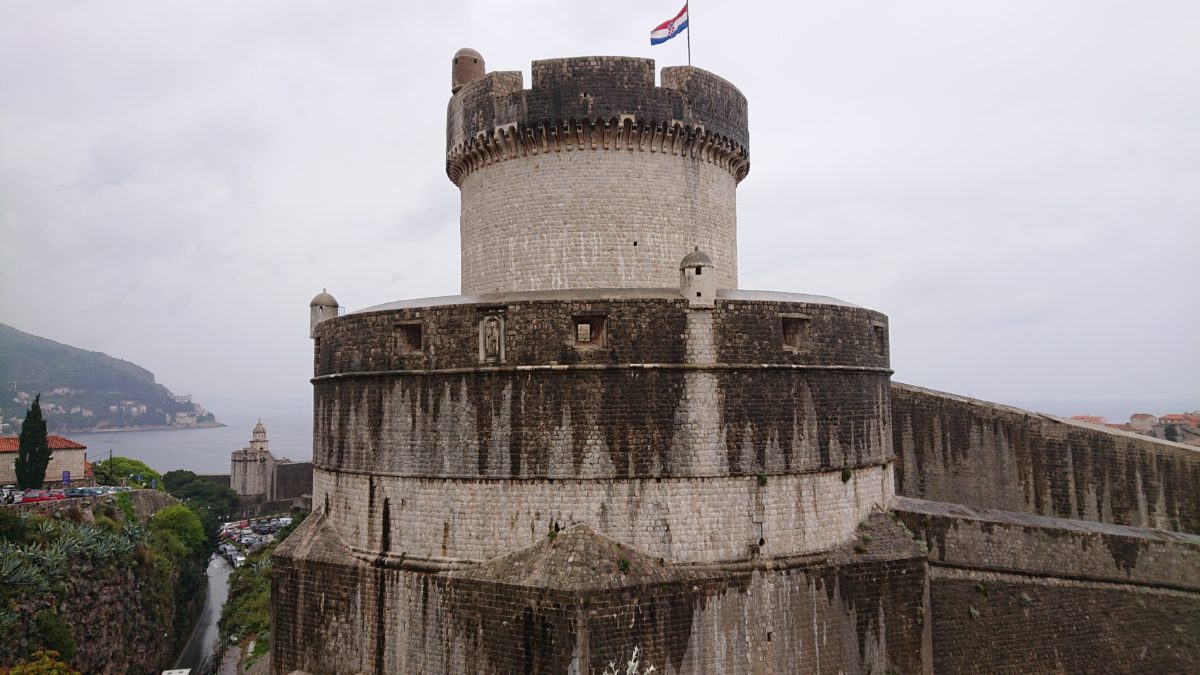
I enter Old Dubrovnik through the second gate, Ploče—the very same one I came through upon my arrival, near the old harbor. It’s overlooked by the Assimov Tower, and when I walked through it on my first day, a multitude of voices in my head kept repeating, “Shame, shame, shame!” Today, as I listened to a tour guide explaining to tourists that this was the scene where a naked Cersei atoned for her sins, I finally understood why, whenever I walked down this alley, those voices echoed in my head!


I’m sitting under a shelter, eating the gluten-free sandwiches I bought at a convenience store earlier, waiting for the heavy downpour to pass—and perhaps also to soak up the atmosphere of the place.

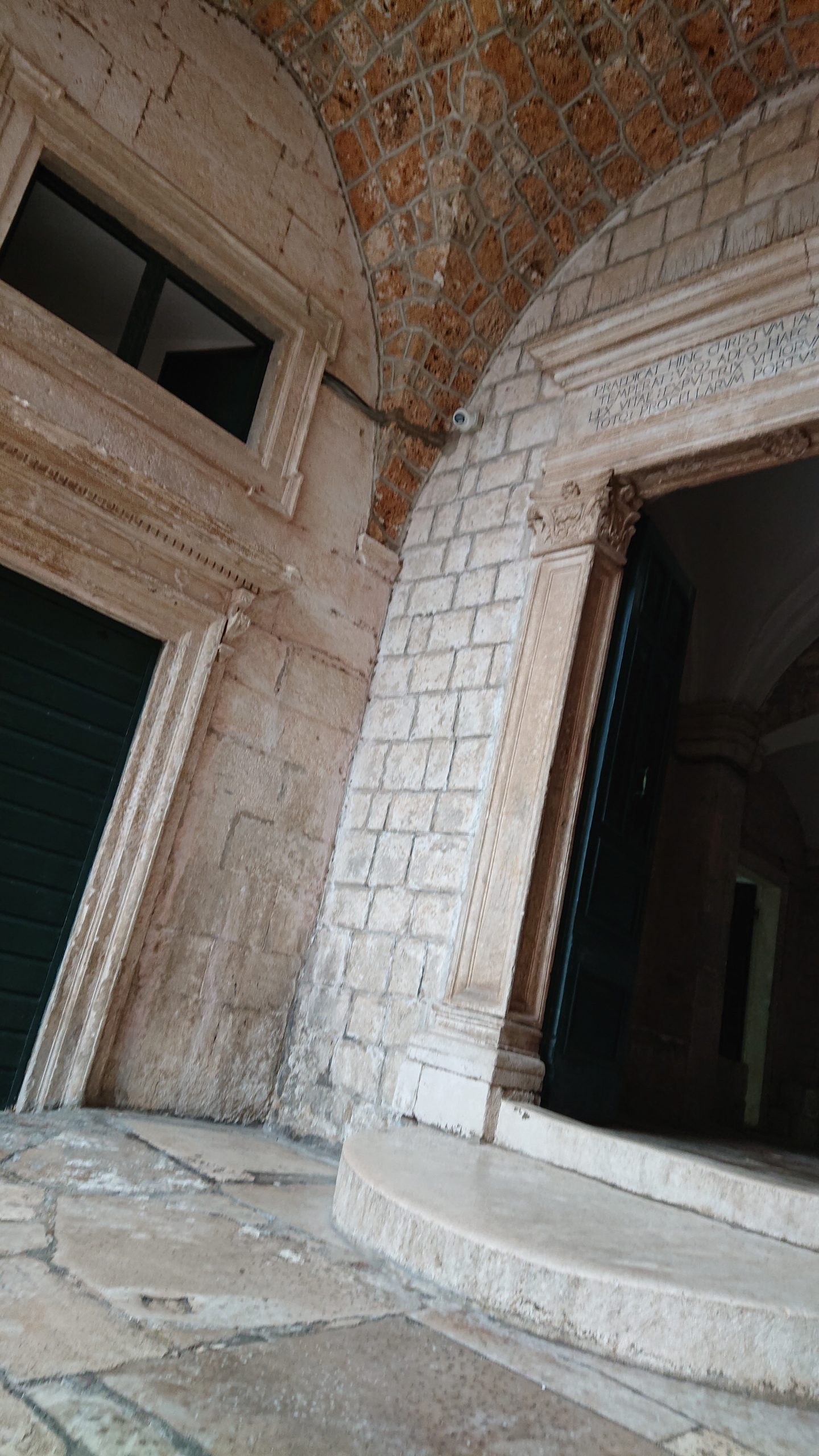
Behind me stands the Dominican convent, founded in the 12th century in the Gothic style but completed two centuries later. I explore the interior and its cloister, which is built more in the Renaissance style. Admission is 30 kn. That said, a quick note: if you’d like to visit several museums, know that there’s a combined ticket for all the museums and many others that’s a good deal— It’s called the Dubrovnik Card and is available for 1, 3, and 7 days, with prices ranging from 250 to 350 kuna (1€ is approximately equal to 7.5 kn).

The historic heart of Dubrovnik is rich in historic monuments built between the 11th and 16th centuries. The city once had nearly 10 monasteries and 42 churches, most of which are still in good condition. It’s worth noting that the stone used for construction—especially the cobblestones—is white stone from Brač, an island near Split in the north. I continue my stroll in the rain until I reach the square where the Rector’s Palace stands. I order an espresso to warm up, and something catches my eye for a long time. A statue—or, more precisely, what lies beneath it. Dragons??


The sky gives me a little respite so I can climb the famous staircase leading to the cathedral. I wait patiently for the crowd gathered in front of the door to clear so I can get a clear view. I’ll admit you have to be patient to get a sharp photo without anyone in it; sometimes you only have a window of a few seconds. You have to assess the situation, find your position, and frame the shot. And even then! It’s not easy, and as luck would have it, the camera shuts off automatically. Cut, let’s try again!

Dubrovnik Cathedral—this version dates back to the 13th century. The previous Romanesque cathedral was completely destroyed in the earthquake. Legend has it that its dome was adorned with statues and that it was built thanks to donations from Richard the Lionheart after the Third Crusade; he survived a shipwreck near Lokrum, the island across from the city.

I wander through the alleyways, going up and down as the beauty of these narrow streets—whether blooming with flowers or weathered by time—takes me. Still, I told myself that if the weather is the same tomorrow, I’ll have to find something interesting to do. A boat trip?
I stop by David’s place, who’s offering a tour of the three islands closest to Lapad (north of Dubrovnik) for 350 kn, including drinks, lunch, and hotel pickup. I chat with him for a bit; he tells me about the war, which is still fresh in people’s minds. We remember the year 1991, but the war actually lasted five years, from 1990 to 1995. 1991 was the year of the major air raid that devastated the city. David’s booth is located across from the grand and luxurious Imperial Hotel. He tells me that during that raid, the hotel opened its doors so that everyone in the surrounding area could take refuge in the hotel’s basements.

The Siege of Dubrovnik: It is said that the city walls truly served and protected the people for the first time during the Siege of Dubrovnik in 91–92. Over the centuries, Dubrovnik often placed itself under the protection of another nation, sultan, or empire.
In 1481, under the Ottoman sultan; in 1684, under the Habsburgs. To counter Venice, Dubrovnik ceded a portion of its coastline to Bosnia. In 1815, Dubrovnik joined the Austro-Hungarian Empire. In 1848, a sense of nationalism awoke among the Croats.
A few years later, World War I was triggered by an assassination carried out by a Serb. According to history, Yugoslavia was formed in 1915 through the union of Serbian, Croatian, and Slovenian politicians. Later, Croatia lost territory as a result of a treaty. In 1945, it became a federal state within Yugoslavia. In 1971, there were calls for greater autonomy. In 1991, Croatia declared its independence. The Serbs were supported by Yugoslavia, and part of the country fell under Serb control as they bombed Croatia during this war, which lasted nearly five years. From the beginning of the war’s second year, airstrikes focused on the old town of Dubrovnik in an attempt to bring it under their control.
Today, the Croatians have renovated the city so well that you can hardly see any traces of that major, traumatic event. But that war is still quite fresh in the minds of Croatians. There’s a museum dedicated to it. The end of the day is approaching; I’m soaked after exploring the city despite my raincoat. I’m going to grab a bite to eat and crash. Tomorrow, a long day awaits me,
See you tomorrow
Yours sincerely,





You May Also Like

Modesta, weekend of the 16th–17th; 2 nights at Ate Meriem's.

Mnemba, paradise on earth